EFTA00014187 - EFTA00014191
Document EFTA00014187 is a court order denying Jeffrey Epstein's motion to stay a civil action filed against him by Jane Doe No. 2.
The document is an order from the United States District Court for the Southern District of Florida, addressing Jeffrey Epstein's motion to stay a civil case (08-80119-CIV-MARRA/JOHNSON) filed by Jane Doe No. 2. Epstein sought the stay based on the argument that a criminal action was pending against him, citing a state case (Florida v. Epstein, No. 2006 CF 09454AXX) and a federal case (re Grand Jury, No. FGJ 07-103(WPB)). The court ultimately denied Epstein's motion, disagreeing with his interpretation of a "deferred-prosecution" agreement as a pending criminal action.
Key Highlights
- •The document is a court order denying Jeffrey Epstein's motion to stay a civil action.
- •Jane Doe No. 2 is the Plaintiff in the civil case against Jeffrey Epstein.
- •The court cites 18 U.S.C. § 3509 (k) regarding the stay of civil actions when a related criminal action involving a child victim is pending.
Frequently Asked Questions
Books for Further Reading
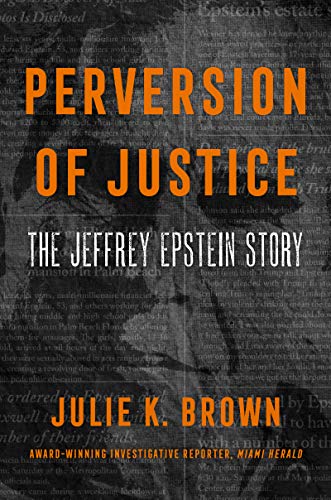
Perversion of Justice: The Jeffrey Epstein Story
Julie K. Brown
Investigative journalism that broke the Epstein case open

Filthy Rich: The Jeffrey Epstein Story
James Patterson
Bestselling account of Epstein's crimes and network

Relentless Pursuit: My Fight for the Victims of Jeffrey Epstein
Bradley J. Edwards
Victims' attorney's firsthand account
Document Information
Bates Range
EFTA00014187 - EFTA00014191
Pages
5
Document Content
Page 1 - EFTA00014187
Case 9:08-cv-80119-KAM Document 33 Entered on FLSD Docket 08:05:2008 Page 1 of 5 UNITED STATES DISTRICT COURT SOUTHERN DISTRICT OF FLORIDA NO. 08-80119-CIV-MARRA/JOHNSON JANE DOE NO. 2, Plaintiff, v. JEFFREY EPSTEIN, Defendant. ORDER DENYING MOTION TO STAY THIS CAUSE comes before the Court on Defendant Jeffrey Epstein's Motion to Stay (DE 12), filed June 20, 2008. The motion is now fully briefed and is ripe for review. The Court has carefully considered the motion and is otherwise fully advised in the premises. Defendant Jeffrey Epstein ("Defendant") seeks a stay of this civil action under a federal statute which reads, in pertinent part, as follows: If, at any time that a cause of action for recovery of compensation for damage or injury to the person of a child exists, a criminal action is pending which arises out of the same occurrence and in which the child is the victim, the civil action shall be stayed until the end of all phases of the criminal action and any mention of the civil action during the criminal proceeding is prohibited. As used in this subsection, a criminal action is pending until its final adjudication in the trial court. 18 U.S.C. § 3509 (k). In his motion, Defendant cites a state case, Florida v. Epstein, No. 2006 1 EFTA00014187
Page 2 - EFTA00014188
Case 9:08-cv-80119-KAM Document 33 Entered on FLSD Docket 08/05/2008 Page 2 of 5 CF 09454AXX (Fla. Cir. Ct. 2008)' and a federal case, hr re Grand Jury, No. FGJ 07-103(WPB) (S.D. Fla.), that arise out of the same occurrences and are pending and thus require a stay of this civil case. The federal "case," according to Defendant, involves a "deferred-prosecution" agreement whereby the U.S. Attorney agreed to suspend its investigation of Defendant while "retaining the right to reactivate the grand jury." (DE 24.) Defendant essentially reasons, because the U.S. Attorney could bring criminal charges against Defendant, that a criminal action is "pending." The Court rejects this definition of a "pending criminal action." When interpreting the text of a statute, the Court begins with the plain meaning of the text. In re Hedrick, 524 F.3d 1175, 1186 (11'h Cir. 2008). If the plain meaning of a statute is clear, the Court should not deviate from that interpretation. Id. Pending is defined as "remaining undecided" and "awaiting decision." Blacks Law Dictionary (81h ed. 2004).2 Likewise, an 'As Defendant recognizes, the state court case was "finally adjudicated" and thus no longer pending as of June 30, 2008. (See DE 12.) 'Defendant attempts to argue that the fact that grand jury subpoenas are still "outstanding" and "not withdrawn" and that the grand jury will not be dismissed until Defendant completes his obligations under the state plea agreement means that a "criminal action" is "pending." (Def. Reply 4.) Defendant misunderstands the purpose of a grand jury. A grand jury, as Blackstone writes, is composed of citizens who "inquire, upon their oaths, whether there be sufficient cause to call upon the party to answer" the charge of criminal activity. Beavers v. Henkel, 194 U.S. 73, 84 (1904) (quoting William Blackstone, 4 Commentaries *303). The grand jury's sole purpose is to inquire into whether there is probable cause to bring an individual before a tribunal to determine his guilt or innocence of an alleged crime. Id. The grand jury is simply an investigative body. See U.S v. Aired, 144, F.3d 1405, 1413 (111h Cir. 1998). A "criminal action" is not instigated by the calling of a grand jury, because a grand jury is convened "to determine whether a crime has been committed and whether criminal proceedings should be instituted against any person." U.S. v. Calandra, 414 U.S. 338, 344 (1974). An "action" is commenced against a person after the grand jury actually finds probable cause to make an individual answer specific charges and renders a bill of indictment against that individual. Until a grand jury's investigation is complete and there has been a determination by a lawful authority that probable cause exists, there can be no criminal action. 2 EFTA00014188
Page 3 - EFTA00014189
Case 9:08-cv-80119-KAM Document 33 Entered on FLSD Docket 08/05/2008 Page 3 of 5 "action" is defined as a "criminal judicial proceeding." Id. Because the U.S. Attorney has not filed an indictment or an information against Defendant, the Court fails to see how there is an undecided judicial proceeding in federal court against Defendant. Defendant argues that this statute should be read to include the definition of "criminal action" used in 18 U.S.C. § I595(b)(2), which reads as follows: "In this subsection, a 'criminal action' includes investigation and prosecution and is pending until final adjudication in the trial court." Defendant argues that "Congress specifically intended that the term 'criminal action' would be applied extremely broadly" under § 1595, so Congress "took pains to ensure that courts would give it the broadest possible construction" and defined "criminal action" as including investigatory stages. (Def. Reply 4.) Defendants argue that the Court should borrow this definition. The Court disagrees. The Court believes that Congress's inclusion of this broader definition under § 1595 evinces Congressional intent to depart from the normal meaning of the term "criminal action."' This addition to the text suggests that Congress knows the plain meaning of the term "criminal action" and that Congress decided, under § 1595, that the definition of "criminal action" should be broader. In contrast, Congress could have made such an addition to § 3509 had it intended the mandatory stay provision to apply to pre-indictment investigations, but it did not. In other words, by not broadening the definition of "criminal action" § 3509, Congress intended that the term should only have its ordinary meaning: that an indictment or information has been filed naming a specific defendant. Instead, it seems clear that 'In fact, Congress made this intent clear by stating that this broader definition of a "criminal action" applied only "in this subsection." 3 EFTA00014189
Sponsored
Page 4 - EFTA00014190
Case 9:08-cv-80119-KAM Document 33 Entered on FLSD Docket 08/05/2008 Page 4 of 5 Congress intended that these two statutory provisions should each have a different scope. Defendant's argument of statutory construction fails. The single case cited by Defendant in support of his motion is not on point. In Doe 1 v. Francis, No. 5:03CV260/MCR/WCS, 2005 WL 517847 (N.D. Fla. Feb. 10, 2005), the stay was entered because criminal charges had been filed against the defendant in a state court several months earlier (i.e., the defendants had been indicted by the state attorney). See Memorandum in Support of Motion to Stay Proceedings Pending Outcome of Parallel Criminal Proceedings at 3, Doe 1 v. Francis, No. 5:03CV260/MCRIWCS (N.D. Fla. Dec. 2, 2003). The Court agrees with Defendant that a stay under § 3509(k) is mandatory when a criminal action is pending; the Court simply disagrees that the "deferred-prosecution agreement" constitutes a pending criminal action. The Court also does not believe a discretionary stay is warranted. Defendant did not seek this relief in his motion; including such a request in the reply brief is inappropriate. Further, the Court sees no reason to delay this litigation for the next thirty-three months. After all, Defendant is in control of his own destiny - it is up to him (and him alone) whether the plea agreement reached with the State of Florida is breached. If Defendant does not breach the agreement, then he should have no concerns regarding his Fifth Amendment right against self-incrimination. The fact that the U.S. Attorney (or other law enforcement officials) may object to some discovery in these civil cases is not, in an of itself, a reason to stay the civil action. Any such issues shall be resolved as they arise in the course of this litigation. Accordingly, it is ORDERED AND ADJUDGED as follows: I. Defendant's Motion to Stay (DE 12) is DENIED. 2. Defendant's Motion for Hearing (DE 27) is DENIED AS MOOT. 4 EFTA00014190
Page 5 - EFTA00014191
Case 9:08-cv-80119-KAM Document 33 Entered on FLSD Docket 08/05/2008 Page 5 of 5 3. Plaintiff's Motion for an Extension of Time to File Response (DE 18) is GRANTED NUN(' PRO TUNC. DONE AND ORDERED in Chambers at West Palm Beach, Palm Beach County, Florida, this 4ih day of August, 2008. e e"--2.- KENNETH A. MARRA United States District Judge Copies furnished to: all counsel of record 5 EFTA00014191
Entities Mentioned
AI
Aired
PERSON
Name reference in documents
Beavers
PERSON
Surname reference in documents
CA
Calandra
PERSON
Surname reference in documents
HE
Hedrick
PERSON
Surname reference in documents
HE
Henkel
PERSON
Surname reference in documents
JD
Jane Doe
PERSON
Pseudonym for anonymous victims/witnesses in Epstein legal proceedings

Jeffrey Epstein
PERSON • 3 mentions
American sex offender and financier (1953–2019)
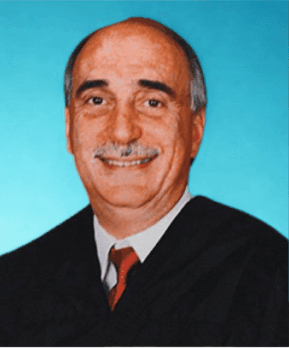
Kenneth Marra
PERSON
American judge

Pope Francis
PERSON
266th pope of the Catholic Church (2013–2025)
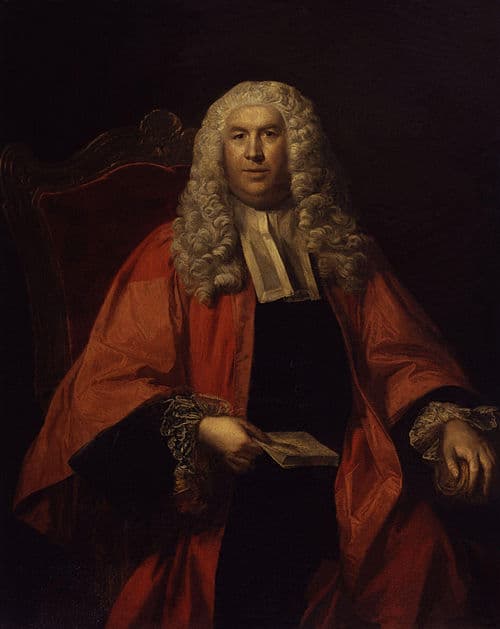
William Blackstone
PERSON
Person referenced in documents
111h Cir.
ORGANIZATION
Organization referenced in documents

Blackstone
ORGANIZATION
Canadian television series
Fla. Cir.
ORGANIZATION
Organization referenced in documents
Grand Jury
ORGANIZATION
Grand jury, legal body for criminal proceedings
Statistics
Pages:5
Entities:14
Avg. OCR:0.9%
Sponsored