EFTA00013373 - EFTA00013388
Document EFTA00013373 is a legal document, specifically a U.S. District Court case, U.S. v. Montano, from 1995.
The document presents pretrial motions in limine filed by both the defendants and the government in a case involving alleged drug distribution and money laundering. The court addresses issues such as the admissibility of evidence, witness testimony, and other procedural matters. The document's significance lies in its detailed examination of legal arguments and rulings related to evidence and trial procedures.
Key Highlights
- •The document is a legal ruling from the U.S. District Court, N.D. Illinois, Eastern Division.
- •The case involves defendants charged with drug distribution and money laundering.
- •The court addresses the admissibility of evidence and witness testimony, including issues of illegally obtained evidence and statutory penalties.
Frequently Asked Questions
Document Information
Bates Range
EFTA00013373 - EFTA00013388
Pages
16
Document Content
Page 1 - EFTA00013373
U.S. v. Montano, 873 F.Supp. 1177 (1995) 873 F.Supp. 1177 United States District Court, N.D. Illinois, Eastern Division. UNITED STATES of America, Plaintiff, v. Christopher Richard MESSINO, et al., Defendants. No. 93 CR 294. Jan. 31, 1995. Synopsis Eight defendants, who were charged in connection with alleged drug distribution and money laundering conspiracy, and government filed pretrial motions in limine. The District Court, Alesia, J., held that: (1) evidence and witnesses' testimony would not be suppressed as result of having been derived from leads attributable to suppressed evidence; (2) testimony regarding statutory maximum penalty faced by government's witnesses was admissible; (3) government would be allowed to recall witnesses during its case in chief; (4) evidence regarding weapons possession, taxes, and dealings involving large amounts of cash was admissible; (5) district court would not grant additional peremptory challenges to defendants; (6) government was not required to put nondefendant participant in conversation with one of defendants on stand in order to play tape recordings of conversation; (7) court would reserve ruling on marital communications privilege; (8) references to one of defendants in codefendants' conversations did not implicate confrontation clause; and (9) government could introduce evidence of incarceration of one of defendants. Motions denied in part and granted in part. West Headnotes (34) Ill Criminal Law S-Searches, seizures, and arrests Criminal Law S-Search or seizure in general Exclusionary rule prohibits introduction of evidence obtained as direct or indirect result of illegal search. Cases that cite this headnote 121 Criminal Law S-Causal nexus; independent discovery or basis or source When disputed evidence is attributable to source independent of illegally obtained primary item, independent source doctrine renders evidence admissible despite primary taint. Cases that cite this headnote 131 Criminal Law S-Inevitable discovery When disputed evidence inevitably would have been discovered by lawful means, inevitable discovery doctrine renders evidence admissible despite primary taint. Cases that cite this headnote 19 Criminal Law S-Causal nexus; independent discovery or basis or source Defendants, who were charged in connection with alleged drug distribution and money laundering conspiracy, were not entitled to suppression of first defendant's lease, identification and place of purchase of second defendant's boat, and witnesses' testimony, even though lease, boat information, and witnesses were derived from leads attributable to suppressed evidence; lease, boat information, and identification and use of witnesses were attributable to independent source of discovery. WEST LAW @ 2019 Thomson Reuters. No claim to original U.S. Government Works. 1 EFTA00013373
Page 2 - EFTA00013374
U.S. v. Mannino, 873 F.Supp. 1177 (1995) Cases that cite this headnote Isl Criminal Law iil lnevitable discovery Defendant, who was charged in connection with alleged drug distribution and money laundering conspiracy, was not entitled to suppression of bank and credit card records and prohibition of use of witness, even though records and witness were derived from leads attributable to suppressed evidence; records and identity and significance of witness would have been inevitably discovered even absent utilization of tainted leads. Cases that cite this headnote 161 Criminal Law S-Motions in limine District court would deny government's motion in limine seeking to preclude evidence and argument, at trial on charges arising from alleged drug distribution and money laundering conspiracy, of lawfulness, noncorrupt conduct, and outrageous government conduct; motion could not be evaluated absent more specific context provided at trial. 2 Cases that cite this headnote ITI Criminal Law aMotions in limine District court would deny as moot government's motion in limine seeking to preclude, at trial on charges arising from alleged drug distribution and money laundering conspiracy, evidence and argument of entrapment; no defendant responded to motion by asserting right to argue entrapment in opening statements. 2 Cases that cite this headnote Isl Criminal Law S-Relevancy in General Evidence as to defense counsel's prior prosecution experience was not admissible as it was irrelevant. Fed.Rules Evid.Rules 401, 402, 28 U.S.C.A. Cases that cite this headnote Witnesses p-Competency of contradictory evidence Draft transcript prepared by one witness could not be used to impeach another witness. Cases that cite this headnote Pw Criminal Law 4SMotions in limine District court would deny government's motion in limine regarding allegations of witness wrongdoing not involving dishonesty; government sought to regulate impeachment of its witnesses at trial and, without context, court was required to reserve ruling. Cases that cite this headnote 1111 Witnesses limExplanation of Testimony on Cross•Examination Witnesses fl•Interest in Event of Witness Not Party to Record Testimony regarding statutory maximum WESTLAW @ 2019 Thomson Reuters. No claim to original U.S. Government Works. 2 EFTA00013374
Page 3 - EFTA00013375
U.S. v. Messino, 873 F.Supp. 1177 (1995) penalties faced by government's witnesses was admissible, notwithstanding contention that such numbers were misleading given realities of sentencing under Sentencing Guidelines; evidence was relevant as to issue of credibility, and, to extent that statutory maximum did not tell whole story, government was free to explore that on redirect examination. U.S.S.G. § 1B1.1 et seq., 18 U.S.C.A.App.; Fed.Rules Evid.Rule 401,28 U.S.C.A. Cases that cite this headnote 1121 Witnesses faRecalling Witnesses District court has discretionary authority to allow government to recall witnesses during its case in chief. Cases that cite this headnote 1131 Witnesses 4-Recalling Witnesses District court would allow government at trial of eight defendants on charges arising from alleged drug distribution and money laundering conspiracy to recall specific witnesses during its case in chief; such recall would be beneficial to July's following government's case. Cases that cite this headnote Criminal Law 4-Conspiracy, racketeering, and money laundering Criminal Law 4-Controlled substances Criminal Law 4-Conspiracy, racketeering, and money laundering Criminal Law 4-Conspiracy, racketeering, and money laundering Evidence of defendants' possession of weapons was admissible, at trial on charges arising out of alleged drug distribution and money laundering conspiracy, on a tool-of-the-trade theory. Cases that cite this headnote 1151 Conspiracy 4-Admissibility in general Tax evidence was admissible, at trial on charges arising from alleged drug distribution and money laundering conspiracy, to show no legitimate source of income. Cases that cite this headnote 118 Criminal Law 4-Evidence calculated to create prejudice against or sympathy for accused Evidence of defendants' use of prostitutes was not admissible at trial on charges arising from alleged drug distribution and money laundering conspiracy; defendants' use of prostitutes was irrelevant and overly prejudicial, absent some special circumstances, which government did not forward. I Cases that cite this headnote I"I Criminal Law 4-Evidence calculated to create prejudice against or sympathy for accused Government could elicit, at trial on charges arising from alleged drug distribution and money laundering conspiracy, testimony that some of defendants might have had sexual relationships with same witnesses; it might be difficult for each witness to tell her story of her relation to those defendants without discussing WESTLAW @ 2019 Thomson Reuters. No claim to original U.S. Government Works. 3 EFTA00013375
Sponsored
Page 4 - EFTA00013376
U.S. v. Messino, 873 F.Supp. 1177 (1995) 1191 fact that she dated them, and government intended to elicit noninflammatory manner. Cases that cite this headnote Conspiracy *admissibility in general information in Evidence of large cash loans made by defendant was admissible, at trial on charges arising from alleged drug distribution and money laundering conspiracy, to show defendant's possession of such cash as evidence of conspiracy. Cases that cite this headnote Criminal Law *Motions in limine District court would deny defendant's motion in limine seeking to preclude, at trial on charges arising from alleged drug distribution and money laundering conspiracy, testimony regarding aliases, carrying of briefcase containing $10,000, and putting assets in other persons' names; depending on context, those incidents could be relevant, and any foundational issues were properly addressed at trial. Fed.Rules Evid.Rule 401, 2S U.S.C.A. Cases that cite this headnote 1201 Criminal Law 4-Motions in limine District court would deny defendant's motion in limine seeking to preclude, at trial on charges arising from alleged drug distribution and money laundering conspiracy, evidence of debt owed to defendant; government's theory was that debt would be linked up when viewed in context of evidence at trial and, thus, court would reserve ruling. Cases that cite this headnote 1211 Criminal Law *Motions in limine District court would deny defendant's motion in limine seeking to preclude testimony at trial on charges arising from alleged drug distribution and money laundering conspiracy; government's theory of admissibility was based on witness' being unindicted coconspirator, and papers submitted could not supply enough context to rule on issue. Cases that cite this headnote 122l Jury 4Codefendants Decision as to whether to grant additional peremptory challenges in multidefendant trial lies within sound discretion of district court. Fed.Rules Cr.Proc.Rule 24(b), 18 U.S.C.A. I Cases that cite this headnote 1231 Jury i*Codefendants District court would not grant defendant's request for additional peremptory challenges, allotting three peremptory challenges for each of eight defendants, but, rather, would collectively allow defendants ten peremptory challenges with each defendant having sole authority over one challenge and joint authority over remaining challenges, even though length of trial might complicate jury selection process. Fed.Rules Cr.Proc.Rule 24(b), IS U.S.C.A. I Cases that cite this headnote WEST LAW @ 2019 Thomson Reuters. No claim to original U.S. Government Works. 4 EFTA00013376
Page 5 - EFTA00013377
U.S. v. Messino, 873 F.Supp. 1177 (1995) demonstrative evidence 1241 Criminal Law 4—Materiality and probable effect of information in general Under Brady rule, prosecution is barred from withholding evidence that is favorable to defendant and material to issue at trial. Cases that cite this headnote 1251 Criminal Law 4-Grand jury proceedings Defendant was not entitled to disclosure, under Brady, of witness' grand jury testimony; prosecution did not intend to call witness at trial, and, although witness' testimony indicated absence of knowledge of any illegality on part of defendant, Brady materiality determination was not search for mere possibilities. Cases that cite this headnote 1261 Criminal Law 4-Sound recordings Criminal Law 4-Sound recordings Government was not required, as foundational matter or under Sixth Amendment, to place nondefendant participant in conversation with defendant on stand in order to play tapes of conversation, which participant transmitted on behalf of government. U.S.C.A. Const.Amend. 6. I Cases that cite this headnote 1271 Criminal Law faIntroduction of documentary and District court would exclude alleged references, in tape-recorded conversation involving defendant, who was charged in connection with alleged drug distribution and money laundering conspiracy, to potential intimidation or murder of government witness; it was not clear that defendant was agreeing to or encouraging such intimidation, either through inaudibility or truncated transmission, transcripts were incomplete, and subject matter was highly inflammatory. I Cases that cite this headnote 1251 Witnesses 4-Incompetency for or Against Each Other in General "Adverse spousal testimony privilege" gives person presently married to criminal defendant right not to testify against his spouse. Cases that cite this headnote Witnesses 4-Objections to competency in general Only testifying spouse can assert adverse spousal testimony privilege. Cases that cite this headnote 1 " Criminal Law 4-Motions in limine District court would deny defendant's motion in limine seeking to preclude his spouse's testimony based on confidential marital communications privilege; defense counsel's information indicated that spouse would assert adverse spousal testimony privilege, government claimed that marriage was sham and would be WESTLAW @ 2019 Thomson Reuters. No claim to original U.S. Government Works. 5 EFTA00013377
Page 6 - EFTA00013378
U.S. v. Messino, 873 F.Supp. 1177 (1995) required to prove that claim at trial, and adverse spousal testimony privilege was threshold matter. Cases that cite this headnote 1311 Criminal Law 4-Presence of jury during inquiry as to admissibility 1321 1331 District court would require government, before presenting attorney-client communications, to establish out of hearing of jury that exception to attorney-client privilege operated. Cases that cite this headnote Criminal Law 4-Confessions or declarations of codefendants Admission of references to defendant in codefendants' conversations which took place after alleged drug distribution and money laundering conspiracy ended did not implicate confrontation clause; references required "linkage" to defendant before they implicated him. U.S.C.A. Const.Amend. 6. Cases that cite this headnote Conspiracy 4-Admissibility in general Government could introduce evidence of defendant's incarceration at trial on charges arising out of alleged drug distribution and money laundering conspiracy; superseding indictment specifically charged that defendant directed coconspirators while incarcerated. Cases that cite this headnote Wl Criminal Law 4-Motions in limine District court would deny defendant's motion in limine to preclude, at trial on charges arising from alleged drug distribution and money laundering conspiracy, evidence regarding isolated incidents of small controlled substance deliveries; government intended to prove that defendant sold small amounts of cocaine during course of and in furtherance of conspiracy, and, furthermore, defendant's motion was too vague to warrant ruling that all incidents fitting into his description should be excluded. I Cases that cite this headnote Attorneys and Law Firms *1180 L. Felipe Sanchez, Matthew Schneider, Kathleen Murdock, Asst. U.S. Attys., Chicago, IL, for U.S. Marc William Martin, Chicago, IL, for Christopher Richard Messina. Douglas P. Roller, Naperville, IL, E.E. Edwards, III, Nashville, TN, for Clement A. Messino. Linda Amdur, Chicago, IL, for Michael Homerding. Robert A. Loeb, Chicago, IL, for Donald Southern. Donna Hickstein—Foley, Chicago, IL, for William Underwood. Gerardo Gutierrez, Chicago, IL, for Christopher B. Messino. Robert L. Gevirtz, Gevirtz, Born & Kissel, Northfield, IL, for Blaise Messino. Joseph R. Lopez, Chicago, IL, for Paul Messino. Walter Jones, Jr., Chicago, IL, for Thomas Hauck. Edna Selan Epstein, Chicago, IL, for Gray Chrystall. Leland Shalgos, Chicago, IL, for Daniel C. Shoemaker. Steven A. Greenberg, Chicago, IL, Richard Friedman, WESTLAW @ 2019 Thomson Reuters. No claim to original U.S. Government Works. 6 EFTA00013378
Sponsored
Page 7 - EFTA00013379
U.S. v. Messino, 873 F.Supp. 1177 (1995) Chicago, IL, for Lawrence Thomas. MEMORANDUM OPINION AND ORDER ALESIA, District Judge. Before the court are pretrial motions in limine as well as a few remaining pretrial motions and matters. For background on this case see United States v. Messino, 871 F.Supp. 1035 (N.D.I11.1995), and other cases cited at 871 F.Supp. at 1037-38 of that opinion. I. TAINT ISSUES RELATED TO PREVIOUSLY SUPPRESSED EVIDENCE On January 18, 1995, the court conducted a taint hearing to determine what, if any, items would be suppressed as evidence because of their having been derived from leads attributable to already suppressed evidence. The hearings were on the motions of defendants Christopher Richard Messino and Clement A. Messino. Based upon the credible evidence of record the court makes the following findings of fact and conclusions of law. The court considers now only those items challenged in defendants' post-hearing submissions. *1181 A. Findings of Fact Credibility Finding 1. Special Agent Michael Priess, the sole witness at the hearing, was a credible witness in all respects. His testimony demonstrated detailed recall of facts surrounding the instant investigation. Challenges from Christopher Richard Messina 2. The lease between Nick Sula and Christopher Richard Messino is attributable to an independent source of discovery. 3. The government's identification and use of Jerry Haas and Lisa Batts as witnesses are attributable to an independent source of discovery. Challenges from Clement A. Messino 4. The government's identification of Clement A. Messino's boat and place of purchase are attributable to an independent source of discovery. 5. The government's identification and use of George Thorpe, John Richard, Phillip Webb, Ed Cozzi, and Frank Fuscone as witnesses are attributable to an independent source of discovery. 6. The identity and significance of Chris Smith as a witness would have inevitably been discovered even absent utilization of tainted leads. 6. Bank records from Interstate Bank of Oak Forest, Chesterfield Bank, Beverly Bank, Thomridge State Bank, Evergreen Plaza Bank, Heritage Bank of Crestwood, First National Bank of Harvey, and First National Bank of Blue Island, as well as any credit card records would, at the very least, have been inevitably discovered even absent utilization of tainted leads. B. Conclusions of Law I. The exclusionary rule prohibits "the introduction of evidence obtained as the direct or indirect result of an illegal search." United States v. Markling, 7 F.3d 1309, 1315 (7th Cir.1993) (citing Murray v. United States, 487 U.S. 533, 536, 108 S.Ct. 2529, 2532, 101 L.Ed.2d 472 (1988)). 2. Various doctrines define whether evidence not primarily tainted was obtained as a result of the primary illegality. See generally 4 WAYNE R. LAFAVE, SEARCH & SEIZURE § 11.4(a) (2d ed. 1987). 121 3. When the disputed evidence is attributable to a source independent of the illegally obtained primary item, the independent source doctrine renders the evidence admissible despite the primary taint. Markling, 7 F.3d at WEST LAW @ 2019 Thomson Reuters. No claim to original U.S. Government Works. 7 EFTA00013379
Page 8 - EFTA00013380
U.S. v. Messino, 873 F.Supp. 1177 (1995) 1314-18, 1318 n. I. PI 4. When the disputed evidence inevitably would have been discovered by lawful means, the inevitably discovery doctrine renders the evidence admissible despite the primary taint. See United States v. Jackson, 901 F.2d 83, 84-85 (7th Cir.I 990); Markling, 7 F.3d at 1318 n. 1. C. Holding 141 151 No further items are suppressed as evidence because of tainted leads. II. GOVERNMENT'S CONSOLIDATED PRE—TRIAL MOTION IN LIMINE The government's motion raises eight separate evidentiary issues. A. Impeachment of Joseph Granata For reasons discussed under Clement Messino's motion in !amine, the government's motion in this regard is granted. B. Evidence and Argument of Lawfulness and Non-corrupt Conduct 161 The government's motion in this respect cannot be evaluated absent the more specific context provided at trial. Accordingly, in this respect said motion is denied. C. Evidence and Argument of Outrageous Government Conduct The government's motion in this respect cannot be evaluated absent the more specific context provided at trial. Accordingly, in this respect said motion is denied. *1182 D. Evidence and Argument of Entrapment I'll No defendant has responded to this part of the motion by asserting a right to argue entrapment in opening statements. Accordingly, in this regard the government's motion is denied as moot.' E. Mention of Prior Prosecution Experience by Defense Counsel 181 Clement Messino's attorney, as far as the court is aware, is the only person to whom this argument is directed. Counsel represents he has no intention to mention his prosecution experience. On the off chance another attorney or a witness might introduce the fact of counsel's prosecution experience, the court holds that the subject is irrelevant, and accordingly grants the motion in this regard. FED.R.EVID. 401, 402. F. Evidence and Argument About Draft Transcripts 191 The government does not appear to dispute that a draft transcript prepared by a witness may be used to impeach that witness. Rather the government objects to using the draft against another witness, which would not be proper impeachment. Accordingly, in this regard the government's motion is granted.' G. Allegations of Witness Wrongdoing Not Involving Dishonesty 1101 The government here seeks to regulate impeachment of its witnesses at trial. Without context, the court must reserve ruling, and accordingly in this respect the government's motion is denied. H. Maximum Penalties Faced by Witnesses 1111 The government wants to exclude introduction of the statutory maximum penalty, arguing that such a number is misleading given the realities of sentencing under the United States Sentencing Guidelines. Such evidence is Rule 401 relevant to the issue of credibility. To the extent the statutory maximum does not tell the whole story, the government is free to explore that on re-direct WEST LAW @ 2019 Thomson Reuters. No claim to original U.S. Government Works. 8 EFTA00013380
Page 9 - EFTA00013381
U.S. v. Messino, 873 F.Supp. 1177 (1995) examination. Accordingly, in this regard the government's motion is denied. In conclusion, the Government's Motion in Limine is granted in part, denied in part, and denied as moot in part. III. GOVERNMENT'S MOTION FOR LEAVE TO RECALL CERTAIN WITNESSES DURING ITS CASE IN CHIEF 1121 " 31 In order to present its case in a "chronological, coherent manner," the government asks to be able to recall certain witnesses during its case in chief. The court has the discretionary authority to allow the case in chief to proceed as the government suggests. See United States v. Dent, 984 F.2d 1453, 1463 (7th Cir.) (citing cases), cert. denied, 510 U.S. 858, 114 S.Ct. 169, 126 L.Ed.2d 129, and 510 U.S. 875, 114 S.Ct. 209, 126 L.Ed.2d 165 (1993); FED.R.EVID. 611(a). The court agrees with the government that, properly executed, its proposal would be beneficial to the jury's following the government's case. Accordingly, the Government's Motion for Leave to Recall Certain Witnesses During Its Case in Chief is granted. IV. DEFENDANT CHRISTOPHER RICHARD MESSINO'S MOTION IN LIMINE TO PRECLUDE INCOMPETENT LAW OPINION EVIDENCE, EVIDENCE BASED UPON LACK OF PERSONAL KNOWLEDGE AND EVIDENCE BASED UPON HEARSAY Defendant Christopher Richard Messino's motion, phrased as it is, seeks merely to enforce Rules 602, 701 and 802. As long as the court is careful to note that defendant's examples of enforcement of these rules are not necessarily valid, the motion may be granted. *1183 Defendant Christopher Richard Messino's Motion in Limine to Preclude Incompetent Law Opinion Evidence, Evidence Based upon Lack of Personal Knowledge and Evidence Based upon Hearsay is granted. FED.R.EVID. 602, 701 and 802. V. DEFENDANT CHRISTOPHER RICHARD MESSINO'S MOTION IN LIMINE TO PRECLUDE EVIDENCE REGARDING CHRISTOPHER RICHARD MESSINO'S EMPLOYMENT AS A POLICE OFFICER Defendant Christopher Richard Messino's Motion in Limine to Preclude Evidence Regarding Christopher Richard Messino's Employment as a Police officer is denied. FED.R.EVID. 401, 402, 403. VI. DEFENDANT CHRISTOPHER RICHARD MESSINO'S OMNIBUS MOTION IN LIMINE Defendant Christopher Richard Messino seeks to preclude introduction of sixteen categories of evidence. A. Certain Et ents Pe g to Clement Messino I. Escape The government does not intend to introduce such evidence, and so the motion in this regard is denied as moot. 2. Granata Dealings The court has previously ruled on the Granata transactions, and in this regard the motion is denied. 3. Gun NI Such evidence is admissible on a tool-of-the-trade theory. See United States v. Ramirez, Nos. 93-4056 & 93-4059, 1995 WL 17808, at •7 (7th Cir. Jan. 19, 1995). In this regard, the motion is denied. WESTLAW @ 2019 Thomson Reuters. No claim to original U.S. Government Works. 9 EFTA00013381
Sponsored
Page 10 - EFTA00013382
U.S. v. Messino, 873 F.Supp. 1'177 (1995) 4. Severance The government is right. The severance issue has been given its due. In this regard the motion is denied. B. Tax Evidence for Years Other than 1986 and 1987 115) This evidence may be admissible to show no legitimate source of income. See United States v. Briscoe, 896 F.2d 1476, 1500 (7th Cir.) ("It is well settled that in narcotics prosecutions, a defendant's possession and expenditure of large sums of money, as well as his or her failure to file tax returns, are relevant to establish that, in all probability, the reason for the failure to report this income is due to the defendant's participation in illegal activities."), cert. denied, 498 U.S. 863, III S.Ct. 173, 112 L.Ed.2d 137 (1990). Accordingly, in this regard the motion is denied. C. Rumors Regarding Murders The government has no intention of introducing any murder issue, so in this regard the motion is denied as moot. D. Sex Evidence/Use of Prostitutes 1161 1171 The motion and the government's response raise a few issues here. First, any defendant's use of prostitutes is irrelevant and overly prejudicial, absent some special circumstances, which the government does not forward. Second, defendant wants to avoid reference to the fact that some defendants may have had sexual relationships with the same women. The government is right, though, to note that it may be difficult for a witness to tell her story of her relation to those defendants without discussing the fact that she dated them. The government intends to elicit the information in a "non-inflammatory" manner, a representation under which the introduction of the evidence will not be unduly prejudicial. In this regard the motion is granted in part and denied in part. *1184 E. Possession of Weapons This evidence is admissible on a tool-of-the-trade theory, as discussed above. In this regard the motion is denied. F. Loan Sharking I'M All the government intends to do here is introduce evidence of large cash loans to show defendant's possession of such cash as evidence of the conspiracy. This introduction is admissible. See United States v. James, 40 F.3d 850, 861 (7th Cir.1994), cert. denied, No. 94-7225, 1995 WL 21671 (U.S. Jan. 23, 1995); see also Briscoe, 896 F.2d at 1500. In this regard the motion is denied. G. Car Theft Activity On this issue the court has previously reserved ruling. In this regard the motion is denied. H. Kim Forbes Defendant seeks to bar introduction of confidential marital communications. The government agrees with this theory. In this regard the motion is granted, although fact issues related to the privilege may arise at trial. I. Yvette Gifford 1191 Defendant raises three objections to predicted testimony by Yvette Gifford regarding aliases, the carrying of a briefcase full of $10,000, and putting assets in other persons' names. Depending on context, these incidents could be Rule 401 relevant. Also, any foundational issues are properly addressed at trial. In this regard the motion is denied. J. Michael Homerding Defendant seeks to bar evidence of Homerding being shot at, which the government does not seek to introduce. In WEST LAW @ 2019 Thomson Reuters. No claim to original U.S. Government Works. 10 EFTA00013382
Page 11 - EFTA00013383
U.S. v. Messino, 873 F.Supp. 1177 (1995) this regard the motion is denied as moot. K. Timothy Larkin Two concerns are here. First is evidence of an accusation by Christopher Richard Messina that Larkin stole money. The government does not seek to introduce such evidence. Second is evidence of large amounts of cash, which the government is entitled to introduce. In this regard the motion is denied as moot in part and denied in part. L. Mary Beth Maroulis Here the motion raises foundational issues, reserved for trial. In this regard the motion is denied. M. Dawn Peco Here the motion addresses a gun shot incident, which the government says it will not introduce. In this regard the motion is denied as moot. N. Pete Peco, Jr. 12.1 Here defendant raises an issue of evidence of a debt owed by Gray Chrystall to Christopher Richard Messina. The government's theory is that the debt will be linked up when viewed in the context of the evidence at trial. Accordingly, the court reserves ruling by denying the motion in this regard. 0. Pete Peco, Sr. The government has agreed not to introduce the disputed evidence that Christopher Richard Messina asked this witness to beat up a certain "kid." Accordingly, in this regard the motion is denied as moot. P. Terry Saberhagen PH The government's theory of the admissibility of challenged testimony by Saberhagen is based on Saberhagen's being an unindicted coconspirator. The court reserves ruling until trial, as the papers cannot supply enough context presently to rule. In this regard the motion is denied. In conclusion, Defendant Christopher Richard Messino's Omnibus Motion in Limine is granted in part, denied in part, and denied as moot in part. *1185 VII. DEFENDANT CHRISTOPHER RICHARD MESSINO'S MOTION FOR ADDITIONAL PEREMPTORY CHALLENGES MI Under Rule 24(b) of the Federal Rules of Criminal Procedure, in this non•capital case in which "the offense charged is punishable by more than one year, the government is entitled to 6 peremptory challenges and the defendant or defendants jointly to 10 peremptory challenges." FED.R.CRIM.P. 24(b). However, where, as here, "there is more than one defendant, the court may allow the defendants additional peremptory challenges and permit them to be exercised separately or jointly." Id. Both the language of Rule 24(b) and Seventh Circuit cases make clear that "[t]he decision whether to grant additional peremptory challenges in multi-defendant trials ... lies within the sound discretion of the district court." United States v. Cochran, 955 F.2d 1116, 1121 (7th Cir.) (citing United States v. Farmer, 924 F.2d 647, 653 (7th Cir.I99 I)), cert. denied, — U.S. 113 S.Ct. 460, 121 L.Ed.2d 368 (1992). P1 Defendant Christopher Richard Messino argues that because potential jurors in this case face a lengthy trial, additional peremptory challenges are necessary. At the time of the motion, eleven defendants were going to trial, and defendant argued that each of the eleven defendants going to trial should be allotted three peremptory challenges. While the court is aware that the length of a trial may complicate the jury selection process,' the peremptory challenge plan defendant proposes is not one the court in its discretion will employ. With eight defendants going to trial as the court writes, the court collectively will allow the defendants ten peremptory challenges.s Each defendant will have sole authority over one challenge. The defendants should come to agreement on exercising the remaining challenges. Accordingly, Defendant Christopher Richard Messino's WESTLAW @ 2019 Thomson Reuters. No claim to original U.S. Government Works. 11 EFTA00013383
Page 12 - EFTA00013384
U.S. v. Messino, 873 F.Supp. 1177 (1995) Motion for Additional Peremptory Challenges is denied. VIII. DEFENDANT CHRISTOPHER RICHARD MESSINO'S MOTION FOR PRODUCTION OF EXCULPATORY OR IMPEACHING MATERIAL Defendant seeks material pursuant to Brady v. Maryland, 373 U.S. 83, 83 S.Ct. 1194, 10 L.Ed.2d 215 (1963), and Giglio v. United States, 405 U.S. 150, 92 S.Ct. 763, 31 L.Ed.2d 104 (1972). Specifically, defendant seeks information regarding three individuals: Fred Maleki, Cindy Delapena and Patrick Tobin. Regarding Tobin, the government represents that it has no written statements. Regarding Maleki and Delapena, the government asserts that (1) it does not intend to call those witnesses; and (2) none of the material on them is exculpatory. 1241 1251 The court has verified through in camera inspection that the government's files on Malcki and Delapena do not contain Brady material. Brady bars the prosecution from withholding "evidence that is favorable to the defendant and material to an issue at trial." United States v. Carson, 9 F.3d 576, 582 (7th Cir.1993), cert. denied, 513 U.S. 844, 115 S.Ct. 135, 130 L.Ed.2d 77 (1994). The Delapena Grand Jury testimony does not meet this test. Stretching materiality to its limits, one could argue that on some theory Delapena's absence of knowledge of any illegality on the part of Christopher Richard Messino makes her testimony material. But a Brady materiality determination is not a search for mere possibilities. Id., 9 F.3d at 583. Under this analysis the court will not order production of the Delapena testimony. Similarly, Maleki's testimony need not be produced by the government. The court's inspection of the testimony reveals no Brady material. *1186 Accordingly, Defendant Christopher Richard Messina's Motion to Produce Exculpatory or Impeaching Information is denied. IX. DEFENDANT CLEMENT A. MESSINO'S MOHON IN LIMINE TO PRECLUDE CERTAIN EVIDENCE Defendant Clement Messina raises five issues. A. Granata Transactions 1261 The government apparently has defendant Clement Messino on tape with Joseph Granata, who was transmitting the conversation on behalf of the government. The government wants to play the tapes without putting Granata himself on the witness stand. Clement Messino's motion in this regard seeks to prevent the government from playing the tapes unless Granata testifies. The court finds the Seventh Circuit's decision in United States v. McClain, 934 F.2d 822 (7th Cir.1991), instructive. In McClain, the Seventh Circuit approved admission of tapes even where the government did not put the non-defendant participant in the conversation on the stand. Id. at 832. The district court also in that case properly denied the opportunity of the defendant to impeach the non-defendant should the defendant call him. Id. The foundational and Sixth Amendment issues here are no different than in McClain.' This is not a ruling on foundation issues or any other aspect of any Granata tapes. This is merely a ruling on whether some per se requirement prevents the government from introducing the Granata tapes without Granata. The court finds no such requirement, and so in this regard denies defendant's motion. In Defendant has, however, noted transcript portions that the court agrees are objectionable and will exclude. Specifically, defendant objects to September 15 and 16, 1991, references potentially to intimidating or even murdering a government witness. Both instances have two problematic aspects. First, it is not entirely clear that Clement Messino in either instance is agreeing to or encouraging such intimidation. Second, either through inaudibility or truncated transmission the transcripts are incomplete. When the subject matter is so potentially inflammatory, the better course is to exclude those portions of the transcripts. In this regard, therefore, defendant's motion is granted. B. Pamela Messino There is no question that Pamela Messino and defendant Clement Messino have been legally married since 1968. They are apparently married now and were married at all times relevant to this case. Defendant's motion raises the implications of that fact for the evidence in this case, based on the confidential marital communications privilege. United States v. Keck, 773 F.2d 759, 767 (7th Cir. 1985). WEST LAW @ 2019 Thomson Reuters. No claim to original U.S. Government Works. 12 EFTA00013384
Sponsored
Page 13 - EFTA00013385
U.S. v. Messino, 873 F.Supp. 1177 (1995) 1281 1291 The court does not reach issues of the confidential marital communications privilege, because there is a threshold issue of whether the adverse spousal testimony privilege will apply. See Keck, 773 F.2d at 767. By the government's own description, this privilege gives a person presently married to a criminal defendant the right not to testify against his or her spouse. See United States v. Fulk, 816 F.2d 1202, 1205 (7th Cir.1987). The government has two reasons why the adverse spousal testimony privilege will not apply: first, Pamela Messino is not asserting the privilege (as only she can assert it); and second, the marriage is a sham. 1101 As far as the first point, Clement Messino's counsel's information is that Pamela Messino will assert the privilege. (See Defendant Clement Messino's Reply Memorandum in Support of Motion in Limine to Exclude Certain Evidence at 9 n. 5.) Therefore, questions under this privilege may arise. As far as the second point, as the strength of the marriage is contested by defendant, the government would have to •1187 prove up any exception, or at least present uncontested facts on which the exception would be based. See generally United States v. Clark, 712 F.2d 299 (7th Cir.1983). Such a prove up would undoubtedly resolve many of the issues as to the confidential marital communications privilege, which Clement Messino himself can invoke. Nonetheless, the adverse spousal testimony privilege is a threshold matter. The court reserves the factual determinations necessary to rule on the privileges until trial, and accordingly denies defendant's motion in this regard. C. Michael Gubbins 1311 As the briefing came to a close, all defendant wants here is to obligate the government, before presenting attorney-client communications, to establish out of hearing of the jury that an exception to the privilege operates. This is a safe and reasonable request, so the motion in this regard is granted.' D. "Post-conspiracy" Evidence Defendant here challenges transcript portions from five dates: January 7, 1992; January 28, 1992; March 3, 1992; March 15, 1993; and April 7, 1993. 1. January 7 and 28, 1992 The court agrees that the January 7 and 28, 1992, statements are, as a preliminary matter, admissible under Rule 801(dX2)(E). 2. April 7, 1993 The government concedes that the April 7, 1993, conversation should be redacted as in Exhibit E-5 to defendant's motion. 3. March 3 and IS, 1993 As to the March 3 and IS, 1992, conversations, the government's position is that while those conversations admittedly took place after the end of the charged conspiracy (and therefore Rule 801(dX2)(E) does not apply), the proposed redactions are too broad. 1~~1 Since this is not an 801(dX2)(E) admission, issues arise under Bruton v. United States, 391 U.S. 123, 88 S.Ct. 1620, 20 L.Ed.2d 476 (1968). "[A] defendant is deprived of his rights under the Confrontation Clause when his nontestifying codefendant's confession naming him as a participant in the crime is introduced at their joint trial, even if the jury is instructed to consider that confession only against the codefendant." Richardson v. Marsh, 481 U.S. 200, 201-02, 107 S.Ct. 1702, 1704, 95 L.Ed.2d 176 (1987). The Richardson court makes clear that the references to Clement Messino that he notes do not present a Bruton problem because those references require "linkage" to Clement Messino before they implicate him. Id. at 208, 107 S.Ct. at 1708. The government is right here, and therefore the redactions should be as the government proposes. Accordingly, in this regard defendant's motion is granted in part and denied in part. WEST LAW @ 2019 Thomson Reuters. No claim to original U.S. Government Works. 13 EFTA00013385
Page 14 - EFTA00013386
U.S. v. Messino, 873 F.Supp. 1177 (1995) E. Other Issues 1. Incarceration Defendant wishes to avoid introduction of any evidence of his incarceration. The government's most important response, with which defendant never comes to grips, is that paragraph eleven of Count I of the Superseding Indictment specifically charges that Clement Messino directed coconspirators while incarcerated. Introduction of evidence of incarceration is therefore hard to avoid. In this regard defendant's motion is denied. 2. Escape The government does not intend to introduce specific evidence of defendant's escape, so the motion in this regard is denied as moot. 3. Employment as Police Officer The motion in this regard is denied. FED.R.EVID. 401, 402. 4. Organized Crime References The government does not intend to introduce references to organized crime, except perhaps for a statement by Clement Messina that he is a good gangster because he used to be a police officer. The court has been provided a paraphrased snippet of testimony from a witness about whom it has heard little *1188 or nothing in the context of this case. The court must therefore reserve ruling, and the motion is accordingly denied. In conclusion Defendant Clement Messino's Motion in Limine to Exclude Certain Evidence is granted in part, denied in part, and denied as moot in part. X. DEFENDANT DONALD SOUTHERN'S MOTION IN LIMINE TO PRECLUDE VARIOUS INADMISSIBLE STATEMENTS Defendant Donald Southern raises two evidentiary issues regarding (1) statements of presumption, guesses or conclusions by lay witnesses, and (2) testimony of Southern's role without personal knowledge, unless foundation is laid or Rule 80 1(dX2)(E) applies. This is in the category of motions to have the Federal Rules of Evidence apply to the trial. Accordingly, Defendant Donald Southern's Motion in Limine to Preclude Various Inadmissible Statements is granted. XI. DEFENDANT CHRISTOPHER B. MESSINO'S MOTION IN LIMINE WITH REGARD TO CERTAIN EVIDENCE Christopher B. Messino raises two evidentiary issues. A. Evidence of Violence of Christopher B. Messino The government rightly points out that the court has reserved ruling here. Accordingly, in this respect the motion is denied. B. Evidence Regarding Isolated Incidents of Small Controlled Substance Deliveries lit The government will attempt to prove that defendant sold small amounts of cocaine during the course of and in furtherance of the conspiracy. Furthermore, defendant's motion is too vague to warrant a ruling that all incidents fitting into defendant's description should be excluded. Accordingly, in this respect the motion is denied. Defendant Christopher B. Messino's Motion in Limine with Regard to Certain Evidence is denied. WESTLAW @ 2019 Thomson Reuters. No claim to original U.S Government Works. 14 EFTA00013386
Page 15 - EFTA00013387
U.S. v. Messino, 873 F.Supp. 1177 (1995) XII. DEFENDANT BLAISE MESSINO'S MOTION IN LIMINE REGARDING THE INTRODUCHON OF CERTAIN EVIDENCE Defendant Blaise Messino raises two issues. A. Possession of Firearms At least as a preliminary matter, evidence of possession of firearms is admissible on a tool-of-the-trade theory. B. Violence Issues regarding evidence of violence have been reserved for trial. Defendant Blaise Messino's Motion in Limine Regarding the Introduction of Certain Evidence is denied. XIII. DEFENDANT PAUL MESSINO'S MOTION IN LIMINE REGARDING INTRODUCHON OF CERTAIN EVIDENCE Paul Messino's motion in conclusory fashion raises seven evidentiary issues. A. Evidence of Robberies or a Fight The government either does not intend to introduce such evidence or correctly notes the motion is not specific enough to support a ruling. In this respect the motion is denied. B. Evidence Regarding His Possession of Weapons In this respect defendant's motion is denied. The evidence may be admissible on a tool-of-the-trade theory. C. Evidence of Violence In this respect defendant's motion is denied. the court reserving ruling. D. Evidence of Drug Deliveries Outside of Charged Conspiracy Defendant's cursory request here is too vague and overbroad to support a ruling. *1189 Accordingly, the motion in this respect is denied. E. Evidence of Involvement with Stolen Vehicles The government correctly notes that the court has previously reserved ruling on this issue. In this respect the motion is denied. F. Evidence that Paul Messino Traveled to Florida to Pick Up Cocaine for Clement Messino or Others Among other things, this conduct would seem to be part of the heart of the case against Paul Messino. The motion in this regard is without basis and is denied. G. Evidence that Defendant Sold Cocaine to Confidential Informant Unless Informant is Produced for Cross-examination The government argues that there is no such requirement. However, any legal issue here is mooted because the government intends to produce informants in that category. In this regard the motion is denied as moot. In conclusion, Defendant Paul Messino's Motion in Limine Regarding Introduction of Certain Evidence is denied in part and denied as moot in part. WESTLAW @ 2019 Thomson Reuters. No claim to original U.S. Government Works. 15 EFTA00013387
Sponsored
Page 16 - EFTA00013388
U.S. v. MossIno, 873 F.Supp. 1177 (1995) CONCLUSION No further items are suppressed as evidence because of tainted leads. Government's Motion in Limine is granted in part, denied in part, and denied as moot in part. Government's Motion for Leave to Recall Certain Witnesses During Its Case in Chief is granted. Defendant Christopher Richard Messino's Motion in Limine to Preclude Incompetent Law Opinion Evidence, Evidence Based upon Lack of Personal Knowledge and Evidence Based upon Hearsay is granted. Defendant Christopher Richard Messino's Motion in Limine to Preclude Evidence Regarding Christopher Richard Messino's Employment as a Police Officer is denied. Defendant Christopher Richard Messino's Omnibus Motion in Limine is granted in part, denied in part, and denied as moot in part. Defendant Christopher Richard Messino's Motion for Additional Peremptory Challenges is denied. Defendant Christopher Richard Messino's Motion to Footnotes Produce Exculpatory or Impeaching Information is denied. Defendant Clement Messino's Motion in Limine to Exclude Certain Evidence is granted in part, denied in part, and denied as moot in part. Defendant Donald Southern's Motion in Limine to Preclude Various Inadmissible Statements is granted. Defendant Christopher B. Messino's Motion in Limine with Regard to Certain Evidence is denied. Defendant Blaise Messino's Motion in Limine Regarding the Introduction of Certain Evidence is denied. Defendant Paul Messino's Motion in Limine Regarding Introduction of Certain Evidence is denied in part and denied as moot in part. All Citations 873 F.Supp. 1177 The course of trial may raise other entrapment issues. For now, the court considers only opening statements. 2 Any attempt by defendants to use the drafts for other purposes would be evaluated at trial. 3 The government wants to preclude evidence that any of its witnesses once worked as prostitutes, but presents no motion. The defendants therefore have not properly been afforded an opportunity to present a theory of relevance. 4 Length of trial is the only reason defendant offers for his jury selection plan. Ile does not raise the issue of conflicting trial strategy. The court nonetheless has taken that danger into consideration and concludes that no conflicting trial strategy problem warrants the plan defendant proposes. See Oxtan, 955 F.2d at 1121. 5 Of course the government will have six challenges, as prescribed by Rule 24(b). 6 In McClain the Seventh Circuit discussed limiting instructions for this situation, 934 F.2d at 832, which the government should proffer. 7 The court finds no waiver of the privilege on the record it now has. End of Document C 2019 Thomson Reuters. No claim to original U.S. Government Works. WESTLAW @ 2019 Thomson Reuters. No claim to original U.S. Government Works. 16 EFTA00013388
Entities Mentioned
AG
Ace Greenberg
PERSON
American executive, former CEO and Chairman of Bear Stearns, who hired Jeffrey Epstein in 1976 (1927-2014)
BM
B. Pamela Messino
PERSON
Name reference in documents
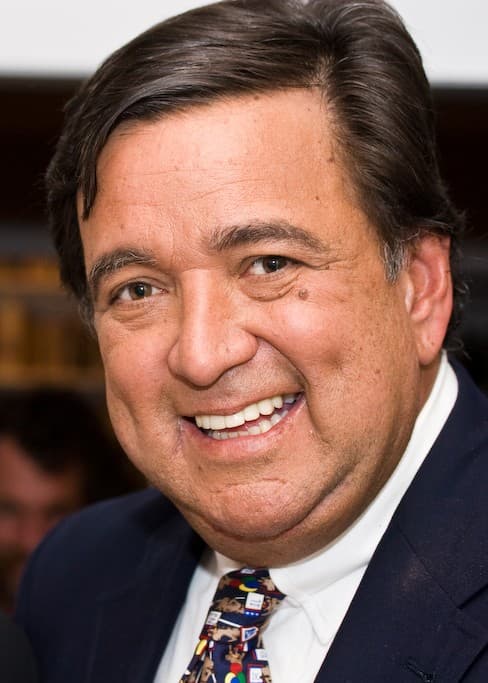
Bill Richardson
PERSON
Governor of New Mexico from 2003 to 2011
Brady
PERSON
Surname reference in Epstein documents
BR
Briscoe
PERSON
Surname reference in documents
BR
Bruton
PERSON
Surname or name fragment in documents
CG
C. Michael Gubbins
PERSON
Name reference in documents
Carson
PERSON
American talk show host and comedian (1925–2005)
CS
Chris Smith
PERSON
Person referenced in documents
CB
Christopher B.
PERSON
Name reference in documents
CM
CHRISTOPHER B. MESSINO
PERSON
Name reference in documents
CR
Christopher Richard
PERSON
Name reference in documents
CD
Cindy Delapena
PERSON
Name reference in documents
Clarence Thomas
PERSON
Associate Justice of the Supreme Court of the United States since 1991
CL
Clement
PERSON
Surname reference in Epstein-related documents
CM
Clement A. Messino
PERSON
Name reference in documents
CM
Clement Messina
PERSON
Name reference in documents

Cochran
PERSON
Surname reference in documents
DS
Daniel C. Shoemaker
PERSON
Name reference in documents
DS
Donald Southern
PERSON
Name reference in documents
Donald Trump
PERSON
President of the United States (2017–2021, 2025–present)
DH
Donna Hickstein
PERSON
Name reference in documents
DR
Douglas P. Roller
PERSON
Name reference in documents
EE
E.E. Edwards
PERSON
Name reference in documents
EC
Ed Cozzi
PERSON
Name reference in documents
EE
Edna Selan Epstein
PERSON
Name reference in documents
FO
Foley
PERSON
Ambiguous surname reference in Epstein documents
FM
Fred Maleki
PERSON
Name reference in documents
FU
Fuscone
PERSON
Name reference in documents
GG
Gerardo Gutierrez
PERSON
Name reference in documents

Giglio
PERSON
NER artifact - legal term or document reference misclassified as person
GR
Granata
PERSON • 2 mentions
Name reference in documents
GC
Gray Chrystall
PERSON
Name reference in documents
Harvey Weinstein
PERSON
American film producer and sex offender (born 1952)
HO
Homerding
PERSON
Name reference in documents
JH
J. Michael Homerding
PERSON
Name reference in documents

Jeffrey Epstein
PERSON
American sex offender and financier (1953–2019)

Jennifer Lopez
PERSON
American singer and actress (born 1969)
JH
Jerry Haas
PERSON
Name reference in documents
John McCain
PERSON
American politician, military officer, and presidential candidate (1936–2018)
JR
John Richard
PERSON
Name reference in documents
JG
Joseph Granata
PERSON
Name reference in documents
JL
Joseph R. Lopez
PERSON
Name reference in documents
KL
K. Timothy Larkin
PERSON
Name reference in documents
KA
Kathleen
PERSON
Ambiguous first name reference to multiple individuals in Epstein documents
LS
L. Felipe Sanchez
PERSON
Name reference in documents
LA
Larkin
PERSON
Surname reference in documents
Lawrence Krauss
PERSON
American particle physicist and cosmologist
LS
Leland Shalgos
PERSON
Name reference in documents
LA
Linda Amdur
PERSON
Name reference in documents
LB
Lisa Batts
PERSON
Name reference in documents
MP
M. Dawn Peco
PERSON
Name reference in documents
MA
Malcki
PERSON
Name reference in documents
MA
Maleki
PERSON
Surname or name fragment in documents
MA
Mannino
PERSON
Surname reference in documents
MM
Marc William Martin
PERSON
Name reference in documents
MF
Maria Farmer
PERSON
American visual artist
MA
Markling
PERSON
Name reference in documents

Marsh
PERSON
Ambiguous surname - appears in legal citations (Richardson v. Marsh) and various Epstein document contexts
MM
Mary Beth Maroulis
PERSON
Name reference in documents
MS
Matthew Schneider
PERSON
Person referenced in documents
ME
Messino
PERSON
Name reference in documents
Michael Jackson
PERSON
American singer, songwriter, record producer, and dancer (1958–2009)
MP
Michael Priess
PERSON
Name reference in documents
MO
Montano
PERSON
Surname reference in documents

Murray
PERSON
Ambiguous surname - refers to multiple Murrays including Murray J. McCabe and Murray Gell-Mann in Epstein documents
NJ
N. Pete Peco, Jr.
PERSON
Name reference in documents
NS
Nick Sula
PERSON
Name reference in documents
PT
Patrick Tobin
PERSON
Name reference in documents
PM
Paul Messino
PERSON
Name reference in documents
PS
Pete Peco, Sr
PERSON
Name reference in documents
PW
Phillip Webb
PERSON
Name reference in documents
RA
Ramirez
PERSON
Surname reference in Epstein-related documents
RF
Richard Friedman
PERSON
Name reference in documents
RL
Robert A. Loeb
PERSON
Name reference in documents
RG
Robert L. Gevirtz
PERSON
Name reference in documents

Rupert Murdoch
PERSON
Australian-American business magnate (born 1931)
SA
Saberhagen
PERSON
Name reference in documents
SG
Steven A. Greenberg
PERSON
Name reference in documents
TS
Terry Saberhagen
PERSON
Name reference in documents
TH
Thomas Hauck
PERSON
Name reference in documents
TO
Tobin
PERSON
Surname reference in documents
UN
Underwood
PERSON
Surname reference in documents
WJ
Walter Jones, Jr.
PERSON
Name reference in documents
YG
Yvette Gifford
PERSON
Name reference in documents
Beverly Bank
ORGANIZATION
Organization referenced in documents
Chesterfield Bank
ORGANIZATION
Organization referenced in documents
Delapena
ORGANIZATION • 2 mentions
Organization referenced in documents
Delapena Grand Jury
ORGANIZATION
Organization referenced in documents

Eastern Division
ORGANIZATION
Division of Fiji
Evergreen Plaza Bank
ORGANIZATION
Organization referenced in documents
First National Bank of Blue
ORGANIZATION
Organization referenced in documents
Gevirtz, Born & Kissel
ORGANIZATION
Organization referenced in documents
H. Kim Forbes
ORGANIZATION
Organization referenced in documents
Heritage Bank of Crestwood
ORGANIZATION
Organization referenced in documents
Interstate Bank of Oak Forest
ORGANIZATION
Organization referenced in documents
The District Court
ORGANIZATION
U.S. federal appeals court
the Seventh Circuit
ORGANIZATION
U.S. Court of Appeals for the Seventh Circuit
Thomridge State Bank
ORGANIZATION
Organization referenced in documents
Thorpe
ORGANIZATION
Organization referenced in documents
U.S. Attys.
ORGANIZATION
Organization referenced in documents
U.S. Government
ORGANIZATION
Organization referenced in documents

Works
ORGANIZATION
2016 song by Rihanna
Alesia
LOCATION
Location referenced in documents

Nashville
LOCATION
Capital and largest city of Tennessee, United States
Northfield
LOCATION
Location referenced in documents

United States
LOCATION
Country located primarily in North America
Statistics
Pages:16
Entities:107
Avg. OCR:0.9%
Sponsored