DOJ-COURT-049
DOJ-COURT-049 is a legal document from the Southern District of Florida, comprising Plaintiffs’ Memorandum of Law in opposition to motions to dismiss filed in multiple cases against Jeffrey Epstein.
The document pertains to cases 08-CV-80119, 08-CV-80232, 08-CV-80380, 08-CV-80381, 08- 80994, and 08- 80993 involving Jane Does 2-7 as plaintiffs and Jeffrey Epstein as the defendant. The plaintiffs are opposing motions to dismiss, arguing that their pleadings contain sufficient statements of their claims and that the facts sought by the defendant are more appropriately obtained through discovery. The document was entered on the FLSD Docket on October 31, 2008.
Key Highlights
- •The document is a legal memorandum opposing motions to dismiss in cases against Jeffrey Epstein.
- •The plaintiffs are identified as Jane Does 2-7.
- •The document was filed in the Southern District of Florida.
Frequently Asked Questions
Books for Further Reading
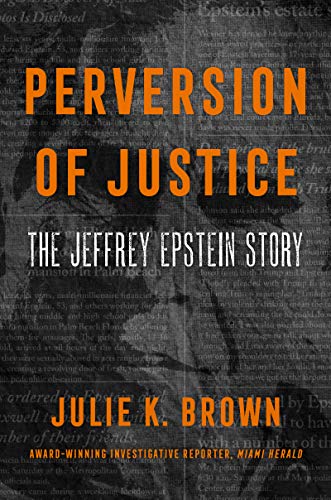
Perversion of Justice
Julie K. Brown
Investigative journalism that broke the case open

Filthy Rich
James Patterson
Bestselling account of Epstein's crimes
Glenn M. Anderson, Lyle Cook, Jack Goldberger, et al., Appellants, v. Frank M. Jordan, as Secretary of State of the State of California. U.S. Supreme ... of Record with Supporting Pleadings
Document Information
Bates Range
DOJ-COURT-049
Pages
11
Source
DOJ First Production
Original Filename
049.pdf
Document Content
Page 1 - DOJ-COURT-049_p1
UNITED STATES DISTRICT COURT SOUTHERN DISTRICT OF FLORIDA JANE DOE NO. 2, CASE NO.: 08-CV-80119-MARRA/JOHNSON Plaintiff, vs. JEFFREY EPSTEIN, Defendant. ____________________________________/ JANE DOE NO. 3, CASE NO.: 08-CV-80232-MARRA/JOHNSON Plaintiff, vs. JEFFREY EPSTEIN, Defendant. ____________________________________/ JANE DOE NO. 4, CASE NO.: 08-CV-80380-MARRA/JOHNSON Plaintiff, vs. JEFFREY EPSTEIN, Defendant. ____________________________________/ JANE DOE NO. 5, CASE NO.: 08-CV-80381-MARRA/JOHNSON Plaintiff, vs. JEFFREY EPSTEIN, Defendant. ____________________________________/ Case 9:08-cv-80119-KAM Document 49 Entered on FLSD Docket 10/31/2008
Page 2 - DOJ-COURT-049_p2
Page 1 of 11 JANE DOE NO. 6, CASE NO.: 08- 80994-CIV-MARRA/JOHNSON Plaintiff, vs. JEFFREY EPSTEIN, Defendant. ____________________________________/ JANE DOE NO. 7, CASE NO.: 08- 80993-CIV-MARRA/JOHNSON Plaintiff, vs. JEFFREY EPSTEIN, Defendant. ____________________________________/ PLAINTIFFS’ MEMORANDUM OF LAW IN OPPOSITION TO MOTIONS TO DISMISS Plaintiffs, Jane Does 2-7, by and through undersigned counsel, file this Memorandum of Law in Opposition to Motions to Dismiss, pursuant to S.D.Fla.L.R. 7.1(C), as follows: I. Introduction and Summary Defendant’s Motions to Dismiss and for More Definite Statement filed in each of the above- captioned cases pursuant to Fed.R.Civ.P. 12(b)(6) and 12(e) essentially concede that Plaintiffs have alleged the elements of the claims asserted in Counts I and III of each pleading, but contend that more factual allegations are necessary for these claims. The pleadings at issue contain a short and plain statement of the claims showing that the Plaintiffs are entitled to relief in accordance with Fed.R.Civ.P. 8(a)(2). The specific facts sought by Defendant may properly be the subject of discovery, but are not necessary for purposes of pleading. Accordingly, Defendant’s Motions are without merit and should be denied in their entirety. 2 Case 9:08-cv-80119-KAM Document 49 Entered on FLSD Docket 10/31/2008
Page 3 - DOJ-COURT-049_p3
Page 2 of 11 II. Facts Plead The pleadings in these six cases are all similarly structured and assert the same claims. In the section entitled “Factual Allegations” each describes the plan and scheme of Defendant Epstein to recruit underage girls to his Palm Beach mansion for “massages”. (Jane Doe No. 2 Amd. Compl. ¶¶ 10-11; Jane Doe No. 3 Amd. Comp. ¶ 10-11; Jane Doe No. 4 Amd. Compl. ¶11-12; Jane Doe No. 5 Amd. Compl. ¶ 10-11; Jane Doe No. 6 Amd. Compl. ¶11-12; Jane Doe No. 7 Amd. Compl. ¶ 11-12). The pleading then alleges that, consistent with this scheme, the Plaintiff was lured to Epstein’s Palm Beach mansion to give a massage for monetary compensation. (Jane Doe No. 2 Amd. Compl. ¶ 12; (Jane Doe No. 3 Amd. Compl. ¶ 12; Jane Doe No. 4 Amd. Compl. ¶ 13; Jane Doe No. 5 Amd. Compl. ¶ 12; Jane Doe No. 6 Amd. Compl. ¶ 13; Jane Doe No. 7 Amd. Compl. ¶ 13). The Plaintiff was directed up a flight of stairs to a room where Epstein instructed the Plaintiff to remove her clothes and give him a massage. Epstein then masturbated and sexually assaulted the Plaintiff during this massage. (Jane Doe No. 2 Amd. Compl. ¶12; Jane Doe No. 3 Amd. Compl. ¶12; Jane Doe No. 4 Amd. Compl. ¶13; Jane Doe No. 5 Amd. Compl. ¶12; Jane Doe No. 6 Amd. Compl. ¶13; Jane Doe No. 7 Amd. Compl. ¶13). Count I of the pleading in each case alleges a claim of sexual assault and battery. Count II alleges a claim for intentional infliction of emotional distress, which Defendant does not seek to dismiss in his Motions before the Court. Count III alleges a claim for coercion and enticement to sexual activity in violation of 18 U.S.C. §2422. Defendant’s Motions to Dismiss seek dismissal of Counts I and III for failure to state a claim under Fed.R.Civ.P. 12(b)(6), or alternatively move for a more definite statement under Fed.R.Civ.P. 12(e) on these Counts. As discussed below, Plaintiffs’ claims are sufficiently plead, and Defendant’s Motions should be denied in their entirety. 3 Case 9:08-cv-80119-KAM Document 49 Entered on FLSD Docket 10/31/2008
Sponsored
Page 4 - DOJ-COURT-049_p4
Page 3 of 11 III. Argument A. THE STANDARD UNDER FED.R.CIV.P. 12(b)(6) DOES NOT SUPPORT DISMISSAL The gravamen of Defendant’s Motion is that Plaintiffs’ have not pled sufficient facts in support of their claims in Counts I and III. According to Defendant, the pleadings in this case do not satisfy “the standard of pleading” established in Bell Atlantic Corp. v. Twombly, 127 S.Ct. 1955 (2007). In making this argument, Defendant would extend Twombly well beyond its intended scope. Twombly was an antitrust conspiracy case, in which the Court abrogated the longstanding pronouncement first made in Conly v. Gibson, 355 U.S. 41 (1957), that a complaint should not be dismissed under Fed.R.Civ.P. 12(b)(6) “unless it appears beyond doubt that the plaintiff can prove no set of facts in support of his claim that would entitle him to relief.” 127 S.Ct. at 1969. The Court noted that it did “not require heightened fact pleading of specifics, but only enough facts to state a claim to relief that is plausible on its face.” Id. at 1974 (emphasis supplied). The antitrust conspiracy claim before the Court was dismissed “[b]ecause the plaintiffs here have not nudged their claims across the line from conceivable to plausible. . . .” Id. Since Twombly, courts and commentators have grappled with the case’s meaning and scope. Courts within the Eleventh Circuit have held that Twombly did not alter the standard for dismissal under Rule 12(b)(6) in the typical case. See, e.g., CBT Flint Partners, LLC v. Goodmail Systems, Inc., 529 F.Supp. 2d 1376, 1379 (N.D. Ga. 2007); Coughlin v. Wal-Mart Stores East LP, 2008 WL 2704381 (M.D. Fla. 2008); Capaz v. Whitaker, Weinstraub & Grizzard, M.D.S, P.A., 2007 WL 1655473 (M.D. Fla. 2007). In CBT Flint Partners, the Court warned against reading the decision in Trombly too broadly: 4 Case 9:08-cv-80119-KAM Document 49 Entered on FLSD Docket 10/31/2008
Page 5 - DOJ-COURT-049_p5
Page 4 of 11 In my view, Trombly did not radically alter the elementary rules of civil procedure that have governed litigation in the federal courts for the past seventy years. The Court’s forced retirement of Conley v. Gibson’s “no set of facts” language does not change the fundamental command of Rule 8 as to what a valid complaint must look like. Indeed, the Court made clear that it was not imposing a heightened pleading standard. As a general matter, I am loath to assume that the Supreme Court circumvented the normal channels for amending the Federal Rules. The Court’s “new standard” was merely a specific way to articulate a solution to what it perceived to be a specific pleading problem, in a specific area of law that inflicted a high cost upon antitrust defendants. It was not a broad based new license for federal courts to ramp up pleading requirements. 529 F.Supp. 2d at 1379 (citations omitted). The standard for pleading in the federal courts remains controlled by Fed.R.Civ.P. 8(a)(2), which “only requires a short and plain statement of the claim showing that the pleader is entitled to relief in order to give the defendant fair notice of what the claim is and the grounds upon which it rests.” Capaz, 2007 WL 1655473 at *1. While the scope of Twombly may not be entirely clear, it plainly cannot be read to turn pleadings into a discovery device, as Defendant advocates here in seeking dismissal for failure to plead detailed factual allegations. In Iqbal v. Hasty, 490 F.3d 143 (2d Cir. 2007), the Court reviewed and analyzed in depth Twombly’s “conflicting signals”, and ultimately held that the Supreme Court did not impose “a universal standard of heightened fact pleading,” but rather a “flexible ‘plausibility standard’ ”. Id. at 157-158. This standard “obliges a pleader to amplify a claim with some factual allegations in those contexts where such amplification is needed to render the claim plausible.” Id. (emphasis original). See also Sales v. All Florida Dialysis Services, Inc., 2007 WL 3231723 *2 n.2 (S.D. Fla. 2007) (noting that Twombly was inapplicable because the defendants did not raise the type of pleading deficiencies confronted in Twombly - lack of specific time, place or person involved in the alleged antitrust conspiracies). 5 Case 9:08-cv-80119-KAM Document 49 Entered on FLSD Docket 10/31/2008
Page 6 - DOJ-COURT-049_p6
Page 5 of 11 The instant allegations and claims cannot be compared to the speculative antitrust conspiracy alleged in Twombly. See 127 S.Ct. at 1965. There should be no doubt that the Plaintiffs’ claims are plausible. Accordingly, Twombley is not authority for dismissal of the pleadings in these cases. II. THE ELEMENTS OF COUNT I FOR SEXUAL ASSAULT AND BATTERY ARE SUFFICIENTLY ALLEGED In each case, the claim in Count I is labeled “Sexual Assault and Battery.” Assault and battery are closely related common law intentional torts that are often alleged together. See Herzfeld v. Herzfeld, 781 So.2d 1070 (Fla.2001) (noting that plaintiff alleged intentional tort of “assault and battery” based on allegations of sexual abuse); Sullivan v. Atlantic Federal Savings & Loan, 454 So.2d 52 (Fla. 4th DCA 1984) (holding that a cause of action for assault and battery cannot be based entirely on an omission). A common law assault occurs when a person “acts intending to cause a harmful or offensive contact with the person of the other, or an imminent apprehension of such contact, and the other is thereby put in such imminent apprehension”. Restatement (Second) of Torts, Assault §21 (1965). “A battery consists of the infliction of a harmful or offensive contact upon another with the intent to cause such contact or the apprehension that such contact is imminent”. See Paul v. Holbrook, 696 So.2d 1371 (Fla. 5th DCA 1997). See also Scelta v. Delicatessen Support Services, Inc., 57 F.Supp. 2d 1327, 1358-59 (M.D. Fla. 1999) (allegation that defendant attempted to put his hands down plaintiff’s dress, and that there was an actual and intentional touching, sufficient to state a claim for battery); Hogan v. Tavzel, 660 So.2d 350 (Fla. 5th DCA 1995) (tortfeasor may be liable for battery for infecting another with a sexually transmitted disease). Defendant does not contend that the Plaintiffs failed to allege these elements of the common law torts of assault and battery in Count I of their pleadings. Rather, Defendant argues that the pleadings fail to allege the specific facts of “what was said or done to Plaintiff”. Defendant thus 6 Case 9:08-cv-80119-KAM Document 49 Entered on FLSD Docket 10/31/2008
Sponsored
Page 7 - DOJ-COURT-049_p7
Page 6 of 11 misconstrues Twombly. All of the Plaintiffs allege essentially the same plan and scheme of Defendant to lure underage girls to his Palm Beach mansion for “massages”, leading to Defendant engaging in sexual activities with the Plaintiffs. The specific facts concerning what was said and done prior to and during the course of these “massages” is the proper subject of discovery, not the pleadings. Plaintiffs satisfy the pleading requirements of Fed.R.Civ.P. 8(a)(2), and Twombly does not require more specific fact pleading in these cases. III. PLAINTIFFS SUFFICIENTLY ALLEGE A CLAIM IN COUNT III FOR VIOLATION OF 18 U.S.C. §2422 The pleadings in Count III closely track the language of 18 U.S.C. §2422, and thus set forth the elements of a violation of this Statute, as follows: (i) Allegation in Complaint. Epstein used a facility or means of interstate commerce to knowingly persuade, induce or entice Jane Doe, when she was under the age of 18 years, to engage in prostitution or sexual activity for which any person can be charged with a criminal offense; and (ii) 18 U.S.C. §2422(b). Whoever, using the mail or any facility or means of interstate or foreign commerce, . . . knowingly persuades, induces, entices, or coerces any individual who has not attained the age of 18 years, to engage in prostitution or any sexual activity for which any person can be charged with a criminal offense, or attempts to do so. . . 18 U.S.C. §2455(b); Jane Doe 2 Amd. Compl. ¶ 29; Jane Doe 3 Amd. Compl. ¶ 29; Jane Doe 4 Amd. Compl. ¶ 30; Jane Doe 5 Amd. Compl. ¶ 29; Jane Doe 6 Amd. Compl. ¶ 28; Jane Doe 7 Amd. Compl. ¶ 29. Defendant does not appear to contend that Plaintiffs have failed to allege the elements of a violation of 18 U.S.C. §2422 in Count III, but instead argues that further factual allegations are necessary. As with Count I, such specific facts are the proper subject of discovery, and need not be set forth in the pleadings under Rule 8(a)(2). There is no issue of plausibility concerning the Plaintiffs’ claims under 18 U.S.C. §2422. Indeed, the Plaintiffs in these cases were notified by the U.S. Attorney’s office that the Defendant has agreed that each Plaintiff has the same right to proceed on her federal statutory claim “as she would have had if Mr. Epstein had been tried federally and 7 Case 9:08-cv-80119-KAM Document 49 Entered on FLSD Docket 10/31/2008
Page 8 - DOJ-COURT-049_p8
Page 7 of 11 convicted of an enumerated offense.” (See July 10, 2008 letter from A. Marie Villafaña, Assistant U.S. Attorney, attached hereto as Exhibit “A”). Defendant also attempts to make much of a typographical error that appears in Count III in the “Wherefore” clause demanding a judgment for damages. There, the pleading inadvertently makes reference to 28 U.S.C. §2255(a) instead of 18 U.S.C. §2255(a). As is clear from the Defendants’ Motions, Defendant is well aware that this is a typographical error and that the intent is to reference 18 U.S.C. §2255. In any event, this reference concerns the Plaintiffs’ damages, not the elements of Plaintiff’s claim set forth in the paragraphs above it.1 Count III nonetheless satisfies Fed.R.Civ.P. 8(a)(3), as the “Wherefore” clause states that Plaintiff seeks actual and compensatory damages, costs of suit, attorneys’ fees and such other and further relief as this Court deems just and proper. If deemed necessary, the typographical error in the “Wherefore” clause of Count III can be corrected by interlineation. It does not warrant a dismissal and repleading. IV. THERE IS NO BASIS FOR DEFENDANT’S MOTION FOR MORE DEFINITE STATEMENT A motion for more definite statement under Fed.R.Civ.P. 12(e) may only be granted “if a pleading is so vague or ambiguous that a party cannot reasonably be required to frame a responsive pleading.” Hernandez v. Two Brothers Farm, LLC, 2008 WL 4405409 *1 (S.D. Fla. 2008) (quoting Betancourt v. Marine Cargo Mgmt., 930 F. Supp. 606, 608 (S.D. Fla. 1996)). Federal courts disfavor motions for more definite statement. Home Mgmt. Solutions, Inc. v. Prescient, Inc., 2007 WL 2412834 (S.D. Fla. 2007). Most importantly, “Defendants may not use a motion for more definite statement as a means of discovery regarding those claims.” Hernandez, 2008 WL 4405409 at *1. Yet that is exactly how Defendant Epstein uses his Motions for More Definite Statement. He 1 As a result, this reference in error to 28 U.S.C. 2255(a) is not set forth in a paragraph to which Defendant would be expected to frame an answer. 8 Case 9:08-cv-80119-KAM Document 49 Entered on FLSD Docket 10/31/2008
Page 9 - DOJ-COURT-049_p9
Page 8 of 11 seeks by these Motions specific facts which are the proper subject of discovery, not pleadings. Accordingly, Defendants Motions for More Definite Statement should be denied. V. Conclusion For the foregoing reasons, Plaintiffs respectfully request that Defendant’s Motion to Dismiss be denied in their entirety. Dated: October 31, 2008. Respectfully submitted, By: s/ Jeffrey M. Herman Jeffrey M. Herman (FL Bar No. 521647) [email protected] Stuart S. Mermelstein (FL Bar No. 947245) [email protected] Adam D. Horowitz (FL Bar No. 376980) [email protected] HERMAN & MERMELSTEIN, P.A. Attorneys for Plaintiffs Jane Doe 18205 Biscayne Blvd., Suite 2218 Miami, Florida 33160 Tel: 305-931-2200 Fax: 305-931-0877 9 Case 9:08-cv-80119-KAM Document 49 Entered on FLSD Docket 10/31/2008
Sponsored
Page 10 - DOJ-COURT-049_p10
Page 9 of 11 CERTIFICATE OF SERVICE I hereby certify that on October 31, 2008, I electronically filed the foregoing document with the Clerk of the Court using CM/ECF. I also certify that the foregoing document is being served this day to all parties on the attached Service List in the manner specified, either via transmission of Notices of Electronic Filing generated by CM/ECF or in some other authorized manner for those parties who are not authorized to receive electronically Notices of Electronic Filing. s/ Jeffrey M. Herman 10 Case 9:08-cv-80119-KAM Document 49 Entered on FLSD Docket 10/31/2008
Page 11 - DOJ-COURT-049_p11
Page 10 of 11 SERVICE LIST DOE vs. JEFFREY EPSTEIN United States District Court, Southern District of Florida Jack Alan Goldberger, Esq. [email protected] Michael R. Tein, Esq. [email protected] Robert D. Critton, Esq. [email protected] Michael Pike, Esq. [email protected] s/ Jeffrey M. Herman _ 11 Case 9:08-cv-80119-KAM Document 49 Entered on FLSD Docket 10/31/2008
Entities Mentioned
A. Marie Villafana
PERSON
Former Assistant U.S. Attorney, lead federal prosecutor in the 2008 Epstein case
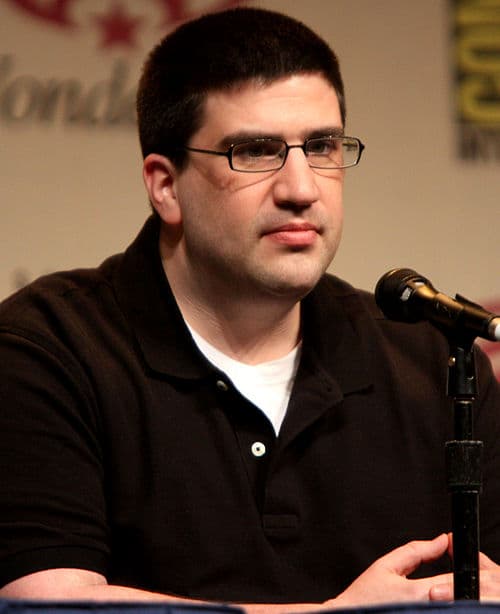
Adam D. Horowitz
PERSON
American attorney specializing in sexual abuse cases, represented multiple Epstein victims
AI
Ahsan Iqbal
PERSON
Person referenced in documents
Betancourt
PERSON
Surname reference in documents
CA
Capaz
PERSON • 2 mentions
Surname or name fragment in documents
CO
Conley
PERSON
Surname reference in Epstein-related documents
CO
Coughlin
PERSON
Surname or name fragment in documents
GI
Gibson
PERSON
American guitar manufacturer
HA
Hasty
PERSON
Name reference in documents
Hernandez
PERSON
Ambiguous surname - refers to multiple people in Epstein documents
HE
Herzfeld
PERSON
Name reference in documents
Hogan
PERSON
Ambiguous surname appearing in legal citations within Epstein court documents
Holbrook
PERSON
Surname reference in documents
JG
Jack Goldberger
PERSON • 2 mentions
American criminal defense attorney who represented Jeffrey Epstein, partner at Goldberger Weiss P.A. in West Palm Beach, Florida
JD
Jane Doe
PERSON
Pseudonym for anonymous victims/witnesses in Epstein legal proceedings
Jeffrey Epstein
PERSON • 5 mentions
American sex offender and financier (1953–2019)

Jeffrey Marc Herman
PERSON
Attorney representing victims in the Jeffrey Epstein case
MP
Michael Pike
PERSON
British diplomat
MT
Michael R. Tein
PERSON
Attorney and legal professional, referenced in Epstein case
RC
Robert D. Critton
PERSON
Individual referenced in Epstein legal documents
SC
Scelta
PERSON
Surname or name fragment in documents
SM
Stuart S. Mermelstein
PERSON
Attorney involved in Jeffrey Epstein legal matters.
SU
Sullivan
PERSON
Surname reference in Epstein documents
TA
Tavzel
PERSON
Surname or name fragment in documents
TW
Twombly
PERSON
Ambiguous - references to Cy Twombly artwork and legal citation Bell Atlantic v. Twombly in Epstein documents
Atlantic Federal Savings & Loan
ORGANIZATION
Organization referenced in documents
CBT Flint Partners, LLC
ORGANIZATION
Organization referenced in documents
Delicatessen Support Services, Inc.
ORGANIZATION
Organization referenced in documents
Sales v. All Florida Dialysis Services, Inc.
ORGANIZATION
Organization referenced in documents
Supreme Court
ORGANIZATION
Highest court of jurisdiction in the US
the Eleventh Circuit
ORGANIZATION
U.S. Court of Appeals for the Eleventh Circuit
Two Brothers Farm, LLC
ORGANIZATION
Organization referenced in documents
Twombley
ORGANIZATION
Organization referenced in documents
United States District Court
ORGANIZATION
U.S. federal trial court
Wal-Mart Stores East LP
ORGANIZATION
Organization referenced in documents
Statistics
Pages:11
Entities:35
Sponsored