HOUSE_OVERSIGHT_012718 - HOUSE_OVERSIGHT_012721
HOUSE_OVERSIGHT_012718 is a government record from the House Oversight Committee, consisting of 4 pages.
The document appears to be related to a discussion or testimony concerning regulatory burdens and their impact on the economy. It references the Clinton and Obama administrations, comparing the number of major regulations enacted per year. The document also mentions efforts to strengthen the Unfunded Mandates Relief Act to require federal regulators to evaluate the costs and benefits of rules.
Key Highlights
- •The document compares the regulatory output of the Clinton and Obama administrations.
- •It discusses the need to reduce the regulatory burden on job creators.
- •The document mentions strengthening the Unfunded Mandates Relief Act.
Frequently Asked Questions


Document Information
Bates Range
HOUSE_OVERSIGHT_012718 - HOUSE_OVERSIGHT_012721
Pages
4
Source
House Oversight Committee
Date
June 17, 2011
Original Filename
DE_85-1_SupplementalAuthority-3633.pdf
File Size
877.42 KB
Document Content
Page 1 - HOUSE_OVERSIGHT_012718
Case 9:08-cv-80736-KAM Document 85-1 Entered on FLSD Docket 06/17/2011 Page 1 of 4 EXHIBIT A HOUSE_OVERSIGHT_012718
Page 2 - HOUSE_OVERSIGHT_012719
June 8, 2011 specifically, how do we get businesses to do more in terms of hiring, spend less on redtape, less on bureaucracy, and reduce the regulatory burden in smart ways? The current administration has said some of the right things but actually moved in the wrong direction. We have seen a sharp increase in the last couple of years in what are deemed to be major economically significant rules. That is defined as regulations that im- pose a cost on the economy of $100 mil- lion or more. According to the administration’s Of- fice of Management and Budget, the current administration has been regu- lating at a pace of 84 major rules per year. By way of comparison, that is about a 50-percent increase over the regulatory output during the Clinton administration, which had about 56 rules per year, and an increase from the Bush administration as well. So we have seen more regulations and more significant regulations. I was encouraged to hear President Obama’s words when he talked about the Executive order in January, which is entitled ‘‘Improving Regulation and Regulatory Review.’”’ But now we need to see action. We need to see it from the administration, from individual agencies to provide real regulatory re- lief for job creators to be able to reduce this drag on the economy. One commonsense step we can take is to strengthen what is called the Un- funded Mandates Relief Act. It was passed in 1995. It was bipartisan. I was a cosponsor in the House of Represent- atives. It is an effort to require Federal regulators to evaluate the cost of rules, to look at the benefits and the costs, and to look at less costly alternatives on rules. The two amendments I would like to offer over the next few days as we con- sider the legislation before us would improve this Unfunded Mandates Re- form Act, and it would reform it in ways that are entirely consistent with the principle President Obama has laid out and committed to in his Executive order on regulatory review. The first amendment would require agencies specifically to assess poten- tial effects of new regulations on job creation—so focusing in on jobs—and to consider market-based and non- governmental alternatives to regula- tion. This would broaden the scope of the Unfunded Mandates Relief Act to require cost-benefit analysis of rules that impose direct or indirect costs of $100 million a year or more. So, again, this is for major rules of $100 million or more. It would also require agencies to adopt the least costly or least burden- some option that achieves whatever policy goals have been set out by Con- gress. It seems to me it is a common- sense amendment. I hope we will get bipartisan support for it. The second amendment would extend the Unfunded Mandates Relief Act to so-called independent agencies which today are actually exempt from the cost-benefit rules that govern all other agencies. In 1995, we had this debate and determined at that time we would not extend the legislation to inde- pendent agencies. In the interim, inde- pendent agencies have been providing more and more rules, have put out more and more regulations, and are having a bigger and bigger impact. An example of an independent agency would be the SEC, the Securities and Exchange Commission, or the CFTC, which is the Commodity Futures Trad- ing Commission. These are agencies that, although independent in the exec- utive branch, are very much involved in putting out major rules and regula- tions. It is sometimes called the ‘‘head- less fourth branch’’ of government be- cause their rules are not reviewed for cost-benefit analysis, even by the OMB, the Office of Management and Budget, in its Office of Information and Regu- latory Affairs, so-called OIRA. We have looked at some GAO data and put together various studies, and it appears to us that there are about 200 regulations that were issued between 1996 until today that would be deemed to have an impact of $100 million or more on the economy but were auto- matically excluded from the Unfunded Mandates Relief Act because they were deemed to be from independent agen- cies. So it is basically closing a loophole and closing this independent agency loophole, which I believe is a sensible reform. It has been endorsed by many people, including, interestingly, the current OIRA Administrator and the President’s regulatory czar, Cass Sunstein, who, in a 2002 Law Review ar- ticle, talked about the fact that this is an area where UMRA ought to be ex- tended because, again, there were so many independent agencies that were putting out regulations impacting job creation in this country. No regulation, whatever its source, should be imposed on American em- ployers or on State and local govern- ments without serious consideration of the costs, the benefits, and the avail- ability of a least-burdensome alter- native. Both these amendments would move us further toward that sensible goal, and I hope the leadership will allow these amendments to be offered. I think they fit well with the under- lying legislation. If they are offered, I certainly urge my colleagues on both sides of the aisle to support them. I yield the floor. I suggest the ab- sence of a quorum. The PRESIDING OFFICER. The clerk will call. The bill clerk proceeded to call the roll. Mr. DURBIN. Mr. President, I ask unanimous consent that the order for the quorum call be rescinded. The PRESIDING OFFICER. Without objection, it is so ordered. Ee MORNING BUSINESS Mr. DURBIN. Mr. President, I ask unanimous consent that Senators be Gase 9:08-cv-80736-KAM Document 85-1 Entered on FLSD Docket 06/17/2011 Page 2 of 4 : CONGRESSIONAL RECORD — SENATE S3607 allowed to speak as in morning busi- ness for up to 10 minutes each. The PRESIDING OFFICER. Without objection, it is so ordered. EE TRIBUTE TO LOUIS E. GIVAN Mr. McCONNELL. Mr. President, I rise today to recognize a distinguished Kentuckian who has worked tirelessly on behalf of our Nation’s soldiers, sail- ors and marines for more than 40 years. Louis E. Givan, a lifelong resident of my hometown of Louisville, has played a vital role in protecting the men and women of our Armed Forces and our country’s defense. Formerly a sailor himself in the U.S. Navy, he has served for the last 11 years as the general manager of Raytheon Missile Systems operations in Louisville. I was saddened to hear of his retirement from that position this coming July 5. He will certainly be missed. Mr. Givan—or, to those who know him, Ed—was a 1966 graduate of St. Xa- vier High School in Louisville and in 1970 earned his bachelor of science de- gree in mechanical engineering from the J.B. Speed School of Engineering at the University of Louisville. In 1968, he began working at the Naval Ord- nance Station in Louisville, and he stayed at that post until 1996, in var- ious engineering and supervisory posi- tions. In 1996 the Naval Ordnance Station transitioned to private ownership, and Ed's leadership was crucial in making that transition a successful one. The facility eventually became part of Raytheon Missile Systems, and Ed was appointed general manager in 2000. As general manager, Ed has led Raytheon Missile Systems in Louisville to great success, success for both the company and for the local community. They de- sign, develop, and produce vital weap- ons systems for our armed forces, ena- bling America to have the most formi- dable military force in the world. Weapons produced at the Louisville fa- cility are used by our forces in all parts of the globe, including in Iraq. Kentucky is lucky to have benefitted from Ed’s dedication, commitment to excellence, and leadership for so many years. I am sure his wife Velma; his sons Eddie, Tony, and Chris; and his grandchildren Benjamin, Nathan, Isaac, Macy and Natalie are all very proud of what Ed has accomplished. I wish him the very best in retirement, and I am sure my colleagues join me in saying that this U.S. Senate thanks Mr. Louis E. ‘‘Ed’’ Givan for his faith- ful service. CRIME VICTIMS’ RIGHTS ACT Mr. KYL. Mr. President, I ask unani- mous consent that the following letter be printed in the RECORD. There being no objection, the mate- rial was ordered to be printed in the RECORD, as follows: HOUSE_OVERSIGHT_012719
Page 3 - HOUSE_OVERSIGHT_012720
Case 9:08-cv-80736-KAM Document 85-1 Entered on FLSD Docket 06/17/2011 Page 3 of 4 S3608 U.S. SENATE, Washington, DC, June 6, 2011. Hon. ERIC H. HOLDER, Jr., Attorney General; U.S. Department of Justice, Washington, DC. DEAR ATTORNEY GENERAL HOLDER: I am writing about the Justice Department’s im- plementation of the Crime Victims’ Rights Act--an act that I co-sponsored in 2004. These questions relate to an Office of Legal Counsel (“OLC’’?) Opinion made public on May 20, 2011 and more broadly to concerns I have heard from crime victims’ advocates that the Department has been thwarting ef- fective implementation of the Act by failing to extend the Act to the investigative phases of criminal cases and by preventing effective appellate enforcement of victims’ rights. I am writing to ask you to answer these ques- tions and explain the Department’s actions in these areas. GOVERNMENT PROTECTION OF VICTIMS’ RIGHTS DURING INVESTIGATION OF A CRIME When Congress enacted the CVRA, it in- tended to protect crime victims throughout the criminal justice process—from the inves- tigative phases to the final conclusion of a case. Congress could not have been clearer in its direction that using ‘“‘best efforts’’ to en- force the CVRA was an obligation of “Colfficers and employees of the Department of Justice and other departments and agen- cies of the United States engaged in the de- tection, investigation, or prosecution of crime . .? 18 U.S.C. §8771(c)(1) (emphasis added). Congress also permitted crime victims to as- sert their rights either in the court in which formal charges had already been filed “or, if no prosecution is underway, in the district court in the district in which the crime oc- curred.” 18 U.S.C. §38771(d)(3) (emphasis added). Despite Congress’ clear intention to extend rights to crime victims throughout the proc- ess, the Justice Department is reading the CVRA much more narrowly. In the recent OLC opinion, for example, the Department takes the position that ‘“‘the CVRA is best read as providing that the rights identified in section 377l(a) are guaranteed from the time that criminal proceedings are initiated (by complaint, information, or indictment) and cease to be available if all charges are dismissed either voluntarily or on the merits (or if the Government declines to bring for- mal charges after the filing of a complaint).” The Availability of Crime Victims’ Rights Under the Crime Victims’ Rights Act of 2004, Memorandum from John E. Bies (Dec. 17, 2010, publicly released May 20, 2011) (herein- after “‘OLC Opinion’’). Indeed, in that same opinion, I am surprised to see the Depart- ment citing a snippet from my floor remarks during the passage of the CVRA for the prop- osition that crime victims can confer with prosecutors only after the formal filing of charges. See id. at 9 (citing 150 Cong. Rec. $4260, S4268 (Apr. 22, 2004) (statement of Sen. Kyl). I did want to express my surprise that your prosecutors are so clearly quoting my re- marks out of context. Here is the full pas- sage of my remarks, which were part of a colloquy with my co-sponsor on the CVRA, Senator Feinstein: Senator Feinstein: Section .. . (a)(5) pro- vides a right to confer with the attorney for the Government in the case. This right is in- tended to be expansive. For example, the vic- tim has the right to confer with the Govern- ment concerning any critical stage or dis- position of the case. The right, however, is not limited to these examples. I ask the Senator if he concurs in this intent. Senator Kyl: Yes. The intent of this sec- tion is just as the Senator says. This right to confer does not give the crime victim any CONGRESSIONAL RECORD — SENATE right to direct the prosecution. Prosecutors should consider it part of their profession to be available to consult with crime victims about concerns the victims may have which are pertinent to the case, case proceedings or dispositions. Under this provision, victims are able to confer with the Government's attorney about proceedings after charging. 150 Cong. Rec. S4260, S4268 (Apr. 22, 2004) (statements of Sens. Feinstein & Kyl) (em- phases added). Read in context, it is obvious that the main point of my remarks was that a victim’s right to confer was ‘‘intended to be expansive.”’ Senator Feinstein and I then gave various examples of situations in which victims could confer with prosecutors, with the note that the right to confer was ‘‘not limited to these examples.’ It is therefore troubling to me that in this opinion the Jus- tice Department is quoting only a limited portion of my remarks and wrenching them out of context to suggest that I think that crime victims do not have any right to con- fer (or to be treated with fairness) until after charging. In giving an example that the victims would have such rights after charging, I was not suggesting that they had no such right earlier in the process. Elsewhere in my re- marks I made clear that crime victims had rights under the CVRA even before an indict- ment is filed. For example, in the passage quoted above, I made clear that crime vic- tims had a right to consult about both ‘‘the case’’ and ‘‘case proceedings’’—i.e., both about how the case was being handled before being filed in court and then later how the case was being handled in court “pro- ceedings.”’ As another example, Senator Feinstein and I explained that we had draft- ed the CVRA to extend a right to victims to attend only ‘‘public” proceedings, because otherwise the rights would extend to grand jury proceedings. See, e.g., 150 Cong. Rec. 54260, S4268 (Apr. 22, 2004) (statements of Sens. Feinstein & Kyl). Of course, no such limitation would have been necessary under the CVRA if CVRA rights attach (as the De- partment seems to think) only after the fil- ing of a grand jury indictment. Courts have already rejected the Justice Department’s position that the CVRA ap- plies only after an indictment is filed. For example, in In re Dean, 527 F.3d 391 (5th Cir. 2008), the Department took the position that crime victims had no right to confer with prosecutors until after the Department had reached and signed a plea agreement with a corporation (BP Products North America) whose illegal actions had resulted in the deaths of fifteen workers in an oil refinery explosion. Of course, this position meant that the victims could have no role in shap- ing any plea deal that the Department reached. In rejecting the Department’s posi- tion, the Fifth Circuit held that “the govern- ment should have fashioned a reasonable way to inform the victims of the likelihood of criminal charges and to ascertain the vic- tims’ views on the possible details of a plea bargain.”’ Id. at 394. In spite of this binding decision from the Fifth Circuit, crime victims’ advocates have reported to me that the Justice Department is still proceeding in the Fifth Circuit and elsewhere on the assumption that it has no obligations to treat victims fairly or to con- fer with them until after charges are for- mally filed. Given the Fifth Circuit’s Dean decision, this position appears to place the Department in violation of a binding court ruling that extends rights to thousands of crime victims in Louisiana, Mississippi, and Texas. And more generally, the Depart- ment’s position simply has no grounding in the clear language of the CVRA. My first question: What is the Justice De- partment doing to extend to victims their June 8, 2011 right to fair treatment and their right to confer with prosecutors when the Justice De- partment is negotiating pre-indictment plea agreements and non-prosecution agreements with defense attorneys, including negotia- tions within the Fifth Circuit? CRIME VICTIMS’ RIGHT TO APPELLATE PROTECTION Protection of crime victims’ rights in ap- pellate courts is an important part of the CVRA. As you know, when Congress passed the CVRA, the federal courts of appeals had recognized that crime victims could take or- dinary appeals to protect their rights. See, e.g., Doe v. United States, 666 F.2d 43, 46 (4th Cir. 1981) (rape victim allowed to appeal dis- trict court’s adverse ‘“‘rape shield statute” ruling); United States v. Kones, 77 F.3d 66 (8rd Cir. 1996) (victim allowed to appeal adverse restitution decision). Congress sought to leave these protections in place, while ex- panding them to ensure that crime victims could obtain quick vindication of their rights in appellate courts by providing—in §3771(d)(3)—that ‘“‘{i]f the district court de- nies the relief sought, the [victim] may peti- tion the court of appeals for a writ of man- damus.”” 18 U.S.C. §8771(d)(3). Ordinarily, whether mandamus relief should issue is dis- cretionary. The plain language of the CVRA, however, specifically and clearly overruled such discretionary mandamus standards by directing that ‘‘[t]he court of appeals shall take up and decide such application forthwith .... 18 U.S.C. §3771(d)(3) (emphasis added). As I explained when the Senate considered the CVRA: {[W]hile mandamus is generally discre- tionary, this provision [18 U.S.C. §3771(d)(3)] means that courts must review these cases. Appellate review of denials of victims’ rights is just as important as the initial assertion of a victim’s right. This provision ensures re- view and encourages courts to broadly defend the victims’ rights. 150 Conc. REc. $4270 (Apr. 22, 2004) (state- ment of Sen. Kyl) (emphases added). Simi- larly, the CVRA’s co-sponsor with me, Sen- ator Feinstein, stated that the Act would create “‘a new use of a very old procedure, the writ of mandamus. This provision will establish a procedure where a crime victim can, in essence, immediately appeal a denial of their rights by a trial court to the court of appeals.”’ 150 Conc. REc. $4262 (statement of Sen. Feinstein) (emphases added): see also id. (statement of Sen. Kyl) (crime victims must ‘“‘be able to have ... the appellate courts take the appeal and order relief). In short, the legislative history shows that §3771(d)(3) was intended to allow crime vic- tims to take accelerated appeals from dis- trict court decisions denying their rights and have their appeals reviewed under ordinary standards of appellate review. In spite of that unequivocal legislative his- tory, the Justice Department has in past cases asserted a contrary position. In In re Antrobus, 519 F.3d 1123 (10th Cir. 2008), Ken and Sue Antrobus sought to obtain appellate review of a ruling by a trial court that they could not deliver a victim impact statement at the sentencing of the man who sold the murder weapon used to kill their daughter. The Tenth Circuit ruled against them on the basis that the Antrobuses were not entitled to regular appellate review, but only discre- tionary mandamus review. See id. at 1124-25. The Tenth Circuit did not consider the legis- lative history in reaching this conclusion, leading the Antrobuses to file petitions for rehearing and rehearing en banc—petitions that recounted this legislative history. In re- sponse, the Justice Department asked the Tenth Circuit to deny the victims’ petitions. Remarkably, the Justice Department told the Tenth Circuit that it could ignore the HOUSE_OVERSIGHT_012720
Sponsored
Page 4 - HOUSE_OVERSIGHT_012721
Case 9:08-cv-80736-KAM Document 85-1 CONGRESSIONAL RECORD — SENATE June 8, 2011 legislative history because the CVRA ‘is un- ambiguous.’’ Response of the United States, In re Antrobus, No. 08-4002, at 12 n.7 (10th Cir. Feb. 12, 2008). At the time that the Justice Department filed this brief, no Court of Appeals agreed with the Tenth Circuit. At the time, three other Circuits had all issued unanimous rul- ings that crime victims were entitled to reg- ular appellate review. See In re W.R. Huff Asset Mgmt. Co., 409 F.3d 555, 562 (2d Cir. 2005); Kenna v. US. Dist. Ct. for the Cent. Dist. of Ca., 435 F.3d 1011, 1017 (9th Cir. 2006); In re Walsh, 229 Fed.Appx. 58, at 60 (8rd Cir. 2007). My next question for you is, given that the Justice Department has an obligation to use its ‘‘best efforts,’’ 18 U.S.C. §38771(c)(1), to af- ford crime victims their rights, how could the Department argue in Antrobus (and later cases) that the CVRA ‘‘unambiguously”’ de- nied crime victims regular appellate protec- tions of their rights when three circuits had reached the opposite conclusion? GOVERNMENT'S RIGHT TO ASSERT ERROR DENIAL OF VICTIMS’ RIGHTS To further bolster protection of crime vic- tims’ rights, Congress also included an addi- tional provision in the CVRA—$§3771(d)(4)— allowing the Justice Department to obtain review of crime victims’ rights issues in ap- peals filed by defendants: ‘‘In any appeal in a criminal case, the Government may assert as error the district court’s denial of any crime victim’s right in the proceeding to which the appeal relates.’ 18 U.S.C. §3771(d)(4). The intent underlying this provi- sion was to supplement the crime victims’ appeal provision found in §3771(d)(3) by per- mitting the Department to also help develop a body of case law expanding crime victims’ rights in the many defense appeals that are filed. It was not intended to in any way nar- row crime victims’ rights to seek relief under §3771(d)(3). Nor was it intended to bar crime victims from asserting other remedies. For instance, it was not intended to block crime victims from taking an ordinary ap- peal from an adverse decision affecting their rights (such as a decision denying restitu- tion) under 28 U.S.C. §1291. Crime victims had been allowed to take such appeals in var- ious circuits even before the passage of the CVRA. See, e.g., United States v. Kones, 77 F.3d 66 (8rd Cir. 1996) (crime victim allowed to appeal restitution ruling); United States v. Perry, 360 F.8d 519 (6th Cir. 2004) (crime vic- tims allowed to appeal restitution lien issue); Doe v. United States, 666 F.2d 43, 46 (4th Cir. 1981) (crime victim allowed to appeal rape shield ruling). As I explained at the time the CVRA was under consideration, this provision supple- mented those pre-existing decisions by “allow[ing] the Government to assert a vic- tim’s right on appeal even when it is the de- fendant who seeks appeal of his or her con- viction. This ensures that victims’ rights are protected throughout the criminal justice process and that they do not fall by the way- side during what can often be an extended appeal that the victim is not a party to.’’ 150 Conc. REC. $4270 (Apr. 22, 2004) (statement of Sen. Kyl). I have heard from crime victims’ advocates that the Department has not been actively enforcing this provision. Indeed, these advo- cates tell me that they are unaware of even a single case where the Department has used this supplemental remedy. My final ques- tion: Is it true that the Department has never used this provision in even a single case in the more than six years since the CVRA was enacted? Sincerely, JON KYL, U.S. Senator. HONORING OUR ARMED FORCES SERGEANT VORASACK T. XKAYSANA Mr. BENNET. Mr. President, it is with a heavy heart that I rise today to honor the life and heroic service of SGT Vorasack T. Xaysana. Sergeant Xaysana, assigned to the Headquarters and Headquarters Company, 2nd Bat- talion, based in Fort Hood, TX, died on April 10, 2011. Sergeant Xaysana was serving in support of Operation New Dawn in Kirkuk, Iraq. He was 30 years old. A native of Westminster, CO, Ser- geant Xaysana enlisted in the Army in 2005. During over 6 years of service, he distinguished himself through his cour- age and dedication to duty. Sergeant Xaysana’s exemplary service quickly won the recognition of his commanding officers. He earned, among other deco- rations, the Iraq Campaign Medal, the Global War on Terrorism Service Medal, and the Army Good Conduct Medal. Sergeant Xaysana worked on the front lines of battle, serving in the most dangerous areas of Iraq. Mark Twain once said, ‘‘The fear of death fol- lows from the fear of life. A man who lives fully is prepared to die at any time.” Sergeant Xaysana’s service was in keeping with this sentiment—by selflessly putting country first, he lived life to the fullest. He lived with a sense of the highest honorable purpose. At substantial personal risk, he braved the chaos of combat zones throughout Iraq. Though his fate on the battlefield was uncertain, he pushed forward, protecting America’s citizens, her safety, and the freedoms we hold dear. For his service and the lives he touched, Sergeant Xaysana will forever be remembered as one of our country’s bravest. To Sergeant Xaysana’s parents, Thong Chanh and Manithip, and to his entire family, I cannot imagine the sorrow you must be feeling. I hope that, in time, the pain of your loss will be eased by your pride in Vorasack’s service and by your knowledge that his country will never forget him. We are humbled by his service and his sac- rifice. EST GRAZING IMPROVEMENT ACT Mr. BARRASSO. Mr. President, I rise today to submit for the REcoRD an ar- ticle written by Karen Budd-Falen and published May 28, 2011, in the Wyoming Livestock Journal. The article’s title is “Leveling the Playing Field: Support for the Grazing Improvement Act of 2011.”’ The title of the article is instructive. Anyone living and working in rural communities knows the playing field is not level. The National Environmental Policy Act has become the preferred tool to delay and litigate grazing per- mit renewals for American ranchers. Livestock grazing on public lands has a strong tradition in Wyoming and all Western States. Ranchers are proud Entered on FLSD Docket 06/17/2011 Page 4 of 4 S3609 stewards of the land, yet the permit- ting process to renew their permits is severely backlogged due to litigation aimed at eliminating livestock from public land. During times of high unemployment and increasing food prices, we need to be encouraging jobs in rural economies. We need to be fostering an environ- ment to raise more high quality, safe, American beef and lamb; not litigating less. That is why I introduced the Grazing Improvement Act of 2011. This legisla- tion will provide the certainty and sta- bility public grazing permit holders desperately need in order to continue supporting rural jobs, providing healthy food, and maintaining open spaces for recreation and wildlife. It is time to help level the playing field for hard working ranching fami- lies across the West. Their livelihood should not be held hostage by litiga- tion and anti-grazing special interest groups. I thank my colleagues, Sen- ators ENZI, CRAPO, HATCH, HELLER, RIScH, and THUNE, in supporting ranch- ing families and this legislation. Mr. President, I ask unanimous con- sent to have printed in the REcorpD the article to which I referred. There being no objection, the mate- rial was ordered to be printed in the RECORD, as follows: [From the Wyoming Livestock Roundup, May 28, 2011) LEVELING THE PLAYING FIELD: SUPPORT FOR THE GRAZING IMPROVEMENT ACT OF 2011 (By Karen Budd-Falen) If jobs and the economy are the number one concern for America, why are rural com- munities and ranchers under attack by rad- ical environmental groups and overzealous federal regulators? America depends upon the hundreds of products that livestock provide, yet radical groups and oppressive regulations make it almost impossible for ranchers to stay in business. Opposition to these jobs comes in the form of litigation by radical environ- mental groups to eliminate grazing on public lands, radical environmental group pressure to force “voluntary” grazing permit buy- outs from “willing sellers,’’ and holding per- mittees hostage to the court deference given to regulatory ‘‘experts.” The playing field is not level and the rancher is on the losing side. The Grazing Improvement Act of 2011 will level the playing field. I urge your sup- port. The Grazing Improvement Act of 2011 does the following: 1. Term of Grazing Leases and Permits. Both BLM and Forest Service term grazing permits are for a 10-year term. This bill ex- tends that term to 20 years. This extension does not affect either the BLM’s or Forest Service’s ability to make interim manage- ment decisions based upon resource or other needs, nor does it impact the preference right of renewal for term grazing permits or leases. 2. Renewal, Transfer and Reissuance of Grazing Leases and Permits. This section codifies the various ‘‘appropriation riders” for the BLM and Forest Service requiring that permits being reissued, renewed or transferred continue to follow the existing terms and conditions until the paperwork is complete. Thus, the rancher is not held hos- tage to the ability of the agency to get its HOUSE_OVERSIGHT_012721
Entities Mentioned
Alison J. Nathan
PERSON
American federal judge who presided over the Ghislaine Maxwell criminal trial
AN
Antrobuses
PERSON • 2 mentions
Name reference in documents

Barack Obama
PERSON • 2 mentions
President of the United States from 2009 to 2017
BA
Barrasso
PERSON
Name reference in documents
BE
Bennet
PERSON
First name reference to multiple individuals in Epstein-related documents
Bill Clinton
PERSON
President of the United States from 1993 to 2001 (born 1946)
Chris Christie
PERSON
55th Governor of New Jersey and former U.S. Attorney for the District of New Jersey
CR
Crapo
PERSON
Surname or name fragment in documents
ED
Eddie
PERSON
First name reference to multiple individuals in Epstein-related documents
Eric H. Holder, Jr.
PERSON
United States Attorney General from 2009 to 2015
Eric Holder
PERSON • 2 mentions
United States Attorney General from 2009 to 2015

Eric Trump
PERSON
American businessman and reality television personality (born 1984)
Feinstein
PERSON
Surname or name fragment in documents
FR
Frisch
PERSON
Surname or name fragment in documents

George W. Bush
PERSON
President of the United States from 2001 to 2009

Givan
PERSON
Name reference in documents
HA
Harth
PERSON
Surname or name fragment in documents

Harvey Weinstein
PERSON
American film producer and sex offender (born 1952)

Hatch
PERSON
Surname reference in documents
HE
Heller
PERSON
Surname reference in Epstein-related documents
JS
Jason Sunstein
PERSON
Person referenced in documents

John E. Bies
PERSON
Name reference in documents

John Kerry
PERSON
American politician and diplomat (born 1943)
Jon Kyl
PERSON
American politician and lobbyist (born 1942)
KB
Karen Budd-Falen
PERSON
Name reference in documents

Kenna
PERSON
Surname reference in Epstein-related documents

Kones
PERSON
Name reference in documents
LG
Louis E. ‘‘Ed’’ Givan
PERSON
Name reference in documents

LOUIS E. GIVAN
PERSON
Name reference in documents
LS
Lsaac
PERSON
Surname or name fragment in documents
MA
Manithip
PERSON
Name reference in documents
Marc Rich
PERSON
American commodities trader (1934–2013)

Mitch McConnell
PERSON
American politician and lawyer (born 1942)
NA
Natalie
PERSON
First name reference to multiple individuals in Epstein documents

Thong Chanh
PERSON
Name reference in documents

Twain
PERSON
Reference to Mark Twain or similar named individual
VE
Velma
PERSON
Surname or name fragment in documents
VO
Vorasack
PERSON
Name reference in documents
VX
VORASACK T. XKAYSANA
PERSON
Name reference in documents
WA
Walsh
PERSON
Ambiguous surname - primarily appears in legal case citations within Epstein court documents
XA
Xaysana
PERSON
Name reference in documents

Agility
ORGANIZATION
Ability to change the direction of the body in an efficient and effective manner, which requires a combination of balance, coordination, speed, reflexes, strength and endurance
Armed Forces
ORGANIZATION
Organization referenced in documents

Battalion
ORGANIZATION
Organization referenced in documents
BP Products North America
ORGANIZATION
Organization referenced in documents

Circuits
ORGANIZATION
Organization referenced in documents

Commodity Futures Trading Commission
ORGANIZATION
Government agency
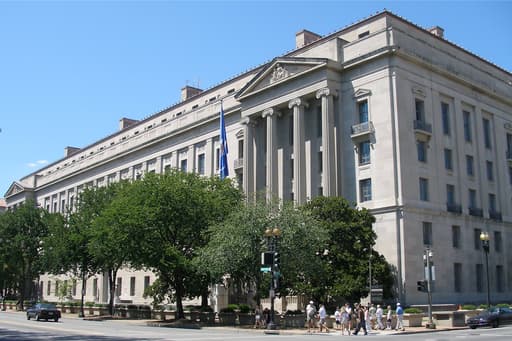
Department of Justice
ORGANIZATION • 5 mentions
United States Department of Justice, federal executive department responsible for law enforcement
Forest
ORGANIZATION
Organization referenced in documents
Forest Service
ORGANIZATION
Agency of the U.S. Department of Agriculture
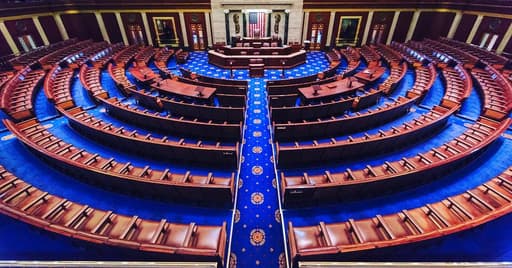
House of Representatives
ORGANIZATION
Lower house of the United States Congress

Law Review
ORGANIZATION
Type of scholarly journal focusing on legal issues
Management and Budget
ORGANIZATION
Organization referenced in documents

Office of Legal
ORGANIZATION
Office of the United States Department of Justice

Office of Management and Budget
ORGANIZATION
Agency that prepares and evaluates the President of the United States' annual budget to Congress
Raytheon Missile Systems
ORGANIZATION
Organization referenced in documents
REcoRD
ORGANIZATION
Organization referenced in documents
the Cen
ORGANIZATION
Organization referenced in documents
the Court of Appeals
ORGANIZATION
Organization referenced in documents

the Fifth Circuit
ORGANIZATION
Organization referenced in documents
The Tenth Circuit
ORGANIZATION
Organization referenced in documents
the U.S Securities and Exchange Commission
ORGANIZATION
Organization referenced in documents
the U.S. Department of Labor
ORGANIZATION
Organization referenced in documents

US Government
ORGANIZATION
Government agency
W.R. Huff Asset Mgmt. Co.
ORGANIZATION
Organization referenced in documents

Kentucky
LOCATION
State of the United States of America

Kirkuk
LOCATION
City in Iraq

Louisiana
LOCATION
State of the United States of America

Louisville
LOCATION
County seat of Jefferson County, Kentucky, United States

Mississippi
LOCATION
State of the United States of America
Westminster
LOCATION
City and borough in London, England, UK

Wyoming
LOCATION
State of the United States of America
Statistics
Pages:4
Entities:72
Avg. OCR:92.9%
Sponsored