HOUSE_OVERSIGHT_023049
Document HOUSE_OVERSIGHT_023049 is a government record from the House Oversight Committee pertaining to Jeffrey Epstein and related legal proceedings.
The document is a news article discussing the aftermath of Jeffrey Epstein's crimes and the legal battles involving his victims. It mentions civil lawsuits, including a federal Crime Victims’ Rights suit, and the challenges faced by Epstein's victims, some of whom struggled with trauma and addiction. The article highlights the confidential financial settlements and the emotional toll on the victims, as well as the legal strategies employed by Epstein's attorneys.
Key Highlights
- •The document discusses the impact of Epstein's crimes on his victims, including their struggles with trauma and addiction.
- •It mentions a federal Crime Victims’ Rights suit seeking to invalidate the non-prosecution agreement in Florida.
- •The article references the confidential financial settlements with victims and the legal tactics used by Epstein's attorneys.
Frequently Asked Questions
Books for Further Reading
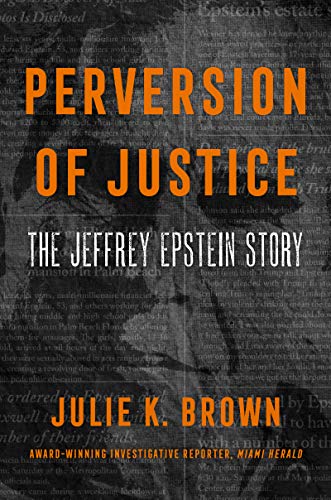
Perversion of Justice: The Jeffrey Epstein Story
Julie K. Brown
Investigative journalism that broke the Epstein case open

Filthy Rich: The Jeffrey Epstein Story
James Patterson
Bestselling account of Epstein's crimes and network
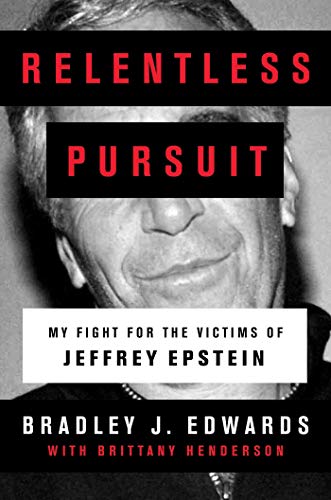
Relentless Pursuit: My Fight for the Victims of Jeffrey Epstein
Bradley J. Edwards
Victims' attorney's firsthand account
Document Information
Bates Range
HOUSE_OVERSIGHT_023049
Pages
1
Source
House Oversight Committee
Original Filename
IMG_1302.jpg
File Size
584.14 KB
Document Content
Page 1 - HOUSE_OVERSIGHT_023049
16 The Virgin Islands Daily News PERVERSION CONTINUED FROM PAGE 14 60 of them are now scattered around the country and abroad, Eight of them agreed to be inter- viewed, on or off the record. Four of them were willing to speak on video. The women are now mothers, wives, nurses, bartenders, Realtors, hairdressers and teach- ers. One is a Hollywood actress, Several have gmppled with trauma, depression and addiction. Some have served time in prison. A few did not survive. One young woman was found dead last year in a rundown motel in West Palm Beach. She overdosed on heroin and left behind a young son. As part of Epstein’s agreement, he was required to register as a sex offender, and pay restitution to the three dozen victims identified by the FBI. In many cases, the confidential financial settlements came only after Epstein’s attorneys exposed every dark comer of their lives ina scorched-earth effort to portray the girls as gold diggers, “You beat yourself up mentally and physically," said Jena-Lisa Jones, 30, who saxl Epstein mo- lasted her when she was 14, “You can't ever stop your thoughts. A word can trigger something, For me, it is the word ‘pure’ because he called me ‘pure’ in that room and then I remember what he did to me in that room.” Now, more than a decade later, two unrelated civil lawsuits arose, A civil trial set for Dec. 4 in Palm Beach County state court, involves Epstein and Edwards, whom Epstein had accused of legal misdeeds in representing several victims. The case would have been noteworthy because it would mark the first time that Epstein’s victims would have their day in court, and several of them were scheduled to testify. However, Epstein settled that case and publlicly apologized to Edwards — but he did not apologize to any of his victims. A second lawsuit, known as the federal Crime Victims’ Rights suit, is still pending in South Florida after a decade of legal jousting. It seeks to invalidate the non-prosecution agreement in hopes of sending Epstein to federal prison. Wild, who has never spoken publicly until now, is Jane Doe No. | in “Jane Doe No. | and Jane Doe No. 2 vs. the United States of America,” a federal lawsuit that alleges Epstein’s federal non- prosecution agreement was illegal. Federal prosecutors, including Acosta, not only broke the law, the women contend in court documents, but they conspired with Epstein and his lawyers to circumvent public scrutiny and deceive his victims in violation of the Crime Victims’ Rights Act. The law assigns victims a series of rights, including the nght of notice of any court proceed- ings and the opportunity to appear at sentencing. “As soon as that deal was signed, they silenced my voice and the voices of all of Jeffrey Epstein'’s other victims,” said Wild, now 31. “This case is about justice, not just for us, but for other victims who aren't Olympic stars or Hollywood stars”” In court papers, federal prosecutors have are gued that they did not violate the Crime Victims’ Rights Act because no federal changes were ever filed in the U.S. District Court for the Southem District of Florida, an argument that was later dismissed by the judge. Despite substantial physical evidence and multiple witnesses backing up the girls’ stories, the secret deal allowed Epstein to enter guilty pleas to two felony prostitution charges. Epstein admitted to committing only one offense against PERVERSION OF JUSTICE File photo by ASSOCIATED PRESS Jeffrey Epstein, second from left, in custody in West Palm Beach, Fla., in 2008. one underage girl, who was labeled a prostitute, even though she was 14, which is well under the age of consent — 18 in Florida. “She was taken advantage of twice — first by Epstein, and then by the cnminal justice system that labeled a 14-year-old girl as a prostitute,” said Spencer Kuvin, the lawyer who represented the girl. “It's just outrageous how they minimized his crimes and devalued his victims by calling them prostitutes,” said Yasmin Vala, a human rights attorney and executive director of Rights4Girls, which is working to end the sexual exploitation of girls and young women. “There is no such thing as a child prostitute. Under federal law, it’s called child sex trafficking whether Epstein pimped them out to others or not, It's still a commercial sex act — and he could have been jailed for the rest of his life under federal law,” she said. It would be easy to dismiss the Epstein case as another example of how there are two systems of justice in America, one forthe rich and one for the poor. But a thorough analysis of the case tells a far more troubling story. Unusual level of collaboration A close look at the trove of letters and emails contained in court records provides a window into the plea negotiations, revealing an unusual level of collaboration between federal prosecutors and Epstein’ legal team that even government es | You beat yourself up mentally and physically. You can’t ever stop your thoughts. A word can trigger something. For me, it is the word ‘pure’ because he called me ‘pure’ in that room and then | remember what he did to me in that room. — Jena-Lisa Jones, who said Epstein molested her when she was 14 lawyers, in recent court documents, admitted was unorthodox. Acosta, in 2011, would explain that he was unduly pressured by Epstein’s heavy-hitting lawyers — Lefkowitz, Harvard professor Alan Dershowitz, Jack Goldberger, Roy Black, former U.S. Attorney Guy Lewis, Gerald Lefcourt, and Kenneth Starr, the former Whitewater special prosecutor who investigated Bill Clinton's sexual liaisons with Monica Lewinsky. That included keeping the deal from Epstein'’s victims, emails show, “Thank you for the commitment you made to me during our Oct. 12 meeting,” Lefkowitz wrote in a letter to Acosta after their breakfast meeting in West Palm Beach. He added that he was hape- ful that Acosta would abide by a promise to keep the deal confidential, “You... assured me that your office would not ... contact any of the identified individuals, po- tential witnesses or potential civil Claimants and the respective counsel in this matter.” Lefkowitz wrote. In email after email, Acosta and the lead fed- eral prosecutor, A. Marie Villafana, acquiesced to Epstein’ legal team’s demands, which offen focused on ways to limit the scandal by shutting out his victims and the media, including suggest- ing that the charges be filed in Miami, instead of Palm Beach, where Epstein’s victims lived. “On an ‘avoid the press’ note ... I can file the charge in district court in Miami which will Wednesday, February 27, 2019 hopefully cut the press coverage significantly, Do you want to check that out?" Villafana wrote: to Lefkowitz ina September 2007 email. Federal prosecutors identified 36 underage victims, but none of those victims appeared at his sentencing on June 30, 2008, in state court in Palm Beach County. Most of them heard about it on the news — and even then they didn’t understand what had happened to the federal probe that they d been assured was ongoing. Edwards filed an emergency motion in federal court to block the non-prosecution agreement, but by the time the agreement was unsealed — overa year later — Epstein had already served his sentence and been released from jail. “The conspiracy between the goverment and Epstein was really ‘let's figure out a way to make the whole thing go away as quietly as possible,’ said Edwards, who represents Wild and Jane Doe No, 2, who declined to comment for this story. “In never consulting with the victims, and keep- ing it secret, itshowed that someone with money can buy his way out of anything.” VIP treatment It was far from the last time Epstein would receive VIP handling. Unlike other convicted sex offenders, Epstein didn’t face the kind of rough justice that child sex offenders do in Florida state prisons. Instead of being sent to state prison, Epstein was housed in a private wing of the Palm Beach County jail. Rather than having him sit in a cell most of the day, the Palm Beach County Sheriff's Office allowed Epstein work release privileges, which enabled him to leave the jail six days a week, for 12 hours a day, to goto a comfortable office that Epstein had set up in West Palm Beach. This was granted despite explicit sheriff's department rules stating that sex offenders don't qualify for work release, The shenff, Ric Bradshaw, would not answer questions, submitted by the Miami Herald, about Epstein’s work release. Neither Epstein nor his lead attomey, Jack Goldberger, responded to multiple requests for comment for this story, Dunng depositions taken as part of two dozen lawsuits filed against him by his victims, Epstein has invoked his Fifth Amend- ment right against self-incrimination, in one instance doing so nore than 200 times. In the past, his lawyers have said that the girls lied about their ages, that their stories were exag- gerated or untrue and that they were unreliable witnesses prone to drug use. In 2011, Epstein petitioned to have his sex offender status reduced in New York, where he has a home and is required to register every 90 days. In New York, he is classified as a level 3 offender — the highest safety risk because of his likelihood to re-offend. A prosecutor under New York County District Attorney Cyrus Vance argued on Epstein’ behalf, telling New York Supreme Court Judge Ruth Pickholtz that the Florida case never led to an indictment and that his underage victims failed to cooperate in the case. However, Pickholtz denied the petition, express: ing astonishment that a New York prosecutor would make such a request on behalfof'a serial sex of- fender accused of molesting so many girls, “Lhave to tell you, I'm a little overwhelmed because I have never seen a prosecutor's office do anything like this. | have done so many [sex of- fender registration hearings] much less troubling than this one where the [prosecutor] would never make a downward argument like this,” she said. Coming tomorrow: The victims’ stories HOUSE_OVERSIGHT_023049
Entities Mentioned
A. Marie Villafana
PERSON • 2 mentions
Former Assistant U.S. Attorney, lead federal prosecutor in the 2008 Epstein case
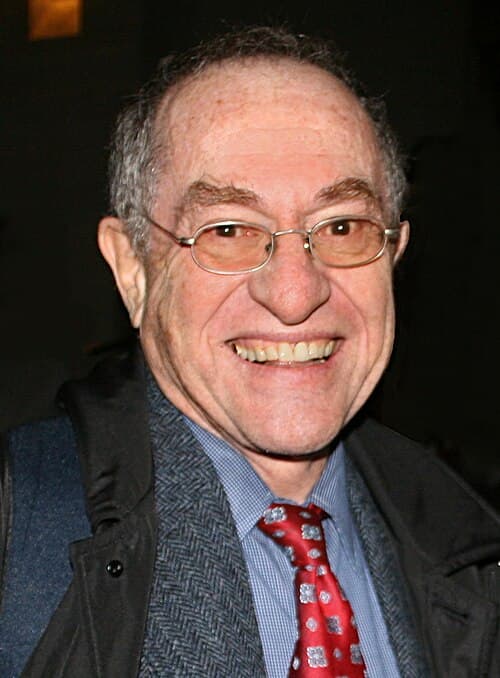
Alan Dershowitz
PERSON
American lawyer, author, and art collector (born 1938)
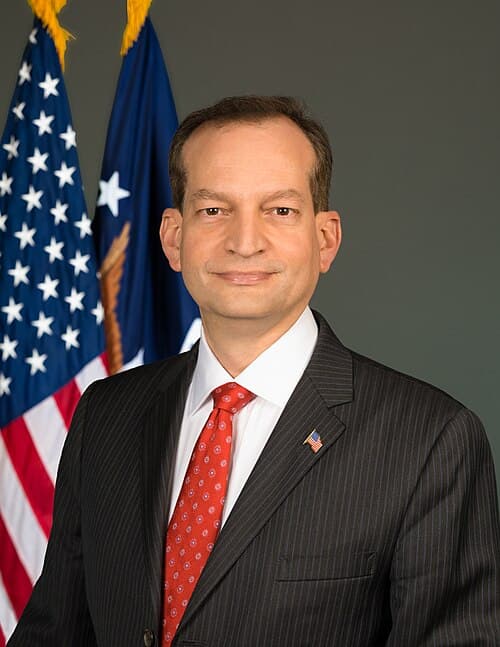
Alexander Acosta
PERSON
American attorney and politician, 27th U.S. Secretary of Labor (born 1969)
Bill Clinton
PERSON • 2 mentions
President of the United States from 1993 to 2001 (born 1946)
Cyrus Vance
PERSON
United States Secretary of State from 1977 to 1980
GL
Gerald Lefcourt
PERSON • 2 mentions
American lawyer
Guy Lewis
PERSON
American basketball player and coach (1922-2015)
JG
Jack Goldberger
PERSON • 2 mentions
American criminal defense attorney who represented Jeffrey Epstein, partner at Goldberger Weiss P.A. in West Palm Beach, Florida
JD
Jane Doe
PERSON
Pseudonym for anonymous victims/witnesses in Epstein legal proceedings
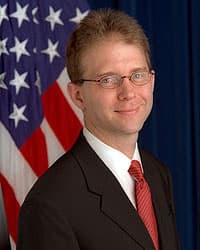
Jay Lefkowitz
PERSON
American lawyer

Jeffrey Epstein
PERSON • 2 mentions
American sex offender and financier (1953–2019)
JJ
Jena-Lisa Jones
PERSON
American writer (born 1961)
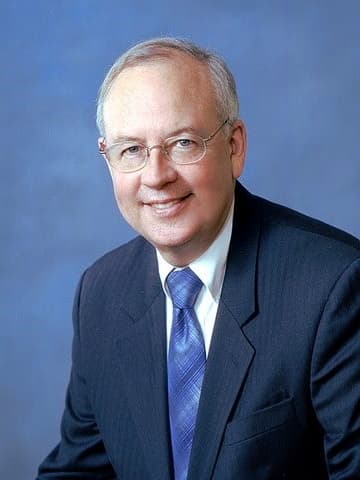
Ken Starr
PERSON • 2 mentions
American judge and educational administrator (1946–2022)
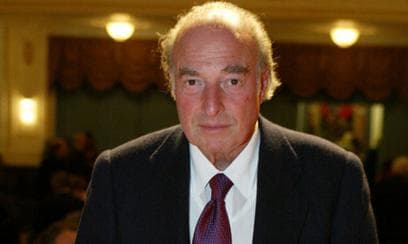
Marc Rich
PERSON
American commodities trader (1934–2013)

Monica Lewinsky
PERSON • 2 mentions
American activist and writer (born 1973)
PI
Pickholtz
PERSON
Name reference in documents
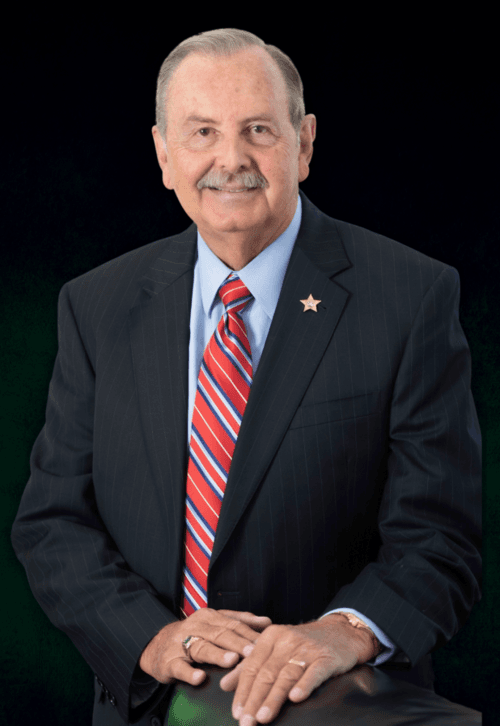
Ric Bradshaw
PERSON
American law enforcement officer (born 1948)
RB
Roy Black
PERSON
American lawyer (1945–2025)
SK
Spencer Kuvin
PERSON • 2 mentions
American lawyer based in Florida (born 1969)
YV
Yasmin Vala
PERSON
Name reference in documents
Rights4Girls
ORGANIZATION
Organization referenced in documents
the Palm Beach County Sheriff's Office
ORGANIZATION
Organization referenced in documents
The Virgin Islands Daily News
ORGANIZATION
Virgin Islands newspaper
Whitewater
ORGANIZATION
Organization referenced in documents

Florida
LOCATION
State of the United States of America

New York City
LOCATION
Most populous city in the United States

United States
LOCATION
Country located primarily in North America
Statistics
Pages:1
Entities:27
Avg. OCR:91.6%
Sponsored