YAHOO_007862
NAHMAD CONTEMPORARY - Hans Hartung, FIAC O.V.R | Calder, New York
This is a March 2021 newsletter from Nahmad Contemporary art gallery, promoting an online viewing room (OVR) for FIAC (an international contemporary art fair) featuring works by Hans Hartung, and highlighting works by Alexander Calder.
The email promotes Nahmad Contemporary's presentation of Hans Hartung's paintings from the 1970s at the FIAC Online Viewing Rooms, accessible through VIP access. It provides a brief biography of Hartung, highlighting his association with Art Informel and his innovative techniques. The newsletter also mentions works by Alexander Calder, specifically referencing a piece titled 'Calder, New York'.
Key Highlights
- •The document is a newsletter from Nahmad Contemporary promoting Hans Hartung's work at FIAC Online Viewing Rooms.
- •Hans Hartung, Alexander Calder, and Fernand Léger are key artists mentioned.
- •The email provides a link to the FIAC Online Viewing Rooms.
Frequently Asked Questions
Books for Further Reading

Perversion of Justice: The Jeffrey Epstein Story
Julie K. Brown
Investigative journalism that broke the Epstein case open

Filthy Rich: The Jeffrey Epstein Story
James Patterson
Bestselling account of Epstein's crimes and network

Relentless Pursuit: My Fight for the Victims of Jeffrey Epstein
Bradley J. Edwards
Victims' attorney's firsthand account
Document Information
Bates Range
YAHOO_007862
Pages
1
Source
DDoSecrets Yahoo Emails
Date
March 1, 2021
From
NAHMAD CONTEMPORARY <[email protected]>
To
None <[email protected]>
Original Filename
20210301-NAHMAD CONTEMPORARY - Hans Hartung, FIAC O.V.R _ C-2187.eml
File Size
6.51 KB
Document Content
Page 1 - YAHOO_007862
NEWSLETTER MARCH 2021 View this email in your browser (https://mailchi.mp/a7636d73cab5/nahmad-contemporary-newsletter-september-13341359?e=c39411af91) http://www.nahmadcontemporary.com/ A R T F A I R S https://fiac.viewingrooms.com/fr/?utm_campaign=FIAC-21-EXP-INSC-INFO-OVR-Email-EN-Infos-VIP&utm_medium=email&utm_source=Eloqua&querytoken= H A N S H A R T U N G F I A C Online Viewing Rooms (https://fiac.viewingrooms.com/fr/?utm_campaign=FIAC-21-EXP-INSC-INFO-OVR-Email-EN-Infos-VIP&utm_medium=email&utm_source=Eloqua&querytoken=) VIP Preview | March 2 - 3, 2021 Public Access | March 4 - 7, 2021 VIP access, please contact the gallery (mailto:[email protected]?subject=F%20I%20A%20C%20-%20Online%20Viewing%20Rooms%20%7C%20request%20for%20VIP%20ACCESS) https://fiac.viewingrooms.com/fr/?utm_campaign=FIAC-21-EXP-INSC-INFO-OVR-Email-EN-Infos-VIP&utm_medium=email&utm_source=Eloqua&querytoken= Hans Hartung in the 1970s Nahmad Contemporary is pleased to present three paintings created in the 1970s by Hans Hartung. Hans Hartung (b. 1904, Leipzig, Germany; d.1989, Antibes, France) is one of the most acclaimed European painters of the postwar era. Settling in Paris in 1945, Hartung worked among artists associated with the School of Paris and Art Informel, such as Jean Dubuffet and Pierre Soulages. Embodying the freeform style of his contemporaries and the expressive aesthetic characteristic to the era, Hartung’s early works feature bold and calligraphic strokes of paint assembled onto colored grounds. >From 1960-80s, Hartung employed a breadth of newfound tools and mark-making techniques to apply pigment to his canvas. He used a compressed-air spray gun to create a unified ground with radiating swathes of color and other unconventional tools, such as tree branches or garden rakes, to mark his surfaces. Unlike his earlier works, the gestural marks on these mid-career paintings evince the physical exertion involved in their making. In these paintings from the 1970s, the effects of a rake’s teeth emphatically scraping the colored ground are palpable. Yet, amid the spraying, scraping and thrashing, the artist maintained incredible reign over his tools. The inherently unruly devices were governed to generate deliberate patterns, forms and expanses of color within an orderly composition. Adhering to an unwavering method of applying paint that predicated on disciplined mark-making, Hartung unleashed controlled bouts of impulse and emotion. Hartung’s brilliant interplay between technical control and stylistic freedom radically distinguished his work from that of his peers early in his career and continued through the end of his life. His artistic legacy can be found in the work of various artists that came after him, from the splattered marks of Sam Francis, to the brazen experimentation of Sigmar Polke and the systematic approach of Gerhard Richter. https://fiac.viewingrooms.com/fr/?utm_campaign=FIAC-21-EXP-INSC-INFO-OVR-Email-EN-Infos-VIP&utm_medium=email&utm_source=Eloqua&querytoken= https://fiac.viewingrooms.com/fr/?utm_campaign=FIAC-21-EXP-INSC-INFO-OVR-Email-EN-Infos-VIP&utm_medium=email&utm_source=Eloqua&querytoken= (top) T-1970-H30, 1970 - Oil on canvas - 44.8 x 57.5 inches (113.8 x 146.1 cm) (left ) T-1971-R16, 1971 - Oil on canvas - 44.8 x 57.5 inches (114 x 146.1 cm) (right) T-1971-H10, 1971 - Oil on canvas - 44.7 x 57.3 inches (113.5 x 145.5 cm) ** C U R R E N T E X H I B I T I O N ------------------------------------------------------------ A L E X A N D E R C A L D E R Blue and Yellow Among Reds, 1964 Nahmad Contemporary, New York Until March 31, 2021 Alexander Calder, Blue and Yellow among Reds, 1964 Sheet metal and wire. 78.75 x 157.5 inches (200 x 400 cm) Alexander Calder Blue and Yellow Among Reds (1964) Achieving a delicate formal beauty which belies its grand scale, Blue and Yellow Among Reds from 1964 comprises vibrant circular elements suspended gracefully in space. The exquisitely cascading components in this large-scale mobile extend over four meters in length yet are seemingly weightless. Communicating a sense of limitless kinetic possibility, the components shift and rotate to create infinite permutations of abstract forms in perfect equilibrium. Calder’s exacting and simple use of color—red, blue, yellow, black, and white—is typical of his output, and adheres to his ideas about the use of color not as a means of decoration or a representation of something in the real world, but rather as a means of highlighting the differing elements within the piece so that they could more aptly form a cohesive whole. One of the 20th century’s most innovative artists, Alexander Calder is unmatched in his ability to translate modest shapes, common materials and base colors into elegant arabesques of kinetic sculpture. Created at a particularly active period in his career, this dynamic work is a striking example of Calder’s iconic mobiles and his keen attention to scale, form, motion, and color. As Calder exclaimed, “People think monuments should come out of the ground, and never out of the ceiling, but mobiles can be monumental too.” Even though he was born in Philadelphia and attended the Art Students League in New York City, Calder had a strong bond with Europe and its artistic sensibilities. Frequently traveling across the Atlantic and even setting up studios in France, Calder interacted with luminaries of the European avant-garde, such as Jean Arp, Fernand Léger, Piet Mondrian and Marcel Duchamp. Bridging the world of the visionaries he met abroad with the East Coast artist movements thriving in the United States, Calder existed in both realms, yet stayed above the fray: he was sharply individual in his methods and materials. Grand, lively, and dynamic, Blue and Yellow Among Reds captures Calder’s spirited personality, brilliant imagination, and singular artistic output. NAHMAD CONTEMPORARY 980 MADISON AVE ⎮ NEW YORK ⎮ NY ⎮10075 [email protected] (mailto:[email protected]) +1 646 449 9118 Monday-Saturday, 10AM-6PM http://www.nahmadcontemporary.com/ https://www.instagram.com/nahmadcontemporary/?hl=en https://www.facebook.com/Nahmad-Contemporary-761104604029387/ https://www.twitter.com/Joe_Nahmad/ @ Hans Hartung @ 2021 Calder Foundation, New York / Artists Rights Society (ARS), New York. ============================================================ If you received this email in error or no longer wish to receive these mailings, you can click here to ** unsubscribe (https://nahmadcontemporary.us17.list-manage.com/unsubscribe?u=b70673086d081550990c36524&id=62f68f98d0&e=c39411af91&c=1c11373c1c)
Entities Mentioned

Alexander Calder
PERSON • 2 mentions
Person referenced in documents
AB
Alexander Calder Blue
PERSON
Name reference in documents
AI
Art Informel
PERSON
Name reference in documents
FL
Fernand Léger
PERSON
Person referenced in documents

Gerhard
PERSON
German visual artist (b. 1932)
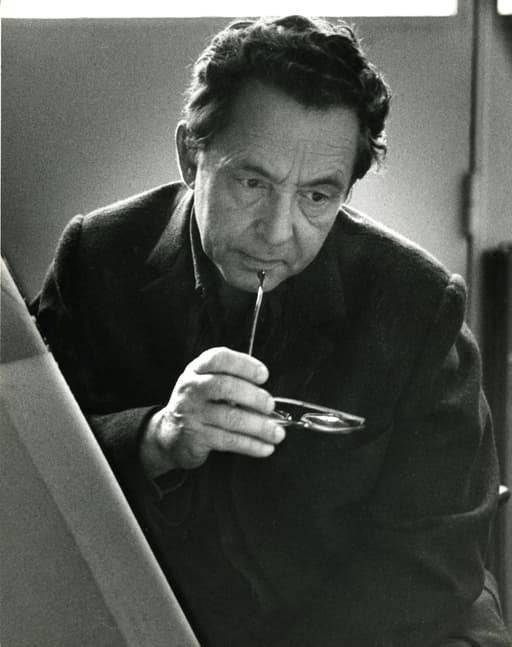
Hans Hartung
PERSON • 4 mentions
French painter (1904-1989)
JA
Jean Arp
PERSON
Name reference in documents
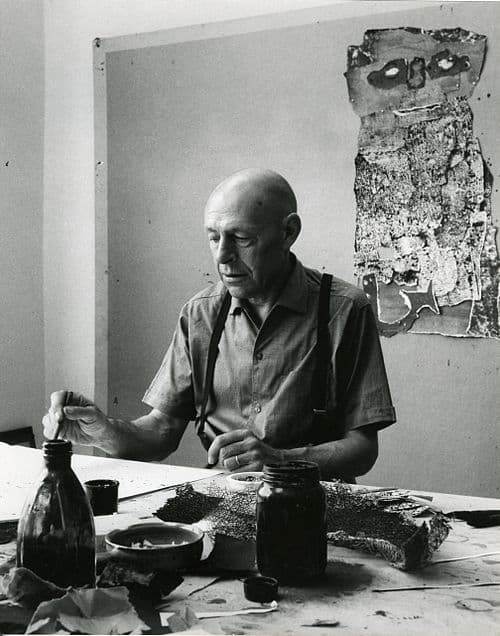
Jean Dubuffet
PERSON
French artist (1901–1985)

Jeffrey Epstein
PERSON • 2 mentions
American sex offender and financier (1953–2019)
PS
Pierre Soulages
PERSON
Name reference in documents
PM
Piet Mondrian
PERSON
Name reference in documents
SF
Sam Francis
PERSON
Name reference in documents
Blue and Yellow Among Reds
ORGANIZATION
Organization referenced in documents
Calder
ORGANIZATION • 5 mentions
Alexander Calder art reference or entity
Calder Foundation
ORGANIZATION
Organization referenced in documents
Nahmad Contemporary
ORGANIZATION • 2 mentions
Organization referenced in documents
Public Access
ORGANIZATION
Organization referenced in documents
Reds
ORGANIZATION
Organization referenced in documents
Sigmar Polke
ORGANIZATION
Organization referenced in documents
Antibes
LOCATION
Commune in Alpes-Maritimes, France

East Coast
LOCATION
Eastern seaboard region of the United States
Europe
LOCATION
Continent in the Northern Hemisphere
France
LOCATION • 2 mentions
Country in Western Europe and other continents (through its overseas territories in America, Africa and Oceania)
Germany
LOCATION
Country in Central Europe
Hartung
LOCATION • 5 mentions
Location referenced in documents
Leipzig
LOCATION
Largest city in Saxony, Germany
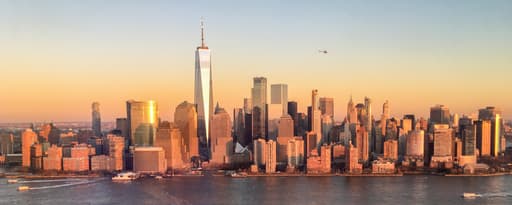
New York
LOCATION • 3 mentions
Most populous city in the United States
New York City
LOCATION
Most populous city in the United States
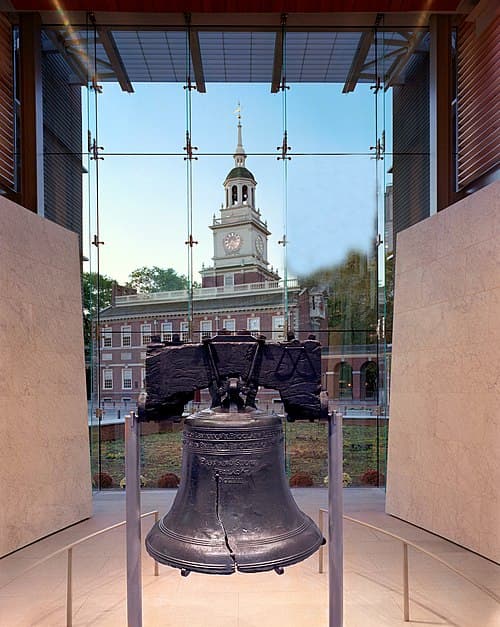
Philadelphia
LOCATION
1993 film by Jonathan Demme
United States
LOCATION
Country located primarily in North America
Statistics
Pages:1
Entities:30
Avg. OCR:1.0%
Sponsored