Back to Network




















3
Shared Docs
3
Same-Page
5 / 3
Mentions
Document Mentions (3 shared documents)
3 mentions1 same-page
Page ?Same page
Kremlin wouldn't block future Security Council resolutions on Syria. The Kremlin refused, but the details of the offer were leaked to the press by Middle Eastern and Western sources, and then subsequently denied by the Russian Foreign Ministry. It must have been the happiest denial the ministry has issued in
speaking at an international conference on this very topic held in Beirut, Lebanon, from Nov. 27-30. The conference was attended by 45 scholars of Middle Eastern and Kurdish studies from the United States, Europe and the Middle East. The consensus of the conferees was that the possibility of the emergence of
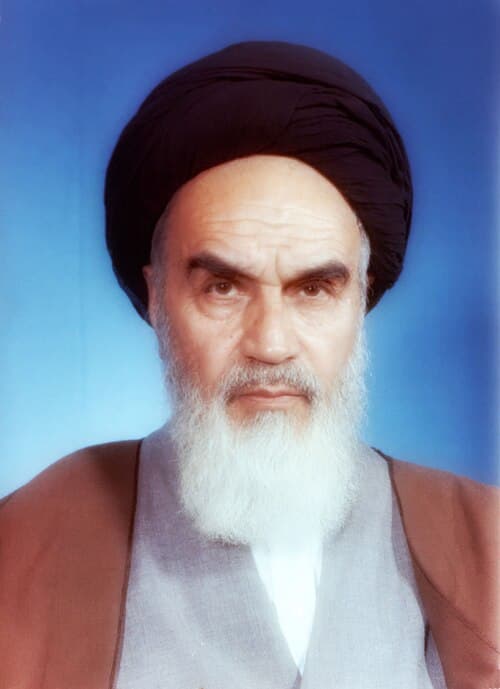
, and Bahrain. Although Iranian-Saudi enmity dates back many decades, it became acute after the 1979 Islamic Revolution when Iran's Supreme Leader, Ayatollah Ruhollah Khomeini, began to spread his revolutionary brand of Shia Islam across the region. The impact was not immediately evident. Iran's war with Iraq in the 1980
3 mentions1 same-page
Page ?Same page
the region, blames Egypt's violence on the Jews; pretty much everyone else blames it on the U.S. The Obama administration had a grand strategy in the Middle East. It was well intentioned, carefully crafted and consistently pursued. Unfortunately, it failed. The plan was simple but elegant: The U.S. would wo
terrorists and radicals, further marginalizing them in the Islamic world. Finally, these groups with American support could bring democracy to more Middle Eastern countries, leading to improved economic and social conditions, gradually eradicating the ills and grievances that drove some people to fanatical an
ood. And in Iran in 1979, individuals who were ardent secular nationalists donned Islamic garb and supported the Islamic Revolution and its leader Ayatollah Ruhollah Khomeini. For them, Islam became a more potent outlet for nationalist ambitions than the Shah, Mohammed Reza Pahlavi, who had lost political legitimacy. Th
2 mentions1 same-page
Page ?Same page
ther when Foreign Minister Sergei Lavrov met Chinese Foreign Minister Yang Jiechi in Moscow on May 6, 2011. They announced their grave concern over Middle Eastern events. Furthermore, they would now coordinate actions to bring about a "speedy stabilization" of the situation and prevent negative unpredictable
e of Khamenei and Ahmadinejad should be understood in the context of Iran's internal rivalries. Since the death in 1989 of the revolution's father, Ayatollah Ruhollah Khomeini — whose austere nature and anti-Americanism set the tenor for Iran's post-monarchic order — Tehran's political elite has been broadly divided into
Sponsored
Mutual Connections (76)
Entities connected to both Middle East and Ayatollah Ruhollah Khomeini
Barack Obama
PERSON211 w/ Middle·5 w/ Ayatollah
United States
LOCATION201 w/ Middle·4 w/ Ayatollah
George W. Bush
PERSON171 w/ Middle·4 w/ Ayatollah
Bill Clinton
PERSON146 w/ Middle·2 w/ Ayatollah
Lebanon
LOCATION124 w/ Middle·3 w/ Ayatollah
Benjamin Netanyahu
PERSON115 w/ Middle·3 w/ Ayatollah
Bashar al-Assad
PERSON114 w/ Middle·3 w/ Ayatollah
Department of Justice
ORGANIZATION115 w/ Middle·2 w/ Ayatollah
Prince Andrew
PERSON114 w/ Middle·2 w/ Ayatollah
Tehran
LOCATION111 w/ Middle·3 w/ Ayatollah
Julie K. Brown
PERSON104 w/ Middle·2 w/ Ayatollah
Vladimir Putin
PERSON100 w/ Middle·4 w/ Ayatollah
Bloomberg L.P.
ORGANIZATION100 w/ Middle·2 w/ Ayatollah
Samantha Power
PERSON95 w/ Middle·2 w/ Ayatollah
Yemen
LOCATION88 w/ Middle·4 w/ Ayatollah
Jerusalem
LOCATION88 w/ Middle·2 w/ Ayatollah
Michael Cohen
PERSON86 w/ Middle·2 w/ Ayatollah
Michael Jackson
PERSON85 w/ Middle·2 w/ Ayatollah
Saddam Hussein
PERSON80 w/ Middle·3 w/ Ayatollah
Cairo
LOCATION80 w/ Middle·2 w/ Ayatollah