Back to Network




9
Shared Docs
9
Same-Page
9 / 9
Mentions
Document Mentions (9 shared documents)
2 mentions1 same-page
Page ?Same page
ing began more than a year ago, few predicted the regime of President Bashar al-Assad would ever teeter toward collapse. Now, though, the demise of Damascus's current leadership appears inevitable, and Syria's revolution will likely be an unpredictable, protracted, and grim affair. Some see similarities
li governments recognize that when the United States says it is unacceptable for Iran to have a nuclear weapon, we mean what we say." The 45-minute Oval Office conversation took place less than a week before the president was scheduled to address the annual convention of AIPAC, the pro-Israel lobbying grou
2 mentions1 same-page
Page ?Same page
onal Cooperation,' write, "A chemical weapons confrontation is escalating in Syria, after an international watchdog agency concluded this month that Damascus used chemical weapons, lied to investigators and violated its commitment to dismantle its chemical weapons arsenal. Syria has 90 days to respond or
d order" candidate was George C. Wallace. Fifty-two years later, "in another moment of social unrest, the law and order' candidate is already in the Oval Office and the politics of division and race ring through the generations as President Trump tries to do what Wallace could not." According to Baker, "com
2 mentions1 same-page
Page ?Same page
sing began more than a year ago, =ew predicted the regime of President Bashar al-Assad would ever teeter tow=rd collapse. Now, though, the demise of Damascus's current leadership appe=rs inevitable, and Syria's revolution will likely be an unpredictable, protracted, and grim affair. Some see sim=larities
li governments recognize that when the United States says it is unacceptable for Iran to have a nuclear weapo=, we mean what we say." The 45-minute Oval Office convers=tion took place less than a week before the president was scheduled to add=ess the annual convention of AIPAC, the pro-Israel lobbying group
Sponsored
2 mentions1 same-page
Page ?Same page
ents might be interpreted. But that could change. Now, six years later, with its own popularity in Gaza at a low-water mark and its former ally in Damascus on the ropes, Hamas may decide to encourage those diplomats who are determined to be encouraged. That wouldn't take much of an ideological shift on
that the president has been qualified for the power of life and death by his reading. Perhaps he once taught the texts and their arguments; but the Oval Office is not a seminar room. This raises an interesting scruple about the relation of ideas to power. It is that the relation should never be unmediated
2 mentions1 same-page
Page ?Same page
Bibi’s idea to reopen efforts to get peace with Syria didn’t last either. Although I’d learn of this only a few years later, he’d approved a visit to Damascus by the American Jewish businessman Ronald Lauder to meet President Assad. The visit made it clear to Bibi what successive Israeli leaders had learned
Clinton on November 9. I was due to follow him three days later. I met Clinton and Dennis Ross over dinner in a little kitchen area attached to the Oval Office, and both seemed surprisingly upbeat. The President said he’d told Arafat the broad points that would be in the new American negotiating paper. It wa
2 mentions1 same-page
Page ?Same page
n to grant us explicit recognition as a Jewish state when we made peace with them. Even when Bibi himself had briefly tried to open negotiations with Damascus in his first period as Prime Minister, we’d never felt the need to ask it of the Syrians either. To the extent there was any logic in demanding it of
restart negotiations, declaring it “intolerable” that there was still not a Palestinian state. He was explicit about what Israel needed to do. In an Oval Office meeting with Bibi in May 2009, and in a speech in Cairo the next month, he called for a total halt to settlement construction on the West Bank. US op
Sponsored
2 mentions1 same-page
Page ?Same page
Bibi's idea to reopen efforts to get peace with Syria didn't last either. Although I'd learn of this only a few years later, he'd approved a visit to Damascus by the American Jewish businessman Ronald Lauder to meet President Assad. The visit made it clear to Bibi what successive Israeli leaders had learned
e Clinton on November 9. I was due to follow him three days later. I met Clinton and Dennis Ross over dinner in a little kitchen area attached to the Oval Office, and both seemed surprisingly upbeat. The President said he'd told Arafat the broad points that would be in the new American negotiating paper. It wa
2 mentions1 same-page
Page ?Same page
n to grant us explicit recognition as a Jewish state when we made peace with them. Even when Bibi himself had briefly tried to open negotiations with Damascus in his first period as Prime Minister, we'd never felt the need to ask it of the Syrians either. To the extent there was any logic in demanding it of
restart negotiations, declaring it "intolerable" that there was still not a Palestinian state. He was explicit about what Israel needed to do. In an Oval Office meeting with Bibi in May 2009, and in a speech in Cairo the next month, he called for a total halt to settlement construction on the West Bank. US op
2 mentions1 same-page
Page ?Same page
onal Cooperation,' write, "A chemical weapons confrontation is escalating in Syria, after an international watchdog agency concluded this month that Damascus used chemical weapons, lied to investigators and violated its commitment to dismantle its chemical weapons arsenal. Syria has 90 days to respond or
order" candidate was George C. Wallace. Fifty-two years later, "in another moment of social unrest, the 'law and order' candidate is already in the Oval Office and the politics of division and race ring through the generations as President Trump tries to do what Wallace could not." According to Baker, "com
Sponsored
Mutual Connections (1,408)
Entities connected to both Damascus and Oval Office
Barack Obama
PERSON141 w/ Damascus·20 w/ Oval
Bashar al-Assad
PERSON137 w/ Damascus·9 w/ Oval
Lebanon
LOCATION127 w/ Damascus·9 w/ Oval
United States
LOCATION114 w/ Damascus·18 w/ Oval
Bill Clinton
PERSON103 w/ Damascus·25 w/ Oval
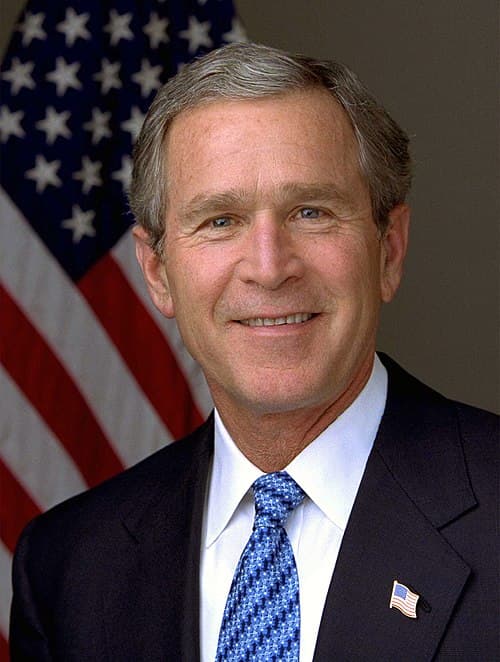
George W. Bush
PERSON99 w/ Damascus·22 w/ Oval
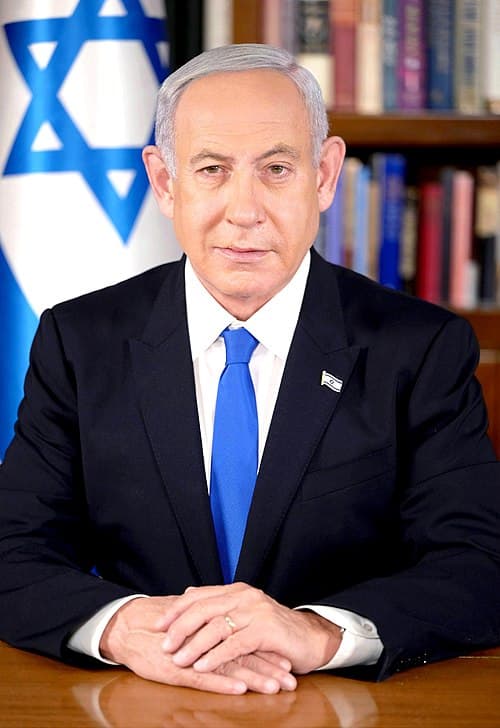
Benjamin Netanyahu
PERSON98 w/ Damascus·11 w/ Oval
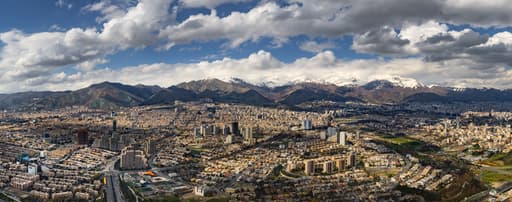
Tehran
LOCATION98 w/ Damascus·6 w/ Oval
Jeffrey Epstein
PERSON51 w/ Damascus·50 w/ Oval
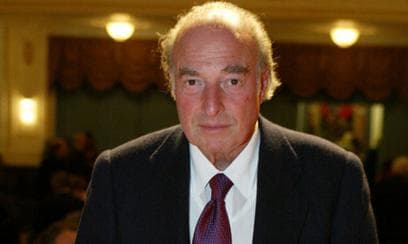
Marc Rich
PERSON61 w/ Damascus·32 w/ Oval
Hillary Clinton
PERSON74 w/ Damascus·19 w/ Oval
Tunisia
LOCATION82 w/ Damascus·2 w/ Oval
Cairo
LOCATION75 w/ Damascus·5 w/ Oval
Vladimir Putin
PERSON70 w/ Damascus·10 w/ Oval
Middle East
LOCATION68 w/ Damascus·11 w/ Oval
Terje Rod-Larsen
PERSON75 w/ Damascus·3 w/ Oval
Saddam Hussein
PERSON70 w/ Damascus·7 w/ Oval
Yemen
LOCATION69 w/ Damascus·4 w/ Oval
Joe Biden
PERSON54 w/ Damascus·18 w/ Oval
Jerusalem
LOCATION60 w/ Damascus·10 w/ Oval