Back to Network




















4
Shared Docs
4
Same-Page
4 / 4
Mentions
Document Mentions (4 shared documents)
2 mentions1 same-page
Page ?Same page
an, however, go deeper and are more complex. At their heart is Iran's interference in internal Arab affairs, particularly in Iraq, Syria, Lebanon, Yemen, and Bahrain. Although Iranian-Saudi enmity dates back many decades, it became acute after the 1979 Islamic Revolution when Iran's Supreme Leader,
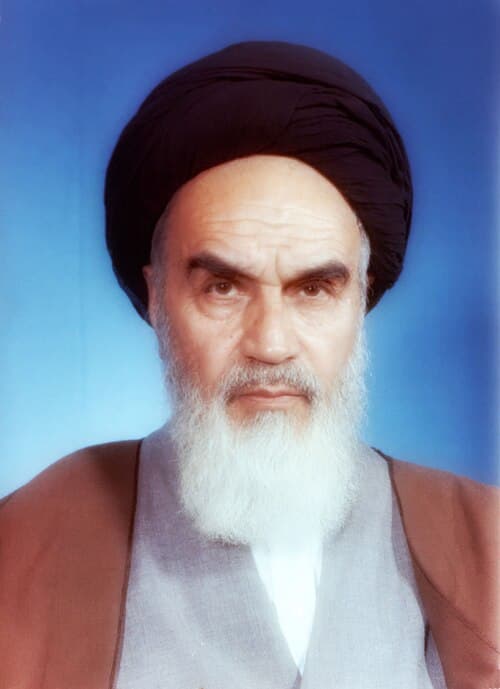
, and Bahrain. Although Iranian-Saudi enmity dates back many decades, it became acute after the 1979 Islamic Revolution when Iran's Supreme Leader, Ayatollah Ruhollah Khomeini, began to spread his revolutionary brand of Shia Islam across the region. The impact was not immediately evident. Iran's war with Iraq in the 1980
2 mentions1 same-page
Page ?Same page
ed course lest it be isolated vis-à-vis NATO and regionally. Moscow's maneuvers betray weakness despite its public posturing. Its advice to Libya, Yemen, Syria, and Central Asia to institute moderate reforms was utterly disregarded yet it upholds these regimes even though they depend, as Syria's For
e of Khamenei and Ahmadinejad should be understood in the context of Iran's internal rivalries. Since the death in 1989 of the revolution's father, Ayatollah Ruhollah Khomeini — whose austere nature and anti-Americanism set the tenor for Iran's post-monarchic order — Tehran's political elite has been broadly divided into
2 mentions1 same-page
Page ?Same page
as Rwanda, but in a strategically more important place. Already it is late, perhaps too late, to prevent Syria from becoming the new Afghanistan or Yemen, home to rabidly anti- Western jihadis. A critical firebreak, the use of chemical weapons on a large scale, has been breached. EFTA_R1_00441459 EF
ood. And in Iran in 1979, individuals who were ardent secular nationalists donned Islamic garb and supported the Islamic Revolution and its leader Ayatollah Ruhollah Khomeini. For them, Islam became a more potent outlet for nationalist ambitions than the Shah, Mohammed Reza Pahlavi, who had lost political legitimacy. Th
Sponsored
2 mentions1 same-page
Page ?Same page
roit-bound airliner, which failed because the suicide bomber misfired his bomb, was also intended to provoke America into another war, this time in Yemen. Al-Qaeda proudly said its goal was to snare America into "the final trap." It tried again with the parcel-bomb attempt last October in a plane bo
ran's opposition leaders are limited in their ambitions: they remain committed to the Islamic Revolution and the principles of its leader, the late Ayatollah Ruhollah Khomeini, but they want to reform the establishment within that framework. "The Green opposition is not questioning the foundation of the system as happene
Sponsored
Mutual Connections (76)
Entities connected to both Yemen and Ayatollah Ruhollah Khomeini
Barack Obama
PERSON165 w/ Yemen·5 w/ Ayatollah
United States
LOCATION130 w/ Yemen·4 w/ Ayatollah
George W. Bush
PERSON129 w/ Yemen·4 w/ Ayatollah
Bill Clinton
PERSON112 w/ Yemen·2 w/ Ayatollah
Bashar al-Assad
PERSON108 w/ Yemen·3 w/ Ayatollah
Lebanon
LOCATION101 w/ Yemen·3 w/ Ayatollah
Tehran
LOCATION96 w/ Yemen·3 w/ Ayatollah
Cairo
LOCATION92 w/ Yemen·2 w/ Ayatollah
Middle East
LOCATION88 w/ Yemen·3 w/ Ayatollah
Hosni Mubarak
PERSON88 w/ Yemen·2 w/ Ayatollah
Benjamin Netanyahu
PERSON84 w/ Yemen·3 w/ Ayatollah
Tunisia
LOCATION82 w/ Yemen·4 w/ Ayatollah
Terje Rod-Larsen
PERSON82 w/ Yemen·3 w/ Ayatollah
Department of Justice
ORGANIZATION81 w/ Yemen·2 w/ Ayatollah
Vladimir Putin
PERSON69 w/ Yemen·4 w/ Ayatollah
Damascus
LOCATION69 w/ Yemen·3 w/ Ayatollah
Saddam Hussein
PERSON67 w/ Yemen·3 w/ Ayatollah
Bloomberg L.P.
ORGANIZATION68 w/ Yemen·2 w/ Ayatollah
Prince Andrew
PERSON66 w/ Yemen·2 w/ Ayatollah
Samantha Power
PERSON61 w/ Yemen·2 w/ Ayatollah