Back to Network



















7
Shared Docs
5
Same-Page
7 / 12
Mentions
Document Mentions (7 shared documents)
3 mentions1 same-page
Page ?Same page
o smaller units that would then be more reliant on foreign support or protection. Sudan has already split into northern and southern states, while Yemen, Iraq and possibly a few others are similarly susceptible to subdivision into smaller statelets. This raises difficult issues about the inviolabili
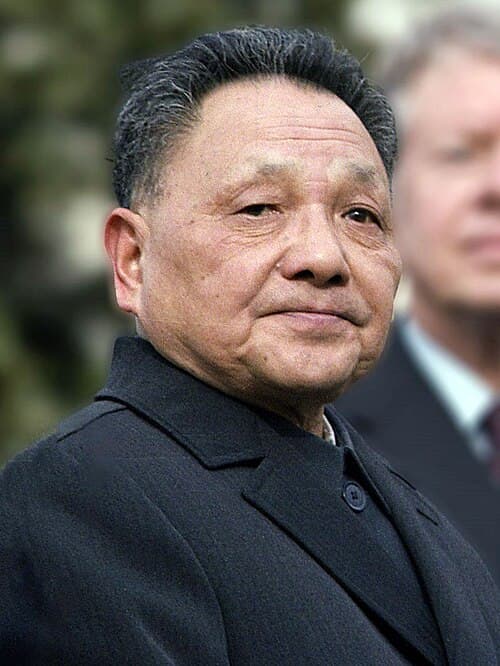
ale. Here the debate gets interesting. Indeed, probably one of the most morally vexing realizations in the field of international politics is that Deng Xiaoping, by dramatically raising the living standard of hundreds of millions of Chinese in such a comparatively short space of time—which, likewise, led to
sonal freedoms across China—was, despite the atrocity of Tiananmen Square that he helped perpetrate, one of the great men of the twentieth century. Deng's successors, EFTA_R1_02029858 EFTA02690091 29 though repressive of political rights, have adhered to his grand strategy of seeking natural res
3 mentions1 same-page
Page ?Same page
ng a managed transition, where the existing rulers might agree to an orderly handover of power, a scenario that guided U.S. policy most closely in Yemen, where the long-standing president, Ali Abdullah Saleh, handed over power to his vice-president, Abed Rabbo Mansour Hadi, in late-2011. For a time,
k of war passed despite Beijing's provocative rhetoric, but Chinese bitterness did not—as Henry Kissinger would learn during his first meeting with Deng Xiaoping in 1974, when the topic of a U.S.-Soviet arms summit in Vladivostok prompted the future Chinese leader to lecture him on Russian rapacity. Conside
embrace its capacious borders—and if Beijing's hawks grow louder in an era of slowing growth, some may recall the Russian indignities that Mao and Deng never forgot. Needless to say, none of this promises an immediate end to Russo-Chinese collusion, nor does it obviate the need for Washington to p
3 mentions1 same-page
Page ?Same page
easure." The administration recognizes the connection, in "blood and treasure," between the costly American interventions in Afghanistan, Pakistan, Yemen and elsewhere and the festering conflict between Israel and Palestine. Gen. James Mattis, commander of US Central Command (CENTCOM), acknowledged
suspects that sooner or later both Beijing and Washington will likely gradually take on reform steps in a piecemeal approach. Former Chinese leader Deng Xiaoping, now deceased, described his approach to reform as, "crossing the river by feeling for stones." That pragmatic approach is likely to be followed b
s in a piecemeal approach. Former Chinese leader Deng Xiaoping, now deceased, described his approach t
Sponsored
2 mentions1 same-page
Page ?Same page
81 popularity of the government, much to the benefit of the radicals who hope to replace it. In many other places, from the West Bank and Gaza to Yemen and Tunisia, the protest movements are also more important for what they mean in local politics than about global policy. Radical movements and ima
ch is controlled by the Communist Party, published an analysis on the Web site of the business magazine Caijing. According to Agence France-Presse, Deng argued that President Hu Jintao and Prime Minister Wen Jiabao "had `created more problems than achievements' during their 10 years in power. ... Th
2 mentions1 same-page
Page ?Same page
er regimes in the region are fighting for their lives, and are not expected to survive. There will soon be different styles of government in Libya, Yemen and Syria. This much is certain. Will there be a different policy toward Israel? Certainly. But this will take time to take shape, since there are
nomy was roughly five times that of the People's Republic. Forty years later, as a result of the industrial revolution unleashed by Mao's successor Deng Xiao- ping, it is conceivable that China could overtake America within a decade. This is a feat the Soviet Union never came close to achieving. Mor
Page HOUSE_OVERSIGHT_031839
ther regimes in the region are fighting for their lives, and are not expected to survive. There will soon be different styles of government in Libya, Yemen and Syria. This much is certain. Will there be a different policy toward Israel? Certainly. But this will take time to take shape, since there are mo
Page: HOUSE_OVERSIGHT_031839 →Page HOUSE_OVERSIGHT_031851
conomy was roughly five times that of the People's Republic. Forty years later, as a result of the industrial revolution unleashed by Mao's successor Deng Xiao- ping, it is conceivable that China could overtake America within a decade. This is a feat the Soviet Union never came close to achieving. Moreover, China
Page: HOUSE_OVERSIGHT_031851 →ndustrial revolution unleashed by Mao's successor Deng Xiao- ping, it is conceivable that China could ov
Page: HOUSE_OVERSIGHT_031851 →Sponsored
Page HOUSE_OVERSIGHT_032181
into smaller units that would then be more reliant on foreign support or protection. Sudan has already split into northern and southern states, while Yemen, Iraq and possibly a few others are similarly susceptible to subdivision into smaller statelets. This raises difficult issues about the inviolability
Page: HOUSE_OVERSIGHT_032181 →Page HOUSE_OVERSIGHT_032199
scale. Here the debate gets interesting. Indeed, probably one of the most morally vexing realizations in the field of international politics is that Deng Xiaoping, by dramatically raising the living standard of hundreds of millions of Chinese in such a comparatively short space of time-which, likewise, led to a
Page: HOUSE_OVERSIGHT_032199 →ersonal freedoms across China—was, despite the atrocity of Tiananmen Square that he helped perpetrate, one of the great men of the twentieth century. Deng's successors, HOUSE_OVERSIGHT_032198 --- PAGE BREAK --- 29 though repressive of political rights, have adhered to his grand strategy of seeking nat
Page: HOUSE_OVERSIGHT_032199 →Sponsored
Mutual Connections (1,374)
Entities connected to both Yemen and Deng Xiaoping
Jeffrey Epstein
PERSON198 w/ Yemen·65 w/ Deng
George W. Bush
PERSON129 w/ Yemen·82 w/ Deng
Barack Obama
PERSON165 w/ Yemen·40 w/ Deng
United States
LOCATION130 w/ Yemen·35 w/ Deng
Bill Clinton
PERSON112 w/ Yemen·39 w/ Deng
Marc Rich
PERSON97 w/ Yemen·40 w/ Deng
Donald Trump
PERSON97 w/ Yemen·29 w/ Deng
Bashar al-Assad
PERSON108 w/ Yemen·18 w/ Deng
Lebanon
LOCATION101 w/ Yemen·14 w/ Deng
Tehran
LOCATION96 w/ Yemen·16 w/ Deng
Middle East
LOCATION88 w/ Yemen·17 w/ Deng
Cairo
LOCATION92 w/ Yemen·9 w/ Deng
Department of Justice
ORGANIZATION81 w/ Yemen·17 w/ Deng
Hosni Mubarak
PERSON88 w/ Yemen·9 w/ Deng
Joe Biden
PERSON75 w/ Yemen·22 w/ Deng
Tunisia
LOCATION82 w/ Yemen·12 w/ Deng
Condoleezza Rice
PERSON53 w/ Yemen·39 w/ Deng
LB
Leon Black
PERSON62 w/ Yemen·29 w/ Deng
Ghislaine Maxwell
PERSON38 w/ Yemen·52 w/ Deng
Hillary Clinton
PERSON75 w/ Yemen·15 w/ Deng