Back to Network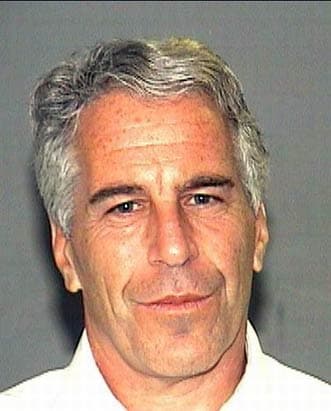



9
Shared Docs
9
Same-Page
9 / 13
Mentions
Document Mentions (9 shared documents)
3 mentions1 same-page
Page ?Same page
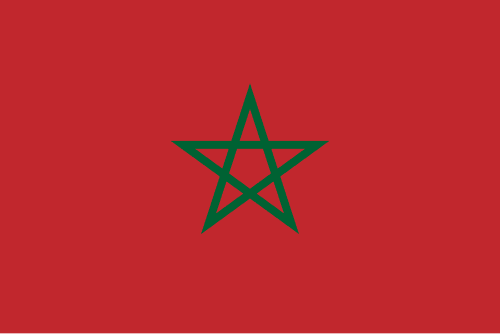
lly to Qaddafi and three of his sons, among others. On May 3ffi, Turkish Prime minister Erdogan called on Colonel Qaddafi to step down from power. Morocco On February 24th, the Moroccan Youth Movement organized protests in seventy cities across the Kingdom. Protesters called for greater freedom, democ
to issue arrest warrants, potentially to Qaddafi and three of his sons, among others. On May 3ffi, Turkish Prime minister Erdogan called on Colonel Qaddafi to step down from power. Morocco On February 24th, the Moroccan Youth Movement organized protests in seventy cities across the Kingdom. Protesters
st to investigate possible crimes against humanity and war crimes in Libya. He plans to also ask ICC judges to issue arrest warrants, potentially to Qaddafi and three of his sons, among others. On May 3ffi, Turkish Prime minister Erdogan called on Colonel Qaddafi to step down from power. Morocco On Fe
3 mentions1 same-page
Page ?Same page
two blocs are taking place on both sides. "The Saudis are restructuring their post-Arab Spring alliances, reviving the 'moderate bloc' of Jordan, Morocco, Egypt, Bahrain, UAE [United Arab Emirates] and others, and the Iranians are rebuilding their 'resistance and resilience bloc' that was brought tog
ding the Lebanese daily As Safir, the Egyptian dailies Al-Masry al- Youm and Aldostor, and the Jordanian daily Alghad. Article 4. RAND Libya after Qaddafi — Lessons and Implications for the Future Christopher S. Chivvis, Jeffrey Martini (Summary) EFTA00717217 March 17, 2014 -- Since the 2011 overth
ic growth. Upping the International Role Despite a significant investment of military and political capital in helping the Libyan rebels overthrow Qaddafi, international actors have done very little to support Libya's post-conflict recovery to date. In contrast with all other cases of NATO military in
3 mentions1 same-page
Page ?Same page
ce to prevent the internationalization of the conflict. As of January 2012, the Arab seat in the United Nations Security Council (UNSC) will go to Morocco after it was held by Lebanon for 2 years. Due to the strong Syrian-Iranian influence in the current Lebanese government, the Lebanese envoy to the
e of his control of Syria's security forces, is "first in command, not second." Bashar's comment that he doesn't own the country is reminiscent of Qaddafi's denial that he had any position of authority in Libya at the beginning of the unrest there. Likewise reminiscent of Qaddafi, who repeatedly claim
at the claim is demonstrably false -- his calm demeanor during the interview underscored this distinction between him and the emotionally unstable Qaddafi. Perhaps a better comparison for Bashar is to Qaddafi's own designated successor, his son Saif al-Islam, who was also seen as a potential force of
Sponsored
3 mentions1 same-page
Page ?Same page
, monarchy has found a way over the decades and centuries to engender a political legitimacy of its own, allowing leaders like King Mohammed VI in Morocco, King Abdullah in Jordan and Sultan Qaboos bin Said in Oman to grant their subjects a wide berth of individual liberties without fear of being over
iddle East these dictators remain the exception to the rule, and this is why quasi monarchies of the iron-fisted Assad or the crazed and tyrannical Qaddafi are now under assault. THE PLACE where benevolent autocracy has struck deep and has systematic roots is Asia. Any discussion of whether and how de
required to hold the state together. To be sure, Egypt's Mubarak and Tunisia's Ben Ali neither ran police states on the terrifying scale of Libya's Qaddafi and Syria's Assad nor stifled economic progress with such alacrity. But while Mubarak and Ben Ali left their countries in conditions suitable for t
2 mentions1 same-page
Page ?Same page
s interests. They were constant, if not always agreeable, companions. Egypt's Mubarak, Jordan's King Hussein, Tunisia's Ben Ali, Yemen's Ali Saleh, Morocco's King Hassan II, Saudi Arabia's kings Fand and Abdullah. The PLO's Yasir Arafat rounded out the group photo. America's arrangements with the acqu
There was the good King Hussein, the wily but indispensable Arafat, the enigmatic yet much-courted Assad, the cruel Saddam, the crazy (like a fox) Qaddafi, and the plodding but reliable Mubarak. The United States built its policies on these men and their regimes without much regard to broader politica
2 mentions1 same-page
Page ?Same page
ptom of this dysfunction and despair, as were the internal conflicts that have convulsed Algeria, EFTA_R1_02013866 EFTA02687049 6 Libya, Yemen, Morocco, Saudi Arabia, Bahrain and Egypt itself in the past two decades. Even Iran's so-called green movement today is another manifestation of the phenome
ck in Libya, the counterrevolution made its stand, and a despot bereft of mercy declared war against his own people. In the calendar of Muammar el- Qaddafi's republic of fear and terror, Sept. 1 marks the coming to power, in 1969, of the officers and conspirators who upended a feeble but tolerant monar
Sponsored
2 mentions1 same-page
Page ?Same page
hin Encounters Civil Society Theodore Friend July 5 -- The journalistic notion of an "Arab Spring" is faulty on two counts. Climatologically, from Morocco to Yemen, it is absurd; there is no such season. It is also misleading, because analogy with the "Prague Spring" of 1968 runs into the unhappy fact
by aggressive men. Libya, in its civil war, has women far more prominent as victims than as leaders. Iman al-Obeidi, who complained of gang rape by Qaddafi soldiers, was then forcibly abducted by agents of the government from a hotel lobby where she was meeting with journalists.[21] After release from
2 mentions1 same-page
Page ?Same page
dominated Middle East politics in matters of war and peacemaking and shaped the region's relations with the great powers. The kings of Jordan and Morocco -- and, of course, Saudi Arabia (and the Persian Gulf states) when it came to oil -- had their say too. But it was the three pseudo-republics, auth
he three members of the Axis of Evil and otherwise indicated that it could be subject to military attacks alarmed Tehran. (Similar developments led Qaddafi to give up his program of WMD development in Libya.) In response, Iran sent the U.S. government a proposal in May 2003 that called for a comprehen
2 mentions1 same-page
Page ?Same page
er more than a symptom of this dysfunction and despair, as were the internal conflicts that have convulsed Algeria, EFTA00586529 6 Libya, Yemen, Morocco, Saudi Arabia, Bahrain and Egypt itself in the past two decades. Even Iran's so-called green movement today is another manifestation of the phenome
ck in Libya, the counterrevolution made its stand, and a despot bereft of mercy declared war against his own people. In the calendar of Muammar el- Qaddafi's republic of fear and terror, Sept. 1 marks the coming to power, in 1969, of the officers and conspirators who upended a feeble but tolerant monar
Sponsored
Mutual Connections (324)
Entities connected to both Morocco and Qaddafi
Jeffrey Epstein
PERSON537 w/ Morocco·11 w/ Qaddafi
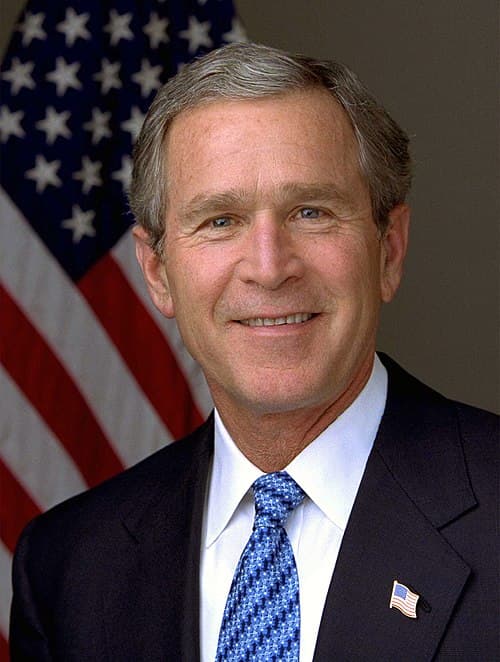
George W. Bush
PERSON95 w/ Morocco·19 w/ Qaddafi
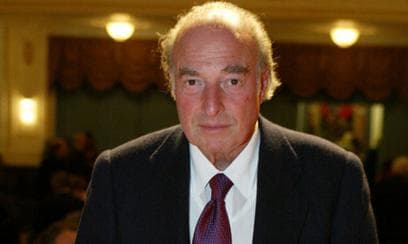
Marc Rich
PERSON90 w/ Morocco·18 w/ Qaddafi
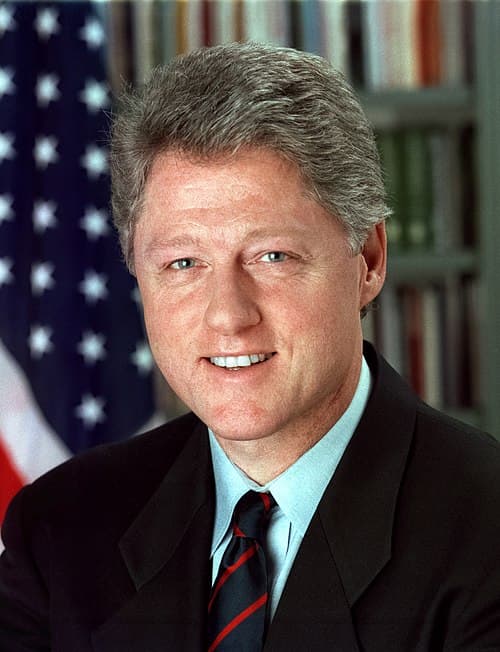
Bill Clinton
PERSON85 w/ Morocco·13 w/ Qaddafi
Barack Obama
PERSON67 w/ Morocco·28 w/ Qaddafi
Tunisia
LOCATION67 w/ Morocco·22 w/ Qaddafi
Lebanon
LOCATION64 w/ Morocco·21 w/ Qaddafi
Bashar al-Assad
PERSON57 w/ Morocco·28 w/ Qaddafi
United States
LOCATION73 w/ Morocco·11 w/ Qaddafi
Yemen
LOCATION57 w/ Morocco·20 w/ Qaddafi
Tehran
LOCATION51 w/ Morocco·18 w/ Qaddafi
Bahrain
LOCATION56 w/ Morocco·12 w/ Qaddafi
Cairo
LOCATION44 w/ Morocco·17 w/ Qaddafi
John F. Kennedy
PERSON56 w/ Morocco·5 w/ Qaddafi
Hosni Mubarak
PERSON38 w/ Morocco·22 w/ Qaddafi
Samantha Power
PERSON53 w/ Morocco·6 w/ Qaddafi
Middle East
LOCATION41 w/ Morocco·17 w/ Qaddafi
Damascus
LOCATION40 w/ Morocco·18 w/ Qaddafi
LB
Leon Black
PERSON53 w/ Morocco·3 w/ Qaddafi
Benjamin Netanyahu
PERSON42 w/ Morocco·11 w/ Qaddafi