Back to Network














7
Shared Docs
7
Same-Page
11 / 7
Mentions
Document Mentions (7 shared documents)
3 mentions1 same-page
Page ?Same page
happen. But Obama—again prodded, perhaps, by Republican critics—has inserted Putin into that pantheon of demonic foes that includes Fidel Castro, Mao Zedong, Saddam Hussein, and Mahmoud Ahmadinejad. That has obscured past areas of cooperation, and made future cooperation much less likely. Kaiser Wilhelm
heon of demonic foes that includes Fidel Castro, Mao Zedong, Saddam Hussein, and Mahmoud Ahmadinejad.
it oil to markets in south and east Asia. Saudi trade and investment are increasingly directed toward Asian markets rather than Europe or America. Saudi Arabia's turn to the east began almost a decade ago. King Abdullah bin Abdulaziz's first foreign trip after becoming king was to India and China in January
3 mentions1 same-page
Page ?Same page
e, but today such a view would be laughed at. The market economy has made Chinese and Indian workers today far more productive than they were under Mao Zedong or Jawaharlal Nehru, India's first prime minister. Societies now accept the simple fact that workers need material incentives to be productive, whi
he Chinese story is reflected in the West's schizophrenic response to it. The Nixon administration eagerly sought better relations with China under Mao, and when Deng Xiaoping doubled down by opening up the country, the West applauded the change. The United States generously accepted Chinese produc
percent to 35 percent. Even some Islamic countries that were initially reluctant to embrace modernization have begun to do so. For example, Qatar, Saudi Arabia, and the United Arab Emirates now feature satellite campuses of major Western universities. One reason for the shift is that the experience of othe
3 mentions1 same-page
Page ?Same page
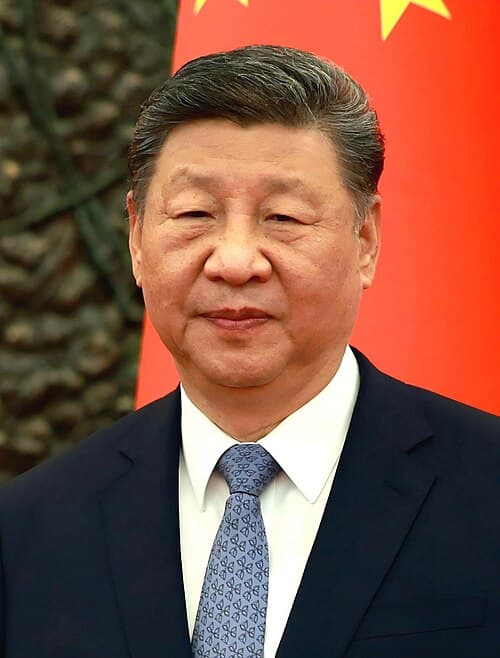
t-large of the American Interest. Article 6. The Economist China's leaders: Changing guard Nov 17th 2012 -- FOR the first time since the death of Mao Zedong in 1976, =hina's most important reins of power have been handed over at the same t=me to a single man: Xi linping (pictured, centre, above). The dec
pt the military =ost for a couple of years after leaving the Politburo, ostensibly to ensur= a smooth transition. Not since Hua Guofeng took over on Mao's death hav= both jobs been transferred simultaneously. Hua turned out to be little more than a transitional figure. Few people exp=ct Mr Xi to be
nuclear Iran on the Middle East by confining his analysis to Israel, the =nited States and Iran. Missing are the inevitable and serious effects as S=udi Arabia, Turkey, Egypt and other regional powers respond to the new sit=ation. Even so, Mr. Bracken's view is a powerful one. It holds little comfort for =
Sponsored
3 mentions1 same-page
Page ?Same page
e, but today such a view would be laughed at. The market economy has made Chinese and Indian workers today far more productive than they were under Mao Zedong or Jawaharlal Nehru, India's first prime minister. Societies now accept the simple fact that workers need material incentives to be productive, whi
he Chinese story is reflected in the West's schizophrenic response to it. The Nixon administration eagerly sought better relations with China under Mao, and when Deng Xiaoping doubled down by opening up the country, the West applauded the change. The United States generously accepted Chinese produc
percent to 35 percent. Even some Islamic countries that were initially reluctant to embrace modernization have begun to do so. For example, Qatar, Saudi Arabia, and the United Arab Emirates now feature satellite campuses of major Western universities. One reason for the shift is that the experience of othe
2 mentions1 same-page
Page ?Same page
certain frisson that attaches to the loathing of Jews and of Israel by the chic folk who express it and cotton to it, like those who carried around Mao's "Little Red Book" in a previous generation or wore a Che Guevara sweatshirt long after everyone knew he was a murderer. In the last few months an
-Awsat The Syrian-Israeli courtship Tariq Alhomayed The Washington Post Plotting a post-Assad road map for Syria David Ignatius Foreign Policy Saudi Arabia's youth unemployment Ellen Knickmeyer Wall Street Journal Another Overhyped Challenge to U.S. Power Joseph Nye Article 1. Article 2. Article 3.
2 mentions1 same-page
Page ?Same page
y which really ancient tradition is preserved and carried forward for new generations. After a few years of study, Nan saw the descending madness of Mao’s China and slipped out of the mainland for Taiwan. He lived for decades between Taipei and Hong Kong and America. During this time his fame as a tea
fter your own country has had upheaval and you've had your visit from a well-meaning American diplomat urging you towards a quiet retirement house in Saudi Arabi, the Spanish social philosopher Manuel Castells will name the disease that undid you. Castells is perhaps an unlikely figure to diagnose the politica
Sponsored
2 mentions1 same-page
Page ?Same page
certain frisson that attaches to the loathing of Jews and of Israel by the chic folk who express it and cotton to it, like those who carried around Mao's "Little Red Book" in a previous generation or wore a Che Guevara sweatshirt long after everyone knew he was a murderer. In the last few months an
-Awsat The Syrian-Israeli courtship Tariq Alhomayed The Washington Post Plotting a post-Assad road map for Syria David Ignatius Foreign Policy Saudi Arabia's youth unemployment Ellen Knickmeyer Wall Street Journal Another Overhyped Challenge to U.S. Power Joseph Nye Vrisidentlel Pros SWIM". EFTA00587
Sponsored
Mutual Connections (1,187)
Entities connected to both Mao Zedong and Saudi Arabia
George W. Bush
PERSON393 w/ Mao·42 w/ Saudi
Jeffrey Epstein
PERSON289 w/ Mao·98 w/ Saudi
Ghislaine Maxwell
PERSON339 w/ Mao·12 w/ Saudi
Joi Ito
PERSON279 w/ Mao·6 w/ Saudi
United States
LOCATION148 w/ Mao·54 w/ Saudi
Condoleezza Rice
PERSON150 w/ Mao·38 w/ Saudi
Alan Dershowitz
PERSON147 w/ Mao·12 w/ Saudi
Marc Rich
PERSON100 w/ Mao·44 w/ Saudi
Xi Jinping
PERSON123 w/ Mao·20 w/ Saudi
Vicky Ward
PERSON135 w/ Mao·5 w/ Saudi
DB
Doug Band
PERSON127 w/ Mao·12 w/ Saudi
Joe Biden
PERSON109 w/ Mao·27 w/ Saudi
Bill Clinton
PERSON84 w/ Mao·47 w/ Saudi
NEW YORK NY
LOCATION127 w/ Mao·2 w/ Saudi
LB
Leon Black
PERSON91 w/ Mao·32 w/ Saudi
New York City
LOCATION113 w/ Mao·10 w/ Saudi
MF
Maria Farmer
PERSON101 w/ Mao·15 w/ Saudi
Prince Andrew
PERSON79 w/ Mao·30 w/ Saudi
CW
Courtney Wild
PERSON99 w/ Mao·9 w/ Saudi
JPMorgan Chase
ORGANIZATION98 w/ Mao·10 w/ Saudi