Back to Network




















4
Shared Docs
4
Same-Page
8 / 4
Mentions
Document Mentions (4 shared documents)
3 mentions1 same-page
Page ?Same page
ll have to emerge. Those who truly believe in a civil, democratic state must overcome two bad habits: sniping from the sidelines, as they did under Hosni Mubarak, and splitting into factions, as they have since time immemorial. Following the heady days of Egypt's uprising, the story of the country's transit
Islamist or less politically self-serving has proved to be naive and EFTA00657290 ineffectual. The conduct of these politicians since the fall of Mubarak makes it clear that they seek to consolidate power and to implement their agenda — an Islamist agenda. Furthermore, with significant pressure from
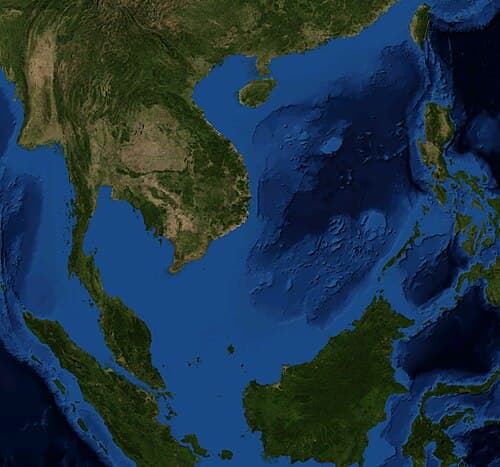
months the paper has published a number of combative editorials on the ongoing standoff with the Philippines regarding ownership of portions of the South China Sea and its territorial dispute with Japan over the Diaovu/Senkaku i . In short, it appears to be at the epicenter of a growing wave of aggressive Chin
3 mentions1 same-page
Page ?Same page
il to improve its effectiveness dramatically. 10. Keeping the United States relevant to the Arab Spring. By choosing to ease out Egyptian President Hosni Mubarak, play a key enabling role in the Libya intervention, and work hard if not so successfully behind the scenes in Bahrain and Yemen, Washington kept i
By choosing to ease out Egyptian President Hosni Mubarak, play a key enabling role in the Libya intervent
e accomplishment side of the ledger, credit Barack Obama with a very smart policy in Asia. By taking advantage of China overplaying its hand in the South China Sea and generally unnerving most of the region, the Obama administration has reconfirmed the central role of the United States in East Asia. The openin
3 mentions1 same-page
Page ?Same page
/online.wsj.com/search/term.html?KE=WORDS=FOUAD+AJAMI&bylinesearch=true> February 10, 2013 -= Two years ago, on Feb. 11, 2011, the Egyptian dictator Hosni Mubarak chttp://topics.wsj.com/person/M/Hosni-Mubarak/6479> stepped aside, overwhelmed by 18 days of protes=s. Silent and remote, he had ruled for three de
ssness, t=e fault line between a feeble secular camp and a cynical Muslim Brotherhood bent on monopolizing political power—th=t the true work of the Mubarak tyranny can be fully appreciated. The "=deep state" he presided over—a Ministry of Interior with nearly two=million functionaries, a police force th
nable. Meanwhile, China'= increasing assertiveness discomfits neighbors throughout Southeast and Ea=t Asia. China has claimed pretty much the whole South China Sea, though it= coastline is farther from much of it than that of Vietnam, Malaysia or the Philippines. It has sent planes and =hips to challenge Japan
Sponsored
3 mentions1 same-page
Page ?Same page
ians facing military trial has been a key grievance of activists and the subject of many protests against the country's leaders since the ouster of Hosni Mubarak. Shahin asserted that "citizens should know that there is no difference between military and civilian courts and this should be included in the new
the country's leaders since the ouster of Hosni Mubarak. Shahin asserted that "citizens should know that
ainland as far as the Philippines, and nearly as far south as the Strait of Malacca." This huge territorial claim, which includes nearly the entire South China Sea, clashes with territorial claims of China's neighbors in the region, including Vietnam, Japan and the Philippines. Brushing aside these counter-cla
Sponsored
Mutual Connections (356)
Entities connected to both Hosni Mubarak and South China Sea
Barack Obama
PERSON139 w/ Hosni·21 w/ South
Bashar al-Assad
PERSON122 w/ Hosni·5 w/ South
George W. Bush
PERSON104 w/ Hosni·15 w/ South
Cairo
LOCATION107 w/ Hosni·6 w/ South
United States
LOCATION96 w/ Hosni·17 w/ South
Bill Clinton
PERSON88 w/ Hosni·18 w/ South
Lebanon
LOCATION97 w/ Hosni·9 w/ South
Benjamin Netanyahu
PERSON98 w/ Hosni·7 w/ South
Tehran
LOCATION87 w/ Hosni·11 w/ South
Yemen
LOCATION88 w/ Hosni·9 w/ South
Tunisia
LOCATION89 w/ Hosni·2 w/ South
Middle East
LOCATION70 w/ Hosni·15 w/ South
Terje Rod-Larsen
PERSON80 w/ Hosni·5 w/ South
Damascus
LOCATION80 w/ Hosni·4 w/ South
Saddam Hussein
PERSON73 w/ Hosni·4 w/ South
Marc Rich
PERSON65 w/ Hosni·10 w/ South
Jeffrey Epstein
PERSON49 w/ Hosni·25 w/ South
Hillary Clinton
PERSON63 w/ Hosni·10 w/ South
Vladimir Putin
PERSON49 w/ Hosni·21 w/ South
Jerusalem
LOCATION62 w/ Hosni·5 w/ South