Back to Network




















5
Shared Docs
3
Same-Page
10 / 5
Mentions
Document Mentions (5 shared documents)
3 mentions1 same-page
Page ?Same page
staff Sami Anan; and the heads of Egypt's army, navy and air force — as finally giving Egypt's revolution the chance to remove key remnants of the Mubarak regime and fulfill its promise. Others, particularly non-Islamists, are more prone to see recent actions as the Muslim Brotherhood removing any che
d Abbas. Early hopes that Egypt's new president, Muhammad Morsi, might put the Hamas genie back in its bottle have subsided. Under his predecessor, Hosni Mubarak, donors meeting in Sharm el-Sheikh in March 2009 committed $5 billion to repair damage from Israel's Gaza war in 2006 and promised to end the siege
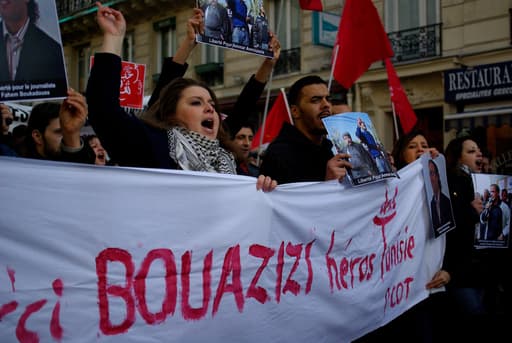
he entire Middle East. "We have far more freedoms," one peddler hawking fruit in the same square lamented, "but far fewer jobs." Another noted that Mohamed Bouazizi, the vendor who set himself on fire, did so not to vote in a democratic election but because harassment by local officials had cost him his livelih
3 mentions1 same-page
Page ?Same page
lt in Tunisia successfully ousted the old regime, the world reacted with amazement. Democracy from below in the Arab world? After the overthrow of Hosni Mubarak's 30 year-old regime in Egypt, the heartland of the Middle East, amazement has turned into certainty. The Middle East has awakened and begun to ent
oints out, oil prices are driven both by current conditions and by future expectations. Oil markets don't like surprises. The sudden ousting of Mr Mubarak and the unrest in Libya, Bahrain, Yemen, Iran and Algeria (which between them supply a tenth of the world's oil) had added 20% to oil prices by the
ountries, more were university graduates with higher expectations. Their frustration and anger became unbearable. The desperate act of one of them, Mohamed Bouazizi, who set himself on fire in front of a police station in a sad town in Tunisia's interior, became the symbol and catalyzing spark for the whole gen
3 mentions1 same-page
Page ?Same page
; for the first time in a long time, Arabs are. In Tahrir Square, Egypt's young made a revolution. President Obama bowed to reality and helped show Hosni Mubarak the door; Benjamin Netanyahu stood athwart history, impotently yelling stop. Now Egypt's leaders are doing its people's will, bringing Hamas and Fa
g about a revolution. Tocqueville observed that a dictatorial regime faces the greatest danger when it is trying to reform itself. WHY, THEN, WERE Mubarak and Ali ousted so easily while other dictators are putting up a more determined resistance? Largely EFTA00586653 22 because they had stayed in p
burg rulers, led to the division between Belgium and Holland. In the case of the Arab awakening of 2011, 46-year-old policewoman Fedia Hamdi struck Mohamed Bouazizi, a Tunisian stallholder in a market, and in protest he burned himself alive (in the subsequent investigation it appeared that in fact Hamdi had not
Sponsored
Page HOUSE_OVERSIGHT_023462
nd YouTube videos from Tunisia, protests broke out across much of the rest of the Arab world. Within weeks, millions were on the streets in Egypt and Hosni Mubarak was gone, shown the door in part by his longtime backer, the U.S. government. The Obama administration was captivated by this spontaneous outbreak of
Page: HOUSE_OVERSIGHT_023462 →In Riyadh, Saudi officials watched with alarm. They became furious when the Obama administration betrayed, to Saudi thinking, a longtime ally in Mr. Mubarak and urged him to step down in the face of the street demonstrations. The Egyptian leader represented a key bulwark in what Riyadh perceives as a gre
Page: HOUSE_OVERSIGHT_023462 →Page HOUSE_OVERSIGHT_023482
ered by the self- immolation of an overeducated 26-year-old Tunisian vegetable seller whose cart was repeatedly confiscated by the authorities. After Mohamed Bouazizi was slapped by a policewoman when he tried to complain, he reached the end of his tether. Bouazizi’s public suicide turned into a social movement bec
Page: HOUSE_OVERSIGHT_023482 →Page HOUSE_OVERSIGHT_031917
xtended and significant resistance against the regime having emerged. Meanwhile, Egypt is struggling with internal tension over the fall of President Hosni Mubarak and the future of the military junta that replaced him. Add to this the U.S. withdrawal from Iraq and the potential rise of Iranian power, and the po
Page: HOUSE_OVERSIGHT_031917 →Page HOUSE_OVERSIGHT_031918
ple. The Pan-Arab rising is moribund. Where it once threatened the existence of Muslim states, like the Arab monarchies, it is now itself threatened. Mubarak, Syrian President Bashar al Assad and Libyan leader Moammar Gadhafi all represented the old Pan-Arab vision. A much better way to understand the "Ara
Page: HOUSE_OVERSIGHT_031918 →Page HOUSE_OVERSIGHT_031930
a sizeable advantage. This is not naïve or farfetched. After all, it was the plight of Tunisian vendor HOUSE_OVERSIGHT_031929 --- PAGE BREAK --- 18 Mohamed Bouazizi and the symbolism of his fate that sparked all the revolutions across the Middle East. The images of the rebels in Libya liberating their country (as
Page: HOUSE_OVERSIGHT_031930 →Sponsored
Mutual Connections (52)
Entities connected to both Hosni Mubarak and Mohamed Bouazizi
Barack Obama
PERSON139 w/ Hosni·6 w/ Mohamed
Bashar al-Assad
PERSON122 w/ Hosni·4 w/ Mohamed
Cairo
LOCATION107 w/ Hosni·4 w/ Mohamed
George W. Bush
PERSON104 w/ Hosni·4 w/ Mohamed
Lebanon
LOCATION97 w/ Hosni·4 w/ Mohamed
Benjamin Netanyahu
PERSON98 w/ Hosni·2 w/ Mohamed
United States
LOCATION96 w/ Hosni·4 w/ Mohamed
Tunisia
LOCATION89 w/ Hosni·5 w/ Mohamed
Yemen
LOCATION88 w/ Hosni·5 w/ Mohamed
Bill Clinton
PERSON88 w/ Hosni·4 w/ Mohamed
Tehran
LOCATION87 w/ Hosni·2 w/ Mohamed
Damascus
LOCATION80 w/ Hosni·4 w/ Mohamed
Saddam Hussein
PERSON73 w/ Hosni·4 w/ Mohamed
Middle East
LOCATION70 w/ Hosni·4 w/ Mohamed
Marc Rich
PERSON65 w/ Hosni·4 w/ Mohamed
Fatah
ORGANIZATION63 w/ Hosni·3 w/ Mohamed
Hillary Clinton
PERSON63 w/ Hosni·3 w/ Mohamed
Jerusalem
LOCATION62 w/ Hosni·2 w/ Mohamed
Bahrain
LOCATION57 w/ Hosni·3 w/ Mohamed
West Bank
LOCATION54 w/ Hosni·3 w/ Mohamed