Back to Network




















4
Shared Docs
4
Same-Page
8 / 4
Mentions
Document Mentions (4 shared documents)
3 mentions1 same-page
Page ?Same page
broad, where everyone obtains a share of power and wealth. Perhaps the reformists' aims were too ambitious. For example, in Egypt, after many years Mubarak finally agreed to the idea of amending the constitution; however, by the time the amendments were done, little had changed. The conservatives had
h Abu Ismail, others described a broader reason for the protests: a rising fear that the military council which has ruled Egypt since the ouster of Hosni Mubarak more than a year ago will refuse to cede power to civilian leaders next month. The council, known by its acronym SCAF (Supreme Council of Armed Fo
de in Jordan, or the Muslim-Coptic Christian divide in Egypt. These sectarian divisions have prevented national leaders from emerging — and no Arab Nelson Mandela or Martin Luther King Jr. has been able to rise above them to heal the rifts. Without such leaders there is too little trust in the room to do big,
3 mentions1 same-page
Page ?Same page
cle in its entirety. Egypt's lost opportunity By Fareed Zakaria Over the past three decades, when American officials would (gently) press Egypt's Hosni Mubarak to stop jailing his opponents and initiate more democratic reforms, he would invariably snap back: "Do you want the Muslim Brotherhood in power?" W
lowed discrimination and even violence against the Coptic Christian minority in Egypt. It has tried to shut down its opposition, banning members of Mubarak's old party from all political offices in Egypt for life. But its biggest failing has been incompetence. Egypt is in free fall. In the year that Mor
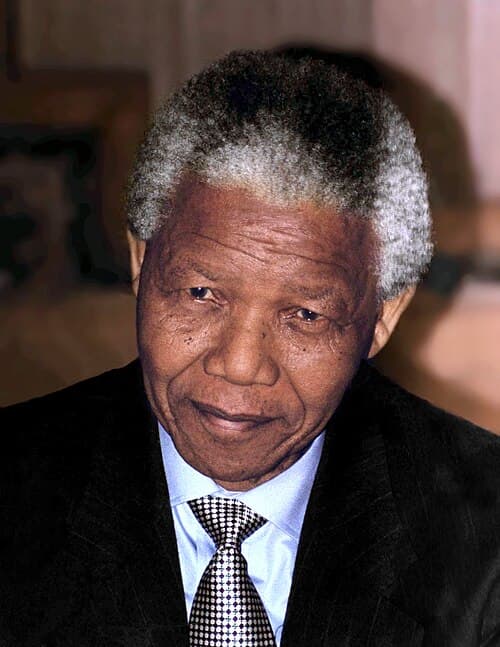
needed to be a different kind of leader. There is such a leader in the world today, lying barely alive in a hospital bed in Pretoria, South Africa. Nelson Mandela has many claims to greatness. But perhaps chief among them was the fact that when he took control of the country, he did everything in his power to
3 mentions1 same-page
Page ?Same page
EFTA_R1_02029339 EFTA02689714 7 the uprisings shaking the Arab world. Erdogan was one of the first world leaders to call on Egyptian President Hosni Mubarak to step down, yet one of the last to ask the same of Libya's Qaddafi. In Syria, meanwhile, the Turkish government remains unable to let go of Bash
world leaders to call on Egyptian President Hosni Mubarak to step down, yet one of the last to ask the sam
eedom to German Chancellor Angela Merkel. The previous foreign recipients included Pope John Paul II, who championed the freedom of Eastern Europe; Nelson Mandela, who triumphed over apartheid in South Africa; and Helmut Kohl, who reunited Germany. Did Merkel, for all her good qualities, really fit in that gr
Sponsored
3 mentions1 same-page
Page ?Same page
last month, some rights activists say, the authorities are acting with a sense of impunity exceeding even the period before the 2011 revolt against Hosni Mubarak. The government installed by Gen. Abdul-Fattah el-Sisi has renewed the Mubarak-era state of emergency removing all rights to due process or protec
nity exceeding even the period before the 2011 revolt against Hosni Mubarak. The government installed by Gen. Abdul-Fattah el-Sisi has renewed the Mubarak-era state of emergency removing all rights to due process or protections against police abuse. And police officials have pronounced themselves "vin
ople in these countries are not just objects. They are subjects; they have agency. South Africa had a moderate postapartheid experience because of Nelson Mandela and F.W. de Klerk. Japan rebuilt itself as a modern nation in the late 19th century because its leaders recognized their country was lagging behind
Sponsored
Mutual Connections (346)
Entities connected to both Hosni Mubarak and Nelson Mandela
Barack Obama
PERSON139 w/ Hosni·22 w/ Nelson
Bashar al-Assad
PERSON122 w/ Hosni·11 w/ Nelson
George W. Bush
PERSON104 w/ Hosni·20 w/ Nelson
United States
LOCATION96 w/ Hosni·15 w/ Nelson
Cairo
LOCATION107 w/ Hosni·3 w/ Nelson
Bill Clinton
PERSON88 w/ Hosni·16 w/ Nelson
Benjamin Netanyahu
PERSON98 w/ Hosni·5 w/ Nelson
Lebanon
LOCATION97 w/ Hosni·5 w/ Nelson
Tunisia
LOCATION89 w/ Hosni·6 w/ Nelson
Tehran
LOCATION87 w/ Hosni·6 w/ Nelson
Yemen
LOCATION88 w/ Hosni·4 w/ Nelson
Terje Rod-Larsen
PERSON80 w/ Hosni·5 w/ Nelson
Damascus
LOCATION80 w/ Hosni·4 w/ Nelson
Marc Rich
PERSON65 w/ Hosni·16 w/ Nelson
Saddam Hussein
PERSON73 w/ Hosni·5 w/ Nelson
Middle East
LOCATION70 w/ Hosni·6 w/ Nelson
Hillary Clinton
PERSON63 w/ Hosni·11 w/ Nelson
Jeffrey Epstein
PERSON49 w/ Hosni·25 w/ Nelson
Bahrain
LOCATION57 w/ Hosni·9 w/ Nelson
Jerusalem
LOCATION62 w/ Hosni·3 w/ Nelson