Back to Network




















11
Shared Docs
3
Same-Page
11 / 11
Mentions
Document Mentions (11 shared documents)
2 mentions1 same-page
Page ?Same page
te bogeyman for the Tea Party right -- particularly TV host Glenn Beck. (Interestingly, the democracy promotion work Soros has funded in the former Soviet Union has also made him a figure of conspiracy theories.) Soros has made at least four visits to the White House since Obama came to office, though contr
has now returned to the administration, this time as the assistant secretary of defense. His new appointment makes him the Pentagon's point man for East Asia and the Pacific at a time whe 38. Jane Harman served nine terms as a congresswoman from California, stepping down in 2011 to lead the Wilson Cen
2 mentions1 same-page
Page ?Same page
ional adversaries. There is no question that some of Putin's policies—including his support for Assad and his apparent to desire to restore the old Soviet Union—run counter to what the United States and any proponent of democracy and human rights would like to see happen. But Obama—again prodded, perhaps, b
res the kingdom's pivot to the east. Long before the American pivot, Saudi Arabia has reoriented its economic and political priorities to South and East Asia. Salman arrived in Beijing on March 13 for his first visit to China. Last month, the crown prince visited Pakistan, Japan, India and the Maldives.
2 mentions1 same-page
Page ?Same page
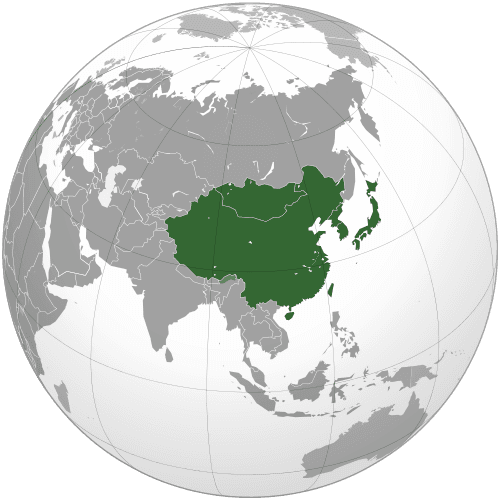
to this one, many people assumed that history moves in only one direction. The tide of freedom had lifted East Asia and Eastern Europe, the former Soviet Union and Indonesia. In an era of global trade and communications, the rest of the world surely would follow. Academics and think tanks studied democrati
toward the end of the last century and into this one, many people assumed that history moves in only one direction. The tide of freedom had lifted East Asia and Eastern Europe, the former Soviet Union and Indonesia. In an era of global trade and communications, the rest of the world surely would follow.
Sponsored
Page HOUSE_OVERSIGHT_029555
g leaves," he says. "He walked away from the ideology of the Communist Party just as effectively as Mikhail Gorbachev walked away from the essence of the Soviet Union." By 2050 Keating sees a world order with nations in terms of gross domestic product in this hierarchy: (1) China, (2) US, (3) India, (4) Japan, (5)
Page: HOUSE_OVERSIGHT_029555 →Page HOUSE_OVERSIGHT_029556
in our oil and gas"; a renewed emphasis on the value of hi- tech and education; and above all, a cultural change that integrates Australia more into East Asia. "Cultural transformation is the key for us," Keating says. He rates it as more important than economic reform. "There is less interest now in being
Page: HOUSE_OVERSIGHT_029556 →Page HOUSE_OVERSIGHT_029561
g leaves," he says. "He walked away from the ideology of the Communist Party just as effectively as Mikhail Gorbachev walked away from the essence of the Soviet Union." By 2050 Keating sees a world order with nations in terms of gross domestic product in this hierarchy: (1) China, (2) US, (3) India, (4) Japan, (5)
Page: HOUSE_OVERSIGHT_029561 →Page HOUSE_OVERSIGHT_029562
in our oil and gas"; a renewed emphasis on the value of hi- tech and education; and above all, a cultural change that integrates Australia more into East Asia. "Cultural transformation is the key for us," Keating says. He rates it as more important than economic reform. "There is less interest now in being
Page: HOUSE_OVERSIGHT_029562 →Page HOUSE_OVERSIGHT_029660
g leaves," he says. "He walked away from the ideology of the Communist Party just as effectively as Mikhail Gorbachev walked away from the essence of the Soviet Union." By 2050 Keating sees a world order with nations in terms of gross domestic product in this hierarchy: (1) China, (2) US, (3) India, (4) Japan, (5)
Page: HOUSE_OVERSIGHT_029660 →Page HOUSE_OVERSIGHT_029661
in our oil and gas"; a renewed emphasis on the value of hi- tech and education; and above all, a cultural change that integrates Australia more into East Asia. "Cultural transformation is the key for us," Keating says. He rates it as more important than economic reform. "There is less interest now in being
Page: HOUSE_OVERSIGHT_029661 →Sponsored
Page HOUSE_OVERSIGHT_029667
g leaves," he says. "He walked away from the ideology of the Communist Party just as effectively as Mikhail Gorbachev walked away from the essence of the Soviet Union." By 2050 Keating sees a world order with nations in terms of gross domestic product in this hierarchy: (1) China, (2) US, (3) India, (4) Japan, (5)
Page: HOUSE_OVERSIGHT_029667 →Page HOUSE_OVERSIGHT_029668
in our oil and gas"; a renewed emphasis on the value of hi- tech and education; and above all, a cultural change that integrates Australia more into East Asia. "Cultural transformation is the key for us," Keating says. He rates it as more important than economic reform. "There is less interest now in being
Page: HOUSE_OVERSIGHT_029668 →Page HOUSE_OVERSIGHT_029675
g leaves," he says. "He walked away from the ideology of the Communist Party just as effectively as Mikhail Gorbachev walked away from the essence of the Soviet Union." By 2050 Keating sees a world order with nations in terms of gross domestic product in this hierarchy: (1) China, (2) US, (3) India, (4) Japan, (5)
Page: HOUSE_OVERSIGHT_029675 →Page HOUSE_OVERSIGHT_029676
in our oil and gas"; a renewed emphasis on the value of hi- tech and education; and above all, a cultural change that integrates Australia more into East Asia. "Cultural transformation is the key for us," Keating says. He rates it as more important than economic reform. "There is less interest now in being
Page: HOUSE_OVERSIGHT_029676 →Page HOUSE_OVERSIGHT_029737
pitalism after the oil shocks and stagflation of the 1970s. America's success in the 1980s contributed both to the end of the Cold War, by persuading the Soviet Union it could not keep up, and to two decades of exceptional global growth. The new U.S. international economic strategy should have five parts. First, th
Page: HOUSE_OVERSIGHT_029737 →Page HOUSE_OVERSIGHT_029738
security, improve productivity, and give North Americans an edge in manufacturing and other industries that are already experiencing rising wages in East Asia. A politically acceptable immigration policy, and a push for educational innovation using new technologies and competition, could lead to a more pros
Page: HOUSE_OVERSIGHT_029738 →Sponsored
Page HOUSE_OVERSIGHT_029824
pitalism after the oil shocks and stagflation of the 1970s. America's success in the 1980s contributed both to the end of the Cold War, by persuading the Soviet Union it could not keep up, and to two decades of exceptional global growth. The new U.S. international economic strategy should have five parts. First, th
Page: HOUSE_OVERSIGHT_029824 →Page HOUSE_OVERSIGHT_029825
security, improve productivity, and give North Americans an edge in manufacturing and other industries that are already experiencing rising wages in East Asia. A politically acceptable immigration policy, and a push for educational innovation using new technologies and competition, could lead to a more pros
Page: HOUSE_OVERSIGHT_029825 →Sponsored
Mutual Connections (575)
Entities connected to both Soviet Union and East Asia
Barack Obama
PERSON46 w/ Soviet·42 w/ East
George W. Bush
PERSON48 w/ Soviet·38 w/ East
United States
LOCATION48 w/ Soviet·34 w/ East
Bill Clinton
PERSON47 w/ Soviet·33 w/ East
Jeffrey Epstein
PERSON42 w/ Soviet·32 w/ East
Marc Rich
PERSON30 w/ Soviet·27 w/ East
Lebanon
LOCATION24 w/ Soviet·30 w/ East
Vladimir Putin
PERSON26 w/ Soviet·22 w/ East
Benjamin Netanyahu
PERSON27 w/ Soviet·21 w/ East
Donald Trump
PERSON31 w/ Soviet·15 w/ East
Middle East
LOCATION18 w/ Soviet·26 w/ East
Bashar al-Assad
PERSON21 w/ Soviet·22 w/ East
Hillary Clinton
PERSON25 w/ Soviet·17 w/ East
Tehran
LOCATION19 w/ Soviet·21 w/ East
Jerusalem
LOCATION19 w/ Soviet·19 w/ East
Vietnam
LOCATION22 w/ Soviet·13 w/ East
Saddam Hussein
PERSON23 w/ Soviet·12 w/ East
Ronald Reagan
PERSON20 w/ Soviet·15 w/ East
Cynthia Nixon
PERSON16 w/ Soviet·18 w/ East
Joe Biden
PERSON17 w/ Soviet·17 w/ East