Back to Network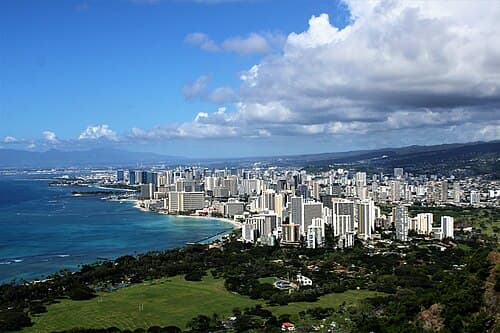















5
Shared Docs
5
Same-Page
5 / 5
Mentions
Document Mentions (5 shared documents)
2 mentions1 same-page
Page ?Same page
gence by the NSA @ was hardly a secret. As the NSA expanded further, it delegated part of its work to regional bases, including ones in Utah, Texas, Hawaii, and Japan. The paramount task of the NSA remained monitoring the channels of communications that an adversary might use. The vast prolifera- tion of
arfare, conventional defensive rules do not apply. “There are no rivers or hills up here. It’s all flat. All advantage goes to the attacker,” General Hayden said in an inter- view in 2015 with the publisher of The Wall Street Journal. His point was that because there are no defensive positions, the United
2 mentions1 same-page
Page ?Same page
not believe an investigative book should be written without the author visiting the crime scene and other pertinent ven- ues, I undertook research in Hawaii, Japan, Hong Kong, and Moscow. Where possible, I flew the same flights that Snowden did. I am grate- ful to Ena and Ines Talakic for their assistance
. Unlike the telephone program that Snowden revealed, the PRISM program produced actionable intelligence until the time when Snowden blew it. General Hayden, who was NSA director during the three years following the 9/11 attack, wrote that these surveil- lance powers, among other things, “uncovered illici
2 mentions1 same-page
Page ?Same page
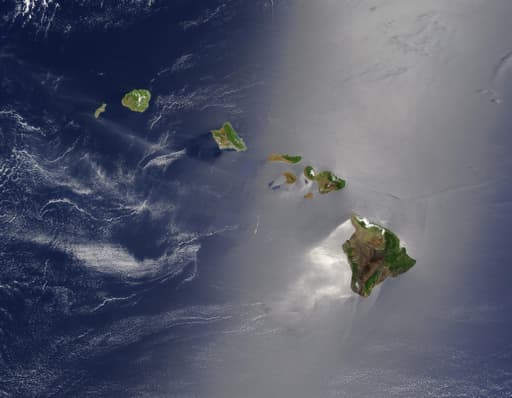
e number of its most secret files had been stolen. The suspect was Edward Snowden, a 29 year old civilian analyst at the NSA’s regional base in Oahu, Hawaii, who had fled to Hong Kong. The stolen documents revealed, among other things, the secret tools and capabilities that the NSA employed to do its job.
e-piping.” One result was that the NSANet, which Snowden had access to at Dell in 2012, became a shared network. It had common access points. General Hayden described them to me as the equivalent of “reading rooms” in a library. They served as a means for NSA workers to exchange ideas about the problems t
Sponsored
2 mentions1 same-page
Page ?Same page
ted as a hero for defying the US government. He had not sacrificed himself, he had transformed himself. He had risen from being a lowly technician in Hawaii whose talents went largely unrecognized, to the status of an international media star in Moscow. In his new messianic role, he could make Internet ap
and they are very grateful” American intelligence officers knowledgeable about the operations of the FSB, agreed with Kalugin’s assessment. General Hayden, for example, who served both as director of the NSA, CIA, and Air Force counterintelligence, told me in an interview that he saw no other possibilit
2 mentions1 same-page
Page ?Same page
workers, such as Ames, it is plausible that it spotted Snowden through his Internet rants against U.S. surveillance. Even if it had missed Snowden in Hawaii, a disgruntled ex-civilian employee at the NSA would have received its full attention after he contacted Russian officials in Hong Kong. While the ta
RSIGHT_020405 254 10. CHAPTER FIFTEEN Did Snowden Act Alone? > “Totality of Snowden’s Actions,”— Author’s interview with Michael Hayden. Also, “Hayden interview,” Meet The Press, NBC, December 15, 2013 “Maclean stole immensely valuable. ..”—See Appendix A, Donald Maclean “Whistle blower Bradley Bi
Sponsored
Mutual Connections (507)
Entities connected to both Hawaii and Hayden
Honolulu
LOCATION1,414 w/ Hawaii·3 w/ Hayden
George W. Bush
PERSON1,251 w/ Hawaii·5 w/ Hayden
United States
LOCATION611 w/ Hawaii·5 w/ Hayden
John F. Kennedy
PERSON575 w/ Hawaii·5 w/ Hayden
Prince Charles
PERSON351 w/ Hawaii·5 w/ Hayden
Jeffrey Epstein
PERSON309 w/ Hawaii·6 w/ Hayden
Aeroflot
ORGANIZATION162 w/ Hawaii·5 w/ Hayden
Sheremetyevo
LOCATION133 w/ Hawaii·2 w/ Hayden
Virginia Giuffre
PERSON105 w/ Hawaii·7 w/ Hayden
Donald Trump
PERSON102 w/ Hawaii·5 w/ Hayden
Marc Rich
PERSON97 w/ Hawaii·3 w/ Hayden
LB
Leon Black
PERSON92 w/ Hawaii·4 w/ Hayden
Prince Andrew
PERSON85 w/ Hawaii·4 w/ Hayden
Colorado
LOCATION84 w/ Hawaii·2 w/ Hayden
Barack Obama
PERSON79 w/ Hawaii·7 w/ Hayden
Julie K. Brown
PERSON79 w/ Hawaii·5 w/ Hayden
Joe Biden
PERSON80 w/ Hawaii·4 w/ Hayden
Department of Justice
ORGANIZATION77 w/ Hawaii·5 w/ Hayden
Eric Trump
PERSON77 w/ Hawaii·4 w/ Hayden
ET
Emmy Taylor
PERSON75 w/ Hawaii·4 w/ Hayden