Back to Network




















7
Shared Docs
7
Same-Page
7 / 7
Mentions
Document Mentions (7 shared documents)
2 mentions1 same-page
Page ?Same page
not to mention the 2003 U.S. invasion — to eliminate the program. The international community got lucky: Had Hussein not been dumb enough to invade Kuwait in 1990, he probably would have gotten the bomb sometime by the mid-1990s. Iran's nuclear program is more advanced than Hussein's was in 1981. But
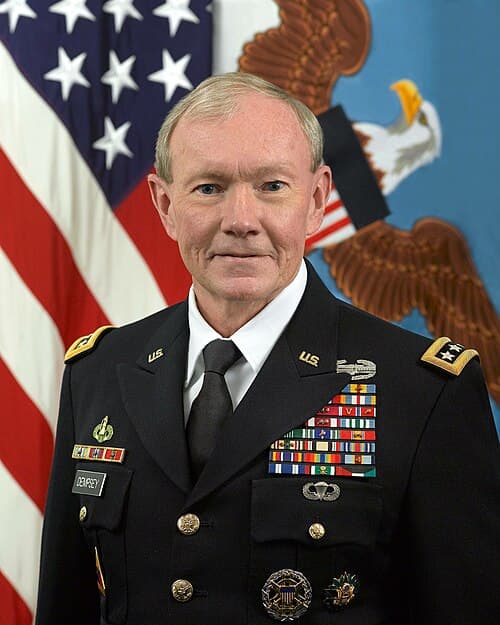
ity to sustain a large-scale bombing campaign, an Israeli assault would probably be a one-off strike with more limited effects. No wonder that Gen. Martin Dempsey, the chairman of the U.S. Joint Chiefs of Staff, recently told CNN that an Israeli attack would set the program back only "a couple of years" and "
2 mentions1 same-page
Page ?Same page
— particularly Saudi Arabia and the United Arab Emirates — is extremely probable. Since the July 3 military intervention, these states along with Kuwait have lavished Egypt's new government with $12 billion in aid and have fully backed the military's clampdown against the Muslim Brotherhood, a grou
tan. With President Obama and Congress apparently disinclined to push the military to fix itself, it is up to the Joint Chiefs, especially Chairman Martin Dempsey and the heads of the Army (Gen. Raymond Odierno) and the Marine Corps (Gen. James Amos), to do so. It is their duty. Thomas E. Ricks, a former Pos
2 mentions1 same-page
Page ?Same page
lished the U.S. as a production powerhouse. In fact, the increase in U.S. crude oil production during the past five years equates to adding another Kuwait to the global oil system. According to the International Energy Agency, the U.S. will surpass Russia in total liquid fuels production (including bi
all of the tools of American power" in a whole-of- government operation. The President also ignored the counsel of his top military advisor, General Martin Dempsey, who had publicly cautioned that in Syria "you need a strategy to tie military options with other instruments of power." It is a rare spectacle to
Sponsored
2 mentions1 same-page
Page ?Same page
l contributed to Iran's nuclear policy decision making. EFTA00636712 2. The broad anger directed at the U.S. by the governments of Saudi Arabia, Kuwait, Bahrain, the United Arab Emirates, Jordan and Egypt. Though these governments pay lip service to the Palestinian cause, the source of their curren
role in shaping this region and its future," Obama said. US reengagement in the Asia-Pacific also referred to America's military presence. General Martin Dempsey, chairman of the Joint Chiefs of Staff and Obama's chief military adviser says, "The US military will be obliged to overtly confront China as it fa
2 mentions1 same-page
Page ?Same page
t of a storm of his own making, fell back on lawyerly dist=nctions. A Greater Middle East, an Islam=c world, used to American campaigns of rescue — Kuwait in 1991, Bosnia i= 1995, Kosovo in 1999, Afghanistan in 2001, Iraq in 2003, Libya in 2011 — is now witnessing the ebb of American power and respons
tary of State Hilla=y Rodham Clinton, Defense Secretary Leon Panetta, CIA Director David Petraeusand the chairman of the Joint Chi=fs of Staff, Gen. Martin Dempsey. But the president overrode them, his cau=ion of no help in a conflict of such virulence. Under the gaze of the world, Obama in=tead =font face="Ti
2 mentions1 same-page
Page ?Same page
ot to mention the 2003 U.S. invasion — to eliminate the program. The international community got lucky: Had Hussein not been dumb enough to invade Kuwait in 1990, he probably would have gotten the bomb sometime by the mid-1990s. Iran's nuclear program is more advanced than Hussein's was in 1981. But
ty to sustain a large-scale bombing campaign, an Israeli assault would probably be a one- off strike with more limited effects. No wonder that Gen. Martin Dempsey, the chairman of the U.S. Joint Chiefs of Staff, recently told CNN that an Israeli attack would set the program back only "a couple of years" and
Sponsored
2 mentions1 same-page
Page ?Same page
a and its affiliated organizations have killed untold thou=ands of Shiites in the past 11 years—in particular, in Iraq. In fact, in=2007, groups in Kuwait that pledged allegiance to Al-Qaeda issued a fatwa=97a legal pronouncement by a religious scholar—against the Shiite government in Iran. From the b
his top national secur=ty officials at that time, including Secretary of State Hillary Clinton, CIA Director David Petraeus, Joint Chi=fs Chairman Martin Dempsey, and Secretary of Defense Leon Panetta. His las=-minute decision in August 2013 not to strike Syria after its use of chemi=al weapons was popular in
Sponsored
Mutual Connections (244)
Entities connected to both Kuwait and Martin Dempsey
Jeffrey Epstein
PERSON155 w/ Kuwait·10 w/ Martin
Barack Obama
PERSON62 w/ Kuwait·18 w/ Martin
United States
LOCATION56 w/ Kuwait·14 w/ Martin
Bahrain
LOCATION64 w/ Kuwait·3 w/ Martin
George W. Bush
PERSON54 w/ Kuwait·11 w/ Martin
Yemen
LOCATION61 w/ Kuwait·4 w/ Martin
Bashar al-Assad
PERSON50 w/ Kuwait·14 w/ Martin
Terje Rod-Larsen
PERSON49 w/ Kuwait·13 w/ Martin
Middle East
LOCATION52 w/ Kuwait·10 w/ Martin
Lebanon
LOCATION48 w/ Kuwait·13 w/ Martin
Marc Rich
PERSON48 w/ Kuwait·6 w/ Martin
Donald Trump
PERSON50 w/ Kuwait·3 w/ Martin
Saddam Hussein
PERSON41 w/ Kuwait·8 w/ Martin
Bill Clinton
PERSON40 w/ Kuwait·8 w/ Martin
Cairo
LOCATION44 w/ Kuwait·3 w/ Martin
Benjamin Netanyahu
PERSON34 w/ Kuwait·12 w/ Martin
Tehran
LOCATION34 w/ Kuwait·12 w/ Martin
Tunisia
LOCATION39 w/ Kuwait·5 w/ Martin
Hosni Mubarak
PERSON39 w/ Kuwait·4 w/ Martin
Jerusalem
LOCATION31 w/ Kuwait·10 w/ Martin