Back to Network
















4
Shared Docs
4
Same-Page
4 / 4
Mentions
Document Mentions (4 shared documents)
2 mentions1 same-page
Page ?Same page
Case for Reason, Science, Humanism, and Progress. Venki Ramakrishnan is a scientist at the Medical Research Council Laboratory of Molecular Biology, Cambridge University; recipient of the Nobel Prize in Chemistry (2009); current president of the Royal Society; and the author of Gene Machine: The Race to Discover the S
: The New Science of Cause and Effect. As a former physicist, I was extremely interested in cybernetics. Though it did not utilize the full power of Turing Machines, it was highly transparent, perhaps because it was founded on classical control theory and information theory. We are losing this transparency now, w
2 mentions1 same-page
Page ?Same page
OMPUTERS BECOME OUR OVERLORDS? Venki Ramakrishnan Venki Ramakrishnan is a scientist at the Medical Research Council Laboratory of Molecular Biology, Cambridge University; recipient of the Nobel Prize in Chemistry (2009); current president of the Royal Society; and the author of Gene Machine: The Race to Discover the S
brains conceptually, formally, might work—an artificial neural network. They saw that their brainlike model would do computations in the same way as Turing Machines. From their work, it emerged that we could make brainlike neural networks that would act as general computers. And in fact, the practical work done b
2 mentions1 same-page
Page ?Same page
Case for Reason, Science, Humanism, and Progress. Venki Ramakrishnan is a scientist at the Medical Research Council Laboratory of Molecular Biology, Cambridge University; recipient of the Nobel Prize in Chemistry (2009); current president of the Royal Society; and the author of Gene Machine: The Race to Discover the S
: The New Science of Cause and Effect. As a former physicist, I was extremely interested in cybernetics. Though it did not utilize the full power of Turing Machines, it was highly transparent, perhaps because it was founded on classical control theory and information theory. We are losing this transparency now, w
Sponsored
2 mentions1 same-page
Page ?Same page
OMPUTERS BECOME OUR OVERLORDS? Venki Ramakrishnan Venki Ramakrishnan is a scientist at the Medical Research Council Laboratory of Molecular Biology, Cambridge University; recipient of the Nobel Prize in Chemistry (2009); current president of the Royal Society; and the author of Gene Machine: The Race to Discover the S
brains conceptually, formally, might work—an artificial neural network. They saw that their brainlike model would do computations in the same way as Turing Machines. From their work, it emerged that we could make brainlike neural networks that would act as general computers. And in fact, the practical work done b
Sponsored
Mutual Connections (688)
Entities connected to both Cambridge University and Turing Machines
Julie K. Brown
PERSON24 w/ Cambridge·4 w/ Turing
J. Robert Oppenheimer
PERSON19 w/ Cambridge·4 w/ Turing
Stephen Hawking
PERSON17 w/ Cambridge·4 w/ Turing
Michael Douglas
PERSON18 w/ Cambridge·2 w/ Turing
George W. Bush
PERSON14 w/ Cambridge·4 w/ Turing
Prince Andrew
PERSON14 w/ Cambridge·4 w/ Turing
Marc Rich
PERSON13 w/ Cambridge·4 w/ Turing
Tufts University
ORGANIZATION13 w/ Cambridge·2 w/ Turing
University of Oxford
ORGANIZATION13 w/ Cambridge·2 w/ Turing
Eric Trump
PERSON10 w/ Cambridge·4 w/ Turing
Robert Gates
PERSON10 w/ Cambridge·4 w/ Turing
Alan Dershowitz
PERSON10 w/ Cambridge·4 w/ Turing
Samantha Power
PERSON10 w/ Cambridge·4 w/ Turing
Milan
LOCATION11 w/ Cambridge·2 w/ Turing
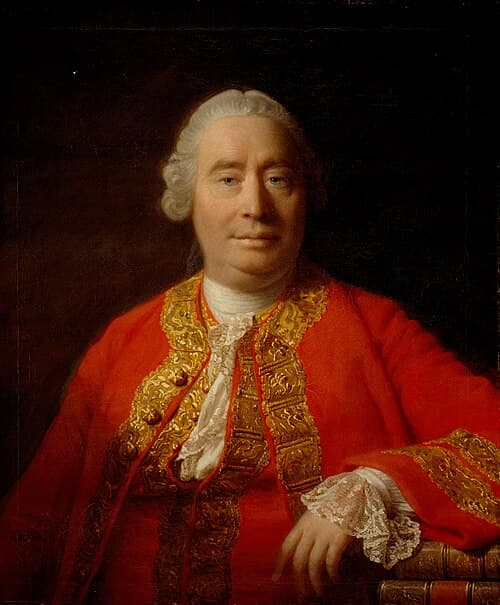
David Hume
PERSON9 w/ Cambridge·4 w/ Turing
Philadelphia
LOCATION11 w/ Cambridge·2 w/ Turing
Barack Obama
PERSON9 w/ Cambridge·4 w/ Turing
Harvey Weinstein
PERSON8 w/ Cambridge·4 w/ Turing
Ghislaine Maxwell
PERSON8 w/ Cambridge·4 w/ Turing
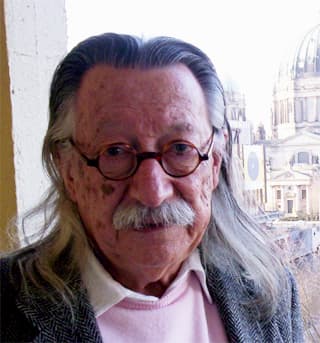
Joseph Weizenbaum
PERSON8 w/ Cambridge·4 w/ Turing