Back to Network


















5
Shared Docs
4
Same-Page
5 / 5
Mentions
Document Mentions (5 shared documents)
2 mentions1 same-page
Page ?Same page
oss the country. The last time EFTA_R1_00440974 EFTA01964298 that happened, when Hosni Mubarak took over as president after the assassination of Anwar Sadat in 1981, the state of emergency remained in force for 30 years. The government has pleaded that it used "the utmost degree of self-restraint" this
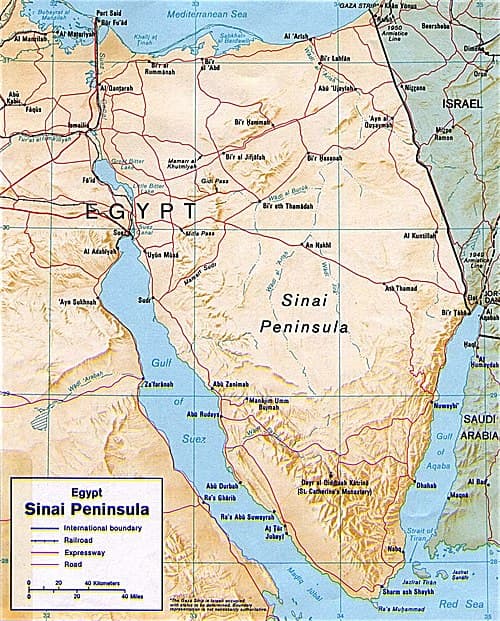
the 1967 Six-Day War, but tensions remained high. 2. UN Resolution 242 (1967) The 6-Day War was a major tactical victory for Israel. It captured the Sinai Peninsula, West Bank, Golan Heights, the Gaza Strip and all of Jerusalem. At this stage Israel had bargaining chips and sought to leverage them. UN Resolutio
2 mentions1 same-page
Page ?Same page
ce process is that whoever makes the Israeli silent majority feel morally insecure about occupation but strategically secure in Israel wins. After Anwar Sadat flew to Jerusalem, Israelis knew there was no way morally that they could hold onto the Sinai and strategically they did not feel the need to any l
n saw Israel as a guarantor of its national security. Following the 1973 war, Egypt signed a peace treaty with Israel that created a buffer zone in the Sinai Peninsula. By then, Lebanon had begun to shift its position, less because of any formal government policy and more because of the disintegration of the Leba
2 mentions1 same-page
Page ?Same page
rgest transfer of weaponry to any Middle Eastern country at that time and signaled Nasser's drift into the Soviet orbit. Following Nasser's death, Anwar Sadat's consolidation of power and geo-strategic shift were even more pronounced than his predecessor's had been. As a condition for being nominated presi
y Beast Is Morsy Staging or Reversing Coup? Hussein Ibish August 13, 2012 -- Seizing on the momentum created by the attack on Egyptian forces in the Sinai Peninsula last week, new Egyptian President Mohammad Morsy took several bold moves this weekend. One of them was firing the country's most senior EFTA_R1_00
Sponsored
2 mentions1 same-page
Page ?Same page
that Mubarak's regime hadn't been created in his image and was no personality cult; he'd simply inherited the reins of power when his predecessor, Anwar Sadat, was gunned down. Mubarak E FTA_R1_00298528 EFTA01884047 ultimately owed his power to the military, and what the military had given, the militar
i crisis. Egypt Since 1978, Israel's strategic reality had been that it faced no threat of a full peripheral war. After Camp David, the buffer of the Sinai Peninsula separated Egypt and Israel, and Egypt had a government that did not want that arrangement to break. Israel still faced a formally hostile Syria. Sy
Page HOUSE_OVERSIGHT_023152
tion cease-fire. ‘Black September’ in Jordan. The PLO is expelled from Jordan. President Gamal Abdel Nasser dies and is replaced by Vice President Anwar al-Sadat. Syria’s Minister of Defense, Hafez al-Assad, leads the “Correctionist Movement’ military coup. Hafez al-Assad is elected President of Syria in a
Page: HOUSE_OVERSIGHT_023152 →Page HOUSE_OVERSIGHT_023170
were not inter- nationally recognized borders. The Arab-Israeli conflict came to a new head with the Six Day War in June 1967, when Israel conquered the Sinai Peninsula and the Gaza Strip from Egypt, the West Bank and East Jerusalem from Jordan, and the Golan Heights from Syria. In the aftermath, Arab nations unified
Page: HOUSE_OVERSIGHT_023170 →Sponsored
Mutual Connections (183)
Entities connected to both Anwar Sadat and the Sinai Peninsula
Barack Obama
PERSON29 w/ Anwar·13 w/ the
Benjamin Netanyahu
PERSON27 w/ Anwar·13 w/ the
Bashar al-Assad
PERSON24 w/ Anwar·13 w/ the
Cairo
LOCATION27 w/ Anwar·9 w/ the
George W. Bush
PERSON26 w/ Anwar·10 w/ the
Hosni Mubarak
PERSON25 w/ Anwar·11 w/ the
Jerusalem
LOCATION24 w/ Anwar·10 w/ the
Tehran
LOCATION23 w/ Anwar·10 w/ the
Bill Clinton
PERSON25 w/ Anwar·7 w/ the
Lebanon
LOCATION23 w/ Anwar·9 w/ the
United States
LOCATION21 w/ Anwar·10 w/ the
Middle East
LOCATION19 w/ Anwar·10 w/ the
Saddam Hussein
PERSON20 w/ Anwar·7 w/ the
Damascus
LOCATION20 w/ Anwar·7 w/ the
Fatah
ORGANIZATION20 w/ Anwar·6 w/ the
Terje Rod-Larsen
PERSON19 w/ Anwar·6 w/ the
Tunisia
LOCATION19 w/ Anwar·6 w/ the
Sinai
LOCATION13 w/ Anwar·11 w/ the
Yemen
LOCATION18 w/ Anwar·6 w/ the
Ehud Barak
PERSON18 w/ Anwar·5 w/ the