Back to Network




















4
Shared Docs
4
Same-Page
12 / 4
Mentions
Document Mentions (4 shared documents)
4 mentions1 same-page
Page ?Same page
of the last U.S. troops from Iraq, we're finally going to get the answer to the core question about that country: Was Iraq the way Iraq was because Saddam was the way Saddam was, or was Saddam the way Saddam was because Iraq is the way Iraq is — a collection of sects and tribes unable to live togethe
s been a mounting campaign by the prime minister, a Shiite with close ties to Iran, against perceived Sunni enemies. Hundreds of former members of Saddam Hussein's Baath party have been arrested in recent weeks. EFTA_R1_01992712 EFTA02681497 14 Security forces controlled by Mr. Maliki have surrounded the c
ternal iron fist that held Iraq together (Saddam Hussein) and the external iron fist (the U.S. armed force
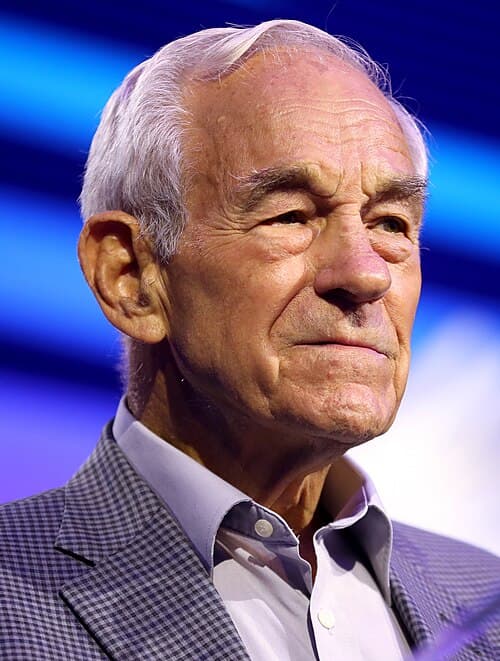
the swamps. And now we have Joe Klein, in Time magazine, in a section accurately entitled "Swampland": "Iowa Republicans are not neoconservatives. Ron Paul has gained ground after a debate in which his refusal to join the Iran warhawks was front and center. Indeed, in my travels around the country, I d
4 mentions1 same-page
Page ?Same page
the regime." Pillar says the theory has some historical evidence on its side. "The big data point in support of this concept is the Iran-Iraq war: Saddam Hussein's Iraq attacking Iran," he says. "Iraq was the aggressor, and the attack [had] a big rally-around-the-flag effect and it had a positive effect in bol
in support of this concept is the Iran-Iraq war: Saddam Hussein's Iraq attacking Iran," he says. "Iraq w
ort of this concept is the Iran-Iraq war: Saddam Hussein's Iraq attacking Iran," he says. "Iraq was the ag
st the unhelpful backdrop of American election-year politics. The Republican presidential candidates, with the exception of the antiwar libertarian Ron Paul, have seized on Iran as a possible winning issue and have tried to outdo each other in sounding bellicose about it. Mitt Romney has repeatedly disc
4 mentions1 same-page
Page ?Same page
q War. Then, the primary concern was that Saddam Hussein's regime would use weapons against another count
ia if the opportunity arose. This threat is not analogous to concerns expressed in the run-up to the Iraq War. Then, the primary concern was that Saddam Hussein's regime would use weapons against another country or deliberately transfer them to a terrorist group. Further, it was suspected that Iraq might hav
the Iraq War. Then, the primary concern was that Saddam Hussein's regime would use weapons against anoth
Overall, Obama led Santorum 33 percent to 18 EFTA_R1_00230141 EFTA01842817 percent; former House Speaker Newt Gingrich 32 percent to 25 percent; Ron Paul 32 percent to 21 percent; and tied Romney at 29 percent. It is noteworthy, that Paul performed slightly better — but within the margin of error —
Sponsored
4 mentions1 same-page
Page ?Same page
ria if the opportunity arose. This threat is not analogous to concerns expressed in the run-up to the Iraq War. Then, the primary concern was that Saddam Hussein's regime would use weapons against another country or deliberately transfer them to a terrorist group. Further, it was suspected that Iraq might have
the Iraq War. Then, the primary concern was that Saddam Hussein's regime would use weapons against anoth
aq War. Then, the primary concern was that Saddam Hussein's regime would use weapons against another count
, except for tying Mitt Romney. Overall, Obama led Santorum 33 percent to 18 percent; former House Speaker Newt Gingrich 32 percent to 25 percent; Ron Paul 32 percent to 21 percent; and tied Romney at 29 percent. It is noteworthy, that Paul performed slightly better — but within the margin of error — t
Sponsored
Mutual Connections (242)
Entities connected to both Saddam Hussein and Ron Paul
Barack Obama
PERSON152 w/ Saddam·14 w/ Ron
George W. Bush
PERSON137 w/ Saddam·8 w/ Ron
United States
LOCATION118 w/ Saddam·5 w/ Ron
Jeffrey Epstein
PERSON107 w/ Saddam·10 w/ Ron
Bill Clinton
PERSON113 w/ Saddam·4 w/ Ron
Bashar al-Assad
PERSON108 w/ Saddam·6 w/ Ron
Lebanon
LOCATION98 w/ Saddam·5 w/ Ron
Tehran
LOCATION91 w/ Saddam·4 w/ Ron
Marc Rich
PERSON84 w/ Saddam·5 w/ Ron
Benjamin Netanyahu
PERSON83 w/ Saddam·5 w/ Ron
Middle East
LOCATION80 w/ Saddam·2 w/ Ron
Hosni Mubarak
PERSON73 w/ Saddam·5 w/ Ron
Vladimir Putin
PERSON66 w/ Saddam·10 w/ Ron
Jerusalem
LOCATION73 w/ Saddam·2 w/ Ron
Donald Trump
PERSON72 w/ Saddam·3 w/ Ron
Damascus
LOCATION70 w/ Saddam·4 w/ Ron
Joe Biden
PERSON70 w/ Saddam·4 w/ Ron
Yemen
LOCATION67 w/ Saddam·4 w/ Ron
Tunisia
LOCATION65 w/ Saddam·4 w/ Ron
Department of Justice
ORGANIZATION64 w/ Saddam·3 w/ Ron