Back to Network




















7
Shared Docs
5
Same-Page
19 / 10
Mentions
Document Mentions (7 shared documents)
5 mentions1 same-page
Page ?Same page
onomic sanctions have "kicked in" strongly enough to produce the desired result—until now. Sanctions against the regimes led by Slobodan Milosevic, Saddam Hussein and Bashar al-Assad produced scarcity and hardship for the poorest of their citizens but enriched the leadership circle, who exacted higher rents o
s against the regimes led by Slobodan Milosevic, Saddam Hussein and Bashar al-Assad produced scarcity and
st the regimes led by Slobodan Milosevic, Saddam Hussein and Bashar al-Assad produced scarcity and hardsh
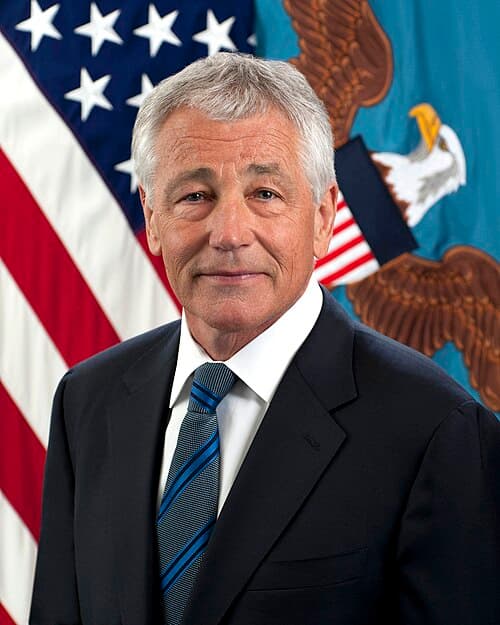
nk Prime Minister Netanyahu is legitimately concerned, as any prime minister of Israel has been, about the future security needs of their country," Hagel said. Netanyahu, he continued, "has got a history of being very clear on where he is on this." Hagel, now in his ninth month leading the Pentagon,
h many in the U.S. Senate, by the way), so on a visit to the Pentagon late last week, one of the first questions I put to the secretary of defense, Chuck Hagel, was this: Is Netanyahu, in fact, using scare tactics in order to torpedo Iran negotiations? "I think Prime Minister Netanyahu is legitimately con
4 mentions1 same-page
Page ?Same page
ld," said President Bush. So much for accountability. Then, of course, there was Vice President Cheney: "We do know, with absolute certainty, that (Saddam Hussein] is using his procurement system to acquire the equipment he needs in order to enrich uranium to build a nuclear weapon." -- "No. I think we may wel
s liberators, and that will help us to keep requirements down ... It's hard to conceive that it would take more forces to provide stability in post- Saddam Iraq than it would take to conduct the war itself and to secure the surrender of Saddam's security forces and his army. Hard to imagine. And the bi
e do know, with absolute certainty, that (Saddam Hussein] is using his procurement system to acquire the e
o were most wrong on the biggest foreign policy catastrophe in recent memory, the opposition was, to a large extent, actually based on the fact that Hagel had been right about Iraq. Having been in favor of the war initially, Hagel quickly saw it for what it was, and committed the grave error of speaki
4 mentions1 same-page
Page ?Same page
vent the kind of chaos that followed the fall of Saddam Hussein in Iraq and EFTA00678416 Moammar Gadda
e kind of chaos that followed the fall of Saddam Hussein in Iraq and EFTA00678416 Moammar Gaddafi in Li
f the regime falls; working with reconcilable elements of the Syrian army to maintain order and prevent the kind of chaos that followed the fall of Saddam Hussein in Iraq and EFTA00678416 Moammar Gaddafi in Libya; and preventing the future use of chemical weapons by the Assad regime in a desperate last stan
questions that Americans have about President Obama's plans for missile strikes. Some answers from Secretary of State John Kerry, Defense Secretary Chuck Hagel and Gen. Martin Dempsey, the chairman of the Joint Chiefs of Staff, about the plans were clear. In other instances, the answers were muddled; in st
Sponsored
4 mentions1 same-page
Page ?Same page
We do know, with absolute certainty, that [Saddam Hussein] is using his procurement system to acquire the
ld," said President Bush. So much for accountability. Then, of course, there was Vice President Cheney: "We do know, with absolute certainty, that [Saddam Hussein] is using his procurement system to acquire the equipment he needs in order to enrich uranium to build a nuclear weapon." Or this one, from 2005 --
that it would take more forces to provide stability in post-Saddam Iraq than it would take to conduct the war itself and to secure the surrender of Saddam's security forces and his army. Hard to imagine. Actually, not so hard, given that Shinseki had just imagined it. And that's one of the most madden
o were most wrong on the biggest foreign policy catastrophe in recent memory, the opposition was, to a large extent, actually based on the fact that Hagel had been right about Iraq. Having been in favor of the war initially, Hagel quickly saw it for what it was, and committed the grave error of speaki
2 mentions1 same-page
Page ?Same page
candidate focusing on Iranian policy toward post-Saddam Iraq at the University of London's School of Orie
ran and America still agree on keeping Mr. Maliki in power — largely for lack of better options. Despite rumblings in Congress, Secretary of Defense Chuck Hagel has stated that "the question of whether Maliki should step down is an internal Iraqi matter." And President Obama didn't hesitate to send military
Page HOUSE_OVERSIGHT_029697
e region, Obama will be advised by new Secretary of State John F. Kerry. He has also named former HOUSE_OVERSIGHT_029696 --- PAGE BREAK --- senator Chuck Hagel as defense secretary, a nomination still in question after an unsteady performance by the candidate before the Senate Armed Services Committee last w
Page: HOUSE_OVERSIGHT_029697 →Page HOUSE_OVERSIGHT_029721
990. When faced with a build-up of Iraqi forces along its border, Kuwait decided not to mobilize its military out of fear that the move would provoke Saddam Hussein. The incentives for Gulf states to make similar strategic calculations in the future will be greater when Iran has an inventory of nuclear we
Page: HOUSE_OVERSIGHT_029721 →en faced with a build-up of Iraqi forces along its border, Kuwait decided not to mobilize its military out of fear that the move would provoke Saddam Hussein. The incentives for Gulf states to make similar strategic calculations in the future will be greater when Iran has an inventory of nuclear weapons to
Page: HOUSE_OVERSIGHT_029721 →Page HOUSE_OVERSIGHT_029722
. One of the great strategic lessons drawn from the long history of conflict in the Middle East is this: Do not go to war without nuclear weapons, as Saddam Hussein did when he invaded Kuwait. The corollary is: Do not allow the United States to methodically build-up forces in the Gulf prior to invading, as Saddam
Page: HOUSE_OVERSIGHT_029722 →Sponsored
Page HOUSE_OVERSIGHT_029784
e region, Obama will be advised by new Secretary of State John F. Kerry. He has also named former HOUSE_OVERSIGHT_029783 --- PAGE BREAK --- senator Chuck Hagel as defense secretary, a nomination still in question after an unsteady performance by the candidate before the Senate Armed Services Committee last w
Page: HOUSE_OVERSIGHT_029784 →Page HOUSE_OVERSIGHT_029808
990. When faced with a build-up of Iraqi forces along its border, Kuwait decided not to mobilize its military out of fear that the move would provoke Saddam Hussein. The incentives for Gulf states to make similar strategic calculations in the future will be greater when Iran has an inventory of nuclear we
Page: HOUSE_OVERSIGHT_029808 →en faced with a build-up of Iraqi forces along its border, Kuwait decided not to mobilize its military out of fear that the move would provoke Saddam Hussein. The incentives for Gulf states to make similar strategic calculations in the future will be greater when Iran has an inventory of nuclear weapons to
Page: HOUSE_OVERSIGHT_029808 →Page HOUSE_OVERSIGHT_029809
. One of the great strategic lessons drawn from the long history of conflict in the Middle East is this: Do not go to war without nuclear weapons, as Saddam Hussein did when he invaded Kuwait. The corollary is: Do not allow the United States to methodically build-up forces in the Gulf prior to invading, as Saddam
Page: HOUSE_OVERSIGHT_029809 →Sponsored
Mutual Connections (430)
Entities connected to both Saddam Hussein and Chuck Hagel
Barack Obama
PERSON152 w/ Saddam·26 w/ Chuck
George W. Bush
PERSON137 w/ Saddam·15 w/ Chuck
United States
LOCATION118 w/ Saddam·19 w/ Chuck
Bill Clinton
PERSON113 w/ Saddam·13 w/ Chuck
Bashar al-Assad
PERSON108 w/ Saddam·17 w/ Chuck
Jeffrey Epstein
PERSON107 w/ Saddam·13 w/ Chuck
Lebanon
LOCATION98 w/ Saddam·15 w/ Chuck
Tehran
LOCATION91 w/ Saddam·16 w/ Chuck
Benjamin Netanyahu
PERSON83 w/ Saddam·17 w/ Chuck
Marc Rich
PERSON84 w/ Saddam·14 w/ Chuck
Middle East
LOCATION80 w/ Saddam·13 w/ Chuck
Joe Biden
PERSON70 w/ Saddam·14 w/ Chuck
Hosni Mubarak
PERSON73 w/ Saddam·11 w/ Chuck
Jerusalem
LOCATION73 w/ Saddam·9 w/ Chuck
Damascus
LOCATION70 w/ Saddam·11 w/ Chuck
Donald Trump
PERSON72 w/ Saddam·8 w/ Chuck
Terje Rod-Larsen
PERSON64 w/ Saddam·14 w/ Chuck
Vladimir Putin
PERSON66 w/ Saddam·11 w/ Chuck
Yemen
LOCATION67 w/ Saddam·10 w/ Chuck
Cairo
LOCATION62 w/ Saddam·13 w/ Chuck