Back to Network




















8
Shared Docs
8
Same-Page
22 / 8
Mentions
Document Mentions (8 shared documents)
4 mentions1 same-page
Page ?Same page
the Tuwaitha complex in Iraq. Israeli Prime Minister Menachem Begin and Defense Minister Ariel Sharon saw the reactor as central to Iraqi President Saddam Hussein's quest to build nuclear weapons, and they believed that it posed an existential threat to Israel. The timing of the strike was justified by intelli
nts and warnings of military action. For Israelis considering a strike on Iran, Osirak seems like a model for effective preventive war. After all, Hussein never got the bomb, and if Israel was able to brush back one enemy hell-bent on its destruction, it can do so again. But a closer look at the Osira
on saw the reactor as central to Iraqi President Saddam Hussein's quest to build nuclear weapons, and th
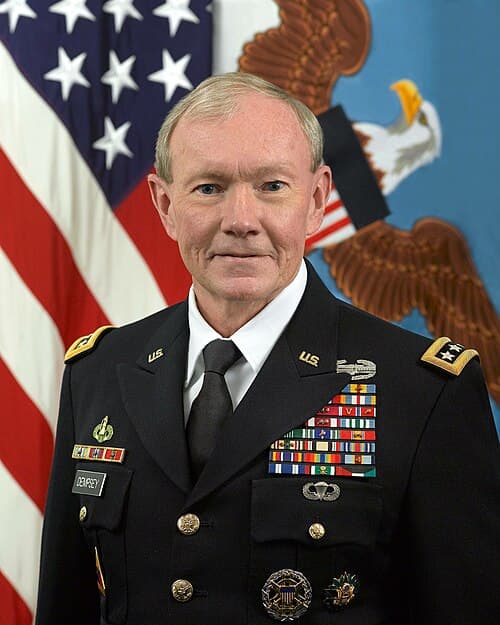
ity to sustain a large-scale bombing campaign, an Israeli assault would probably be a one-off strike with more limited effects. No wonder that Gen. Martin Dempsey, the chairman of the U.S. Joint Chiefs of Staff, recently told CNN that an Israeli attack would set the program back only "a couple of years" and "
4 mentions1 same-page
Page ?Same page
vent the kind of chaos that followed the fall of Saddam Hussein in Iraq and EFTA00678416 Moammar Gadda
e kind of chaos that followed the fall of Saddam Hussein in Iraq and EFTA00678416 Moammar Gaddafi in Li
f the regime falls; working with reconcilable elements of the Syrian army to maintain order and prevent the kind of chaos that followed the fall of Saddam Hussein in Iraq and EFTA00678416 Moammar Gaddafi in Libya; and preventing the future use of chemical weapons by the Assad regime in a desperate last stan
ns have about President Obama's plans for missile strikes. Some answers from Secretary of State John Kerry, Defense Secretary Chuck Hagel and Gen. Martin Dempsey, the chairman of the Joint Chiefs of Staff, about the plans were clear. In other instances, the answers were muddled; in still others, incomplete.
4 mentions1 same-page
Page ?Same page
onomic sanctions have "kicked in" strongly enough to produce the desired result—until now. Sanctions against the regimes led by Slobodan Milosevic, Saddam Hussein and Bashar al-Assad produced scarcity and hardship for the poorest of their citizens but enriched the leadership circle, who exacted higher rents o
s against the regimes led by Slobodan Milosevic, Saddam Hussein and Bashar al-Assad produced scarcity and
st the regimes led by Slobodan Milosevic, Saddam Hussein and Bashar al-Assad produced scarcity and hardsh
all of the tools of American power" in a whole-of- government operation. The President also ignored the counsel of his top military advisor, General Martin Dempsey, who had publicly cautioned that in Syria "you need a strategy to tie military options with other instruments of power." It is a rare spectacle to
Sponsored
4 mentions1 same-page
Page ?Same page
But Israel also has a short-term objective — and that is to play for time. Israel notes that its 1981 bombing of a nuclear reactor in Iraq set back Saddam Hussein's program — and did not result in some sort of massive retaliation. Something similar happened with the 2007 bombing of a Syrian installation. Neithe
e modest number of outside ground troops. They could be partly modeled on the protection we afforded Kurds in Iraq throughout the 1990s, even while Saddam was still in power. Alas, this task would be harder here. There is no natural geographic or demographic logic to any particular possible safe zone
ing of a nuclear reactor in Iraq set back Saddam Hussein's program — and did not result in some sort of ma
of the Maybe the Dog Will Talk Doctrine or do not recognize its importance. (It was cited to me by an Israeli official.) Both Barack Obama and Gen. Martin Dempsey, the chairman of the Joint Chiefs of Staff, have characterized any Israeli attempt to disrupt Iran's nuclear program as a short-term affair. An Isra
4 mentions1 same-page
Page ?Same page
ions of = military strike are not widely discussed. This ominously echoes the run up to the war in Iraq.ap> When Washington was preparing t= invade Saddam Hussein's Iraq, little consideration was given to what ca=e next. Ten years later, the mistakes are evident. Iraq did not pose the immediate security threat t
Iraq.ap> When Washington was preparing t= invade Saddam Hussein's Iraq, little consideration was given to
> When Washington was preparing t= invade Saddam Hussein's Iraq, little consideration was given to what ca
tary of State Hilla=y Rodham Clinton, Defense Secretary Leon Panetta, CIA Director David Petraeusand the chairman of the Joint Chi=fs of Staff, Gen. Martin Dempsey. But the president overrode them, his cau=ion of no help in a conflict of such virulence. Under the gaze of the world, Obama in=tead =font face="Ti
4 mentions1 same-page
Page ?Same page
the Tuwaitha complex in Iraq. Israeli Prime Minister Menachem Begin and Defense Minister Arid Sharon saw the reactor as central to Iraqi President Saddam Hussein's quest to build nuclear weapons, and they believed that it posed an existential threat to Israel. The timing of the strike was justified by intellig
ents and warnings of military action. For Israelis considering a strike on Iran, Osirak seems like a model for effective preventive war. After all, Hussein never got the bomb, and if Israel was able to brush back one enemy hell- bent on its destruction, it can do so again. But a closer look at the Osir
on saw the reactor as central to Iraqi President Saddam Hussein's quest to build nuclear weapons, and th
ty to sustain a large-scale bombing campaign, an Israeli assault would probably be a one- off strike with more limited effects. No wonder that Gen. Martin Dempsey, the chairman of the U.S. Joint Chiefs of Staff, recently told CNN that an Israeli attack would set the program back only "a couple of years" and
Sponsored
4 mentions1 same-page
Page ?Same page
ess" and musing aloud: "You could even go back ten years and say, you know what, it might have been a =ittle more stable when we had that awful guy [Saddam) Hussein, who hated t=e Iranians." Democrats, such as =enator Dianne Feinstein of California, content themselves with denouncing =epublicans for fa
musing aloud: "You could even go back ten years and say, you know what, it might have been a =ittle more stable when we had that awful guy [Saddam) Hussein, who hated t=e Iranians." Democrats, such as =enator Dianne Feinstein of California, content themselves with denouncing =epublicans for failing to
st the Shiite government in Iran. From the beginning,=this has been the irreparable flaw in the American strategy to topple the =raqi government of Saddam Hussein. Saddam was a brutal and murderous dicta=or, but as a secular Sunni who ruled with an iron, bloody fist, he was able to crush the fundamentalist thr
his top national secur=ty officials at that time, including Secretary of State Hillary Clinton, CIA Director David Petraeus, Joint Chi=fs Chairman Martin Dempsey, and Secretary of Defense Leon Panetta. His las=-minute decision in August 2013 not to strike Syria after its use of chemi=al weapons was popular in
2 mentions1 same-page
Page ?Same page
Association notes that, "Even after crushing Iraq in the first Gulf War, the international coalition only imposed a 150-kilometer range ceiling on Saddam's ballistic missiles. A demand to eliminate all ballistic missiles would be unprecedented in the modern era-- removing any doubt among Iranians that
y intervention. Syria is not Libya, the mantra goes, especially in Washington. The provision of arms to the Syrian opposition is "premature," Gen. Martin Dempsey, chairman of the Joint Chiefs of Staff, EFTA_R1_00484972 EFTA01991835 recently stated. We don't know the Syrian opposition, another alibi has it
Sponsored
Mutual Connections (269)
Entities connected to both Saddam Hussein and Martin Dempsey
Barack Obama
PERSON152 w/ Saddam·18 w/ Martin
George W. Bush
PERSON137 w/ Saddam·11 w/ Martin
United States
LOCATION118 w/ Saddam·14 w/ Martin
Bashar al-Assad
PERSON108 w/ Saddam·14 w/ Martin
Bill Clinton
PERSON113 w/ Saddam·8 w/ Martin
Jeffrey Epstein
PERSON107 w/ Saddam·10 w/ Martin
Lebanon
LOCATION98 w/ Saddam·13 w/ Martin
Tehran
LOCATION91 w/ Saddam·12 w/ Martin
Benjamin Netanyahu
PERSON83 w/ Saddam·12 w/ Martin
Middle East
LOCATION80 w/ Saddam·10 w/ Martin
Marc Rich
PERSON84 w/ Saddam·6 w/ Martin
Jerusalem
LOCATION73 w/ Saddam·10 w/ Martin
Damascus
LOCATION70 w/ Saddam·8 w/ Martin
Hosni Mubarak
PERSON73 w/ Saddam·4 w/ Martin
Terje Rod-Larsen
PERSON64 w/ Saddam·13 w/ Martin
Vladimir Putin
PERSON66 w/ Saddam·9 w/ Martin
Donald Trump
PERSON72 w/ Saddam·3 w/ Martin
Joe Biden
PERSON70 w/ Saddam·4 w/ Martin
Department of Justice
ORGANIZATION64 w/ Saddam·8 w/ Martin
Yemen
LOCATION67 w/ Saddam·4 w/ Martin