Back to Network

















3
Shared Docs
3
Same-Page
7 / 3
Mentions
Document Mentions (3 shared documents)
4 mentions1 same-page
Page ?Same page
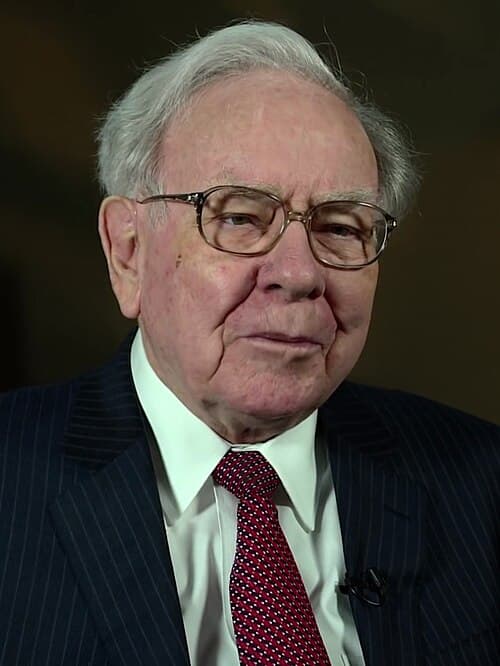
it is allowed to limp on inefficiently. That this happens in real life is supported by the effective long term investing models of Benjamin Graham, Warren Buffet and others. The accumulated wealth of Warren Buffet has always been one of the most pertinent criticisms of the efficient market hypothesis. In an
rve the capital of their companies. Justifications for these assumptions are given below. Until a few years ago, despite the wealth accumulated by Warren Buffet and other acolytes of the Benjamin Graham school of investing, the concept of companies having fundamental value was highly controversial. In recen
less efficient companies until these companies have no capital left and go out of business. This is not what happens. In model 2C, and as Graham, Buffet and others have discovered, also in real life, poorly performing capital is simply written down. Companies are allowed to retain some of their real
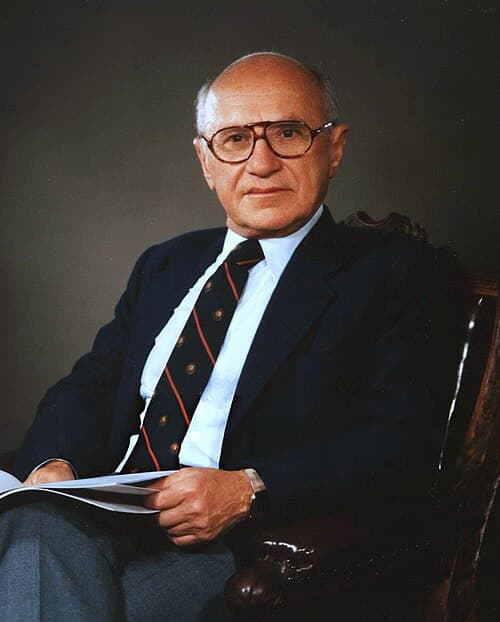
a form of income redistribution, Friedman's ideas suffer from needing continuous flows. I believe my own proposals achieve the same aims of those of Milton Friedman, at much less cost. I would ask that readers consider these proposals to be more neo—Friedmanite than neo- Marxian. If, however, my ideas are incor
4 mentions1 same-page
Page ?Same page
e is down to about ten months. That helps to explain the growing concern about short-termism. Last year a task force of doughty American investors (Warren Buffett, Felix Rohatyn and Pete Peterson, among others) convened by the Aspen Institute, a think-tank, published a report called "Overcoming Short-Termism".
task force of doughty American investors (Warren Buffett, Felix Rohatyn and Pete Peterson, among others) c
measures to encourage investors to hold shares for longer, including withholding voting rights from new shareholders for a year. [Economist 2010a] Warren Buffet is of course a value investor, the sort of investor who intuitively understands the workings of the companies models in section 2 of this paper. The
hat this debt can be expanded indefinitely is to undermine the most important value this debt has; that of security. In similar vein I find much of Milton Friedman's monetary theory terrifyingly naive. However I have found the blogging of 'kitchen-sink' monetarists such as Simon Ward [Ward] and John Hussman [Hus
2 mentions1 same-page
Page ?Same page
ant to question them. Really? Why? There are a vast number of unleveraged, deep-pocket investors around sniffing for bargains, including endowments, Warren Buffets, sovereign wealth funds, hedge funds, and so on. If a bank is really "illiquid" but not "insolvent," then just why will these investors not lend or
ning need for fixed-value default-free assets. Three trillion dollars of interest-paying reserves can easily be $6 trillion of reserves. We can live Milton Friedman's (1969) optimal quantity of money, in which the economy is awash in liquidity. This optimal quantity will have financial stability benefit far beyon
Sponsored
Mutual Connections (281)
Entities connected to both Warren Buffett and Milton Friedman
Jeffrey Epstein
PERSON136 w/ Warren·9 w/ Milton
Marc Rich
PERSON87 w/ Warren·9 w/ Milton
Bill Clinton
PERSON73 w/ Warren·9 w/ Milton
Prince Andrew
PERSON69 w/ Warren·6 w/ Milton
LB
Leon Black
PERSON59 w/ Warren·7 w/ Milton
Ghislaine Maxwell
PERSON58 w/ Warren·3 w/ Milton
Vicky Ward
PERSON51 w/ Warren·3 w/ Milton
Martha Stewart
PERSON49 w/ Warren·2 w/ Milton
Robert Gates
PERSON47 w/ Warren·3 w/ Milton
George W. Bush
PERSON28 w/ Warren·14 w/ Milton
Central Park
LOCATION38 w/ Warren·3 w/ Milton
New Orleans
LOCATION36 w/ Warren·4 w/ Milton
Prince Charles
PERSON33 w/ Warren·6 w/ Milton
Barack Obama
PERSON29 w/ Warren·6 w/ Milton
Donald Trump
PERSON32 w/ Warren·2 w/ Milton
New York
LOCATION29 w/ Warren·4 w/ Milton
New York City
LOCATION27 w/ Warren·5 w/ Milton
John F. Kennedy
PERSON27 w/ Warren·4 w/ Milton
Anne Hathaway
PERSON26 w/ Warren·2 w/ Milton
Harvey Weinstein
PERSON24 w/ Warren·4 w/ Milton