Back to Network













7
Shared Docs
7
Same-Page
8 / 7
Mentions
Document Mentions (7 shared documents)
3 mentions1 same-page
Page ?Same page
nty years of experience, or one year of experience twenty times.” Mike Sharman “Rules are for the obedience of fools and the guidance of wise men. Douglas Bader am an inventor. I’ve always been an inventor. Ever since childhood I’ve tinkered with electronics and computers, taking things apart and putting t
his machines, but in the 20th century a dedicated band of enthusiasts built a working model of Differenc
d on interview, rather than practical tests. Could a computer hold a conversation with me and persuade me it is intelligent? Meet Eliza. Invented by Joseph Weizenbaum of the Massachusetts Institute of Technology, and named after George Bernard Shaw’s character in Pygmalion, Eliza runs an algorithm pretending to be
2 mentions1 same-page
Page ?Same page
2600 told you what you needed to know about this band: It was a group that liked to share, to brag, to
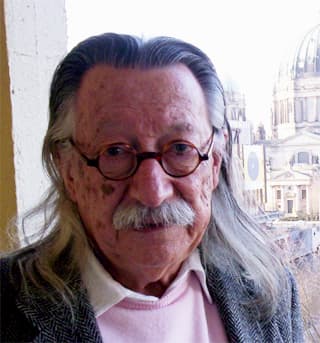
lding - this is fine. Wonderful even. But it’s also not enough. “It happens that programming is a relatively easy craft to learn,” the MIT scientist Joseph Weizenbaum observed in the 1970s, as computers emerged into academic life. “Almost anyone with a reasonably ordered mind can become a good programmer with just
2 mentions1 same-page
Page ?Same page
k had emerged from a desire to emphasize, to physicalize in a way no one could forget, the importance of longer- term thinking. We'd all arrived now, Brand and the other clock masters worried, ata moment in history when no one had a view that extended much past their own lives — or sometimes past the nex
government (or our enemies) behave. We are, ina sense, being engineered by the damn opaque systems we are using. In 1965 the MIT computer scientist Joseph Weizenbaum found himself, somewhat unexpectedly, considering this same problem. 175 Weizenbaum had written a primitive computer program to perform what is now k
Sponsored
2 mentions1 same-page
Page ?Same page
is poorly adapted to conditions outside a narrow band of temperatures, pressures, and atmospheric compo
owing it to detect dissent and subversion as it arises and make resistance to state power futile. Orwell’s telescreens are the prototype, and in 1976 Joseph Weizenbaum, one of the gloomiest tech prophets of all time, warned my class of graduate students not to pursue automatic speech recognition because government s
2 mentions1 same-page
Page ?Same page
we have expanded our vision from a narrow optical band to the full spectrum from radio to gamma. We can
e; the Fair Access to Science and Technology Research Act (FASTR); and the Open Humans Foundation. In his 1976 book Computer Power and Human Reason, Joseph Weizenbaum argued that machines should not replace Homo in situations requiring respect, dignity, or care, while others (author Pamela McCorduck and computer sc
2 mentions1 same-page
Page ?Same page
is poorly adapted to conditions outside a narrow band of temperatures, pressures, and atmospheric compo
owing it to detect dissent and subversion as it arises and make resistance to state power futile. Orwell’s telescreens are the prototype, and in 1976 Joseph Weizenbaum, one of the gloomiest tech prophets of all time, warned my class of graduate students not to pursue automatic speech recognition because government s
Sponsored
2 mentions1 same-page
Page ?Same page
we have expanded our vision from a narrow optical band to the full spectrum from radio to gamma. We can
e; the Fair Access to Science and Technology Research Act (FASTR); and the Open Humans Foundation. In his 1976 book Computer Power and Human Reason, Joseph Weizenbaum argued that machines should not replace Homo in situations requiring respect, dignity, or care, while others (author Pamela McCorduck and computer sc
Sponsored
Mutual Connections (783)
Entities connected to both Doug Band and Joseph Weizenbaum
Jeffrey Epstein
PERSON1,373 w/ Doug·2 w/ Joseph
Ghislaine Maxwell
PERSON578 w/ Doug·4 w/ Joseph
LB
Leon Black
PERSON418 w/ Doug·7 w/ Joseph
George W. Bush
PERSON407 w/ Doug·6 w/ Joseph
Marc Rich
PERSON335 w/ Doug·10 w/ Joseph
Alan Dershowitz
PERSON224 w/ Doug·7 w/ Joseph
Prince Andrew
PERSON224 w/ Doug·7 w/ Joseph
Donald Trump
PERSON227 w/ Doug·2 w/ Joseph
Samantha Power
PERSON186 w/ Doug·10 w/ Joseph
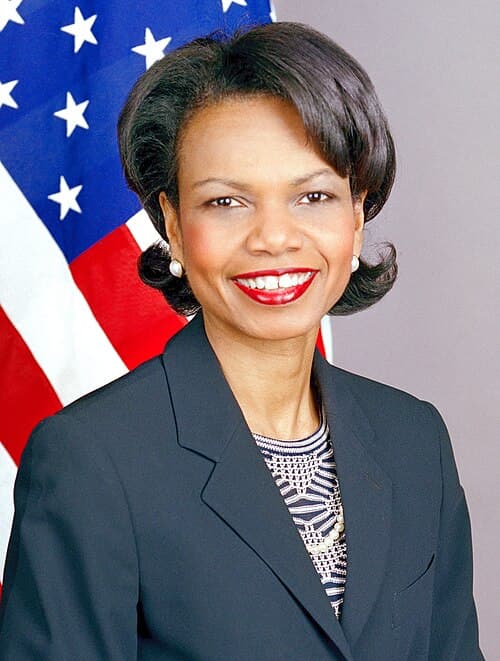
Condoleezza Rice
PERSON191 w/ Doug·2 w/ Joseph
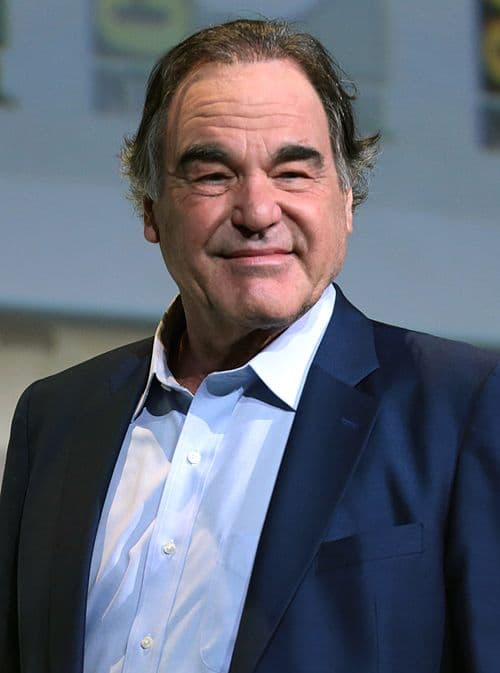
Oliver Stone
PERSON181 w/ Doug·4 w/ Joseph
Woody Allen
PERSON178 w/ Doug·5 w/ Joseph
Julie K. Brown
PERSON177 w/ Doug·5 w/ Joseph
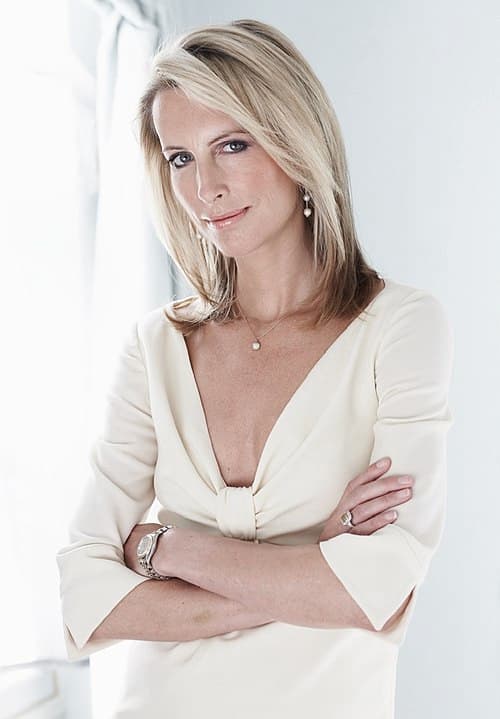
Vicky Ward
PERSON170 w/ Doug·2 w/ Joseph
Prince Charles
PERSON164 w/ Doug·6 w/ Joseph
Joe Biden
PERSON165 w/ Doug·4 w/ Joseph
Barack Obama
PERSON158 w/ Doug·5 w/ Joseph
Eric Trump
PERSON157 w/ Doug·5 w/ Joseph
CW
Courtney Wild
PERSON156 w/ Doug·4 w/ Joseph
MF
Maria Farmer
PERSON151 w/ Doug·2 w/ Joseph