Back to Network

















5
Shared Docs
5
Same-Page
5 / 5
Mentions
Document Mentions (5 shared documents)
2 mentions1 same-page
Page ?Same page
r mind the burning city, goes the logic; we've got our hands full building this Potemkin village. The Arab revolutions demand bold initiatives from the United States and any other outside power seeking to influence their outcome. Airstrikes to break the Syrian military would have been one; a cutoff of military a
es occupied in the recent conflict." Overall the resolution produced little substantial peace accords and did not address Palestinian concerns. 3. Camp David/Israel-Egypt Peace Treaty (1978/1979) After years of fighting and escalating tensions, Egypt finally had enough. In 1977 Egyptian President Anwar S
2 mentions1 same-page
Page ?Same page
has started back home.” Her boss was Motta Gur, who was by now Israel’s military attaché in Washington and was my nominal commander for my period in the United States. “I need to talk to Motta,” I said. She passed him the phone. “I want you to know I’m going back,” I told him. Motta’s reply took my mind back 15 mon
rmy. But I’d now finished my masters degree, and it was impossible to be unaware of the political context in which I’d be returning to uniform. Since Camp David, our negotiators and the Egyptians had been trying to thrash out a formal deal. Sadat was being denounced as a traitor in the Arab world. Begin was s
2 mentions1 same-page
Page ?Same page
des that it was likely to go wrong. Not only were the aides right. Assad had ended up delivering an extraordinary personal rebuff to the President of the United States. Now, I was again asking President Clinton for a summit, and I knew Madeleine Albright, Dennis Ross and others would be highly sceptical. “I understa
n their long coats and black hats praying in the holy city, Jews exercising authority or sovereignty, or a Jewish state, was something else entirely. Camp David had made it clear it was something he was not prepared to accept. The question which I now had to confront was what to do next. 373 HOUSE_OVERSIGHT
Sponsored
2 mentions1 same-page
Page ?Same page
has started back home." Her boss was Motta Gur, who was by now Israel's military attaché in Washington and was my nominal commander for my period in the United States. "I need to talk to Motta," I said. She passed him the phone. "I want you to know I'm going back," I told him. Motta's reply took my mind back 15 mon
rmy. But I'd now finished my masters degree, and it was impossible to be unaware of the political context in which I'd be returning to uniform. Since Camp David, our negotiators and the Egyptians had been trying to thrash out a formal deal. Sadat was being denounced as a traitor in the Arab world. Begin was s
2 mentions1 same-page
Page ?Same page
des that it was likely to go wrong. Not only were the aides right. Assad had ended up delivering an extraordinary personal rebuff to the President of the United States. Now, I was again asking President Clinton for a summit, and I knew Madeleine Albright, Dennis Ross and others would be highly sceptical. "I understa
n their long coats and black hats praying in the holy city, Jews exercising authority or sovereignty, or a Jewish state, was something else entirely. Camp David had made it clear it was something he was not prepared to accept. The question which I now had to confront was what to do next. 373 HOUSE_OVERSIGHT_0
Sponsored
Mutual Connections (504)
Entities connected to both United States and Camp David
George W. Bush
PERSON2,223 w/ United·5 w/ Camp
LB
Leon Black
PERSON927 w/ United·2 w/ Camp
John F. Kennedy
PERSON829 w/ United·4 w/ Camp
Bill Clinton
PERSON528 w/ United·3 w/ Camp
Virginia Giuffre
PERSON474 w/ United·4 w/ Camp
Barack Obama
PERSON419 w/ United·3 w/ Camp
Michael Cohen
PERSON383 w/ United·4 w/ Camp
Stephen Hawking
PERSON342 w/ United·2 w/ Camp
Wilbur Ross
PERSON269 w/ United·2 w/ Camp
CW
Courtney Wild
PERSON261 w/ United·2 w/ Camp
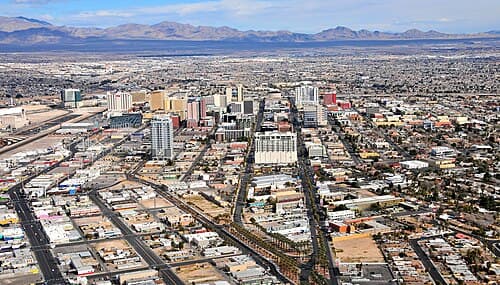
Las Vegas
LOCATION238 w/ United·2 w/ Camp
Hillary Clinton
PERSON218 w/ United·2 w/ Camp
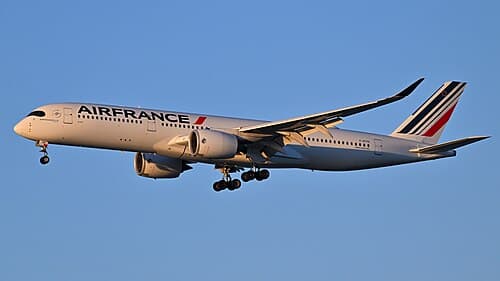
Air France
ORGANIZATION211 w/ United·2 w/ Camp
Benjamin Netanyahu
PERSON203 w/ United·5 w/ Camp
Lebanon
LOCATION185 w/ United·5 w/ Camp
South
LOCATION180 w/ United·2 w/ Camp
Bashar al-Assad
PERSON171 w/ United·3 w/ Camp
Ronald Reagan
PERSON145 w/ United·2 w/ Camp
Jerusalem
LOCATION127 w/ United·5 w/ Camp
Cairo
LOCATION128 w/ United·3 w/ Camp