Back to Network

















5
Shared Docs
3
Same-Page
5 / 5
Mentions
Document Mentions (5 shared documents)
2 mentions1 same-page
Page ?Same page
e statutory provision," not by outside objectives, such as those facilitating successful prosecution. See Cuellar, supra, Slip op. at 7. As Justice Alito stated in his concurring opinion, the government must prove not just the "effect" of the secretive transportation, but also that "petitioner knew th
here is no support for CEOS's view that the courts or a jury should ultimately decide whether a "novel" construction of the law is correct. Instead, the Executive Branch itself has a non-delegable obligation not to exceed its authority; the power of other branches to check or remedy such usurpation does not legitimi
2 mentions1 same-page
Page ?Same page
e statutory provision," not by outside objectives, such as those facilitating successful prosecution. See Cuellar, supra, Slip op. at 7. As Justice Alito stated in his concurring opinion, the government must prove not just the "effect" of the secretive transportation, but also that "petitioner knew th
here is no support for CEOS's view that the courts or a jury should ultimately decide whether a "novel" construction of the law is correct. Instead, the Executive Branch itself has a non-delegable obligation not to exceed its authority; the power of other branches to check or remedy such usurpation does not legitimi
2 mentions1 same-page
Page ?Same page
ving one of these effects was a design (i.e. purpose) of the transportation" of currency. Cuellar v. United States, supra, 553 U.S., Slip op. At I (Alito, J. concurring). Similarly, it is not enough that one effect of a communication scheduling a visit between Mr. Epstein and a minor was that there mi
here is no support for CEOS's view that the courts or a jury should ultimately decide whether a "novel" construction of the law is correct. Instead, the Executive Branch itself has a non-delegable obligation not to exceed its authority; the power of other branches to check or remedy such usurpation does not legitimi
Sponsored
Page HOUSE_OVERSIGHT_012146
There is no support for CEOS’s view that the courts or a jury should ultimately decide whether a “novel” construction of the law is correct. Instead, the Executive Branch itself has a non-delegable obligation not to exceed its authority; the power of other branches to check or remedy such usurpation does not legitimize
Page: HOUSE_OVERSIGHT_012146 →Page HOUSE_OVERSIGHT_012148
ive statutory provision,” not by outside objectives, such as those facilitating successful prosecution. See Cuellar, supra, Slip op. at 7. As Justice Alito stated in his concurring opinion, the government must prove not just the “effect” of the secretive transportation, but also that “petitioner knew tha
Page: HOUSE_OVERSIGHT_012148 →2 mentions
Page EFTA00013815
here is no support for CEOS's view that the courts or a jury should ultimately decide whether a "novel" construction of the law is correct. Instead, the Executive Branch itself has a non-delegable obligation not to exceed its authority; the power of other branches to check or remedy such usurpation does not legitimi
Page: EFTA00013815 →Page EFTA00013817
e statutory provision," not by outside objectives, such as those facilitating successful prosecution. See Cuellar, supra, Slip op. at 7. As Justice Alito stated in his concurring opinion, the government must prove not just the "effect" of the secretive transportation, but also that "petitioner knew th
Page: EFTA00013817 →Sponsored
Mutual Connections (218)
Entities connected to both Samuel Alito and the Executive Branch
Jeffrey Epstein
PERSON30 w/ Samuel·32 w/ the
United States
LOCATION25 w/ Samuel·26 w/ the
Department of Justice
ORGANIZATION26 w/ Samuel·13 w/ the
Supreme Court
ORGANIZATION28 w/ Samuel·11 w/ the
LB
Leon Black
PERSON21 w/ Samuel·14 w/ the
George W. Bush
PERSON21 w/ Samuel·11 w/ the
Donald Trump
PERSON24 w/ Samuel·5 w/ the
Julie K. Brown
PERSON20 w/ Samuel·9 w/ the
Virginia Giuffre
PERSON23 w/ Samuel·5 w/ the
Bill Clinton
PERSON21 w/ Samuel·7 w/ the
Scarlett Johansson
PERSON18 w/ Samuel·8 w/ the
Joe Biden
PERSON20 w/ Samuel·5 w/ the
Prince Andrew
PERSON21 w/ Samuel·3 w/ the
Chris Tucker
PERSON20 w/ Samuel·4 w/ the
ET
Emmy Taylor
PERSON16 w/ Samuel·7 w/ the
Prince Charles
PERSON20 w/ Samuel·3 w/ the
Barneys New York
ORGANIZATION16 w/ Samuel·6 w/ the
Alexander Acosta
PERSON13 w/ Samuel·9 w/ the
Wilbur Ross
PERSON19 w/ Samuel·3 w/ the
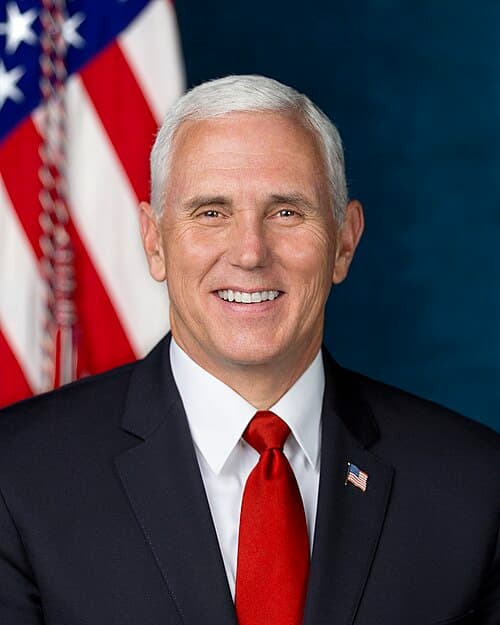
Mike Pence
PERSON18 w/ Samuel·3 w/ the