Back to Network








8
Shared Docs
8
Same-Page
15 / 8
Mentions
Document Mentions (8 shared documents)
4 mentions1 same-page
Page ?Same page
ss) * On lalling throughout history: Wrangham, R.W. & Glowacki, L. (in press). Intergroup aggression
r, including cases where society at large also suffers. Smith initiated the study prior to the US Presidential elections in 2004 involving Republican George W. Bush and Democrat John Kerry; during this period, the Republicans controlled both executive branches of the government. Each subject — all college undergr
party. Next, every subject read and provided reactions to short newspaper articles describing tragicomic moments for the two candidates, one in which Bush fell off his bicycle while riding, and the other involving Kerry wearing a bizarre space outfit during a visit to NASA. Last, subjects read and react
obiology, 113, 171-195; Carlsmith, K. M., Wilson, T. D., & Gilbert, D. T. (2008). The paradoxical consequences of revenge. Journal of Personality and Social Psychology, 95 (6), 1316-1324; de Quervain, D.J-F., Fischbacher, U, Treyer, V., Schellhammer, M., Schnyder, U., Buck, A., & Fehr, E. (2004). The neural basis of
4 mentions1 same-page
Page ?Same page
individual differences, and normality. Organizational Behavior and Human Decision Processes, 94, 74-85; Cushman, F., Knobe, J., & Sinnott-Armstrong, W. (2008). Moral appraisals affect doing/allowing judgments. Cognition, 308, 281-289; Haidt, J., & Baron, J. (1996). Social roles and the moral judgment
d to foreseeable atrocities. Sometimes our desires are toxic, as when we plot to extinguish a culturally distinctive group. On one reading, President George W. Bush may well have initiated the wars in Afghanistan and Iraq as retaliatory attacks on terrorists, designed to protect American interests and well-being.
nctive group. On one reading, President George W. Bush may well have initiated the wars in Afghanistan a
M.J, & Jackson, M.C. (2008). Not yet human: Implicit knowledge, historical dehumanization, and contemporary consequences. Journal of Personality and Social Psychology, 94(2), 292-306; Haslam, N. (2006). Dehumanization: An integrative review. Personality and Social Psychology Review 10(3), 252-264; Haslam, N, Kashim
3 mentions1 same-page
Page ?Same page
Harrison for plagiarizing Mack's 1963 hit single, He's So Fine by The Chiffons (https://www.youtube.com/results?search query=he%27s+so+fine ) after George's My Sweet Lord hit #1 on the Billboard Charts for four weeks in 1970-1 (https://www.youtube.corn/watch?v=M1Ndcm8tLmc ; https://www.youtube.com/res
ship at the National Institute for Mental Health, W. Jay Dowling came to UCLA an Assistant Professor
1578 (4 points) _F_ Neurons in the right frontal and temporal lobes are necessau for harmony perception. (2 points) 2. After getting a Ph.D. in Social Psychology at Harvard and doing a post-doctoral fellowship at the National Institute for Mental Health, W. Jay Dowling came to UCLA an Assistant Professor in
Sponsored
3 mentions1 same-page
Page ?Same page
itness testimony: Research and policy issues. The Bush Center in Child Development and Social Policy, Y
and interviewer bias on children's memory. Journal of Experimental Child Psychology, 60,195-228. Koocher, G., Goodman, G. S., White, S., Friedrich, W., Sivan, A., & Reynolds, C. (1995). Psychological science and the use of anatomically detailed dolls in child sexual abuse assessments. Psychological
Psychological Association Convention. Boston, MA. Goodman, G. S. (2009, March). Child abuse and aggression. Herzliya Conference on Personality and Social Psychology. Herzliya, Israel. Goodman, G. S. (2009, May). Child abuse and memory. Science in the service of the family, University of Gdansk, Gdansk, Poland.
3 mentions1 same-page
Page ?Same page
and ecstatically transcendent and exhausting day-long episodes of the angular geometries of visual pattern-generating DMT, the animistic breathing of bush and flower breathing peyote cactus, the darkly forbidding shadows of the psylocybin-containing mushrooms, the irreversible rocket launches into the e
f the product of the multiplication by bandwidth, W. Transparent clinical examples come from studies o
uman behavioral style, Karen A. Selz and 85 HOUSE_OVERSIGHT_013585 Arnold J. Mandell, In (ed. R.R. Vallacher and A.J. Nowak), Dynamical Systems in Social Psychology, Academic Press, San Diego, 1994. Toward a neuropsychopharmacologicy of habituation: a vertical integration. Arnold J. Mandell, Math. Modeling 7:809
2 mentions1 same-page
Page ?Same page
09 Page 4 of 8 EFTA_000 10256 EFTA00159904 K.W. Alexander ri al. TABLE 3 Regression Analysis fo
etin. 130 228-260. Davis. P. (1999). Gender differences in autobiographical memory for childhood emotional experiences. Journal of Personality and Social Psychology. 76.498-510. Derogatis. LR. (1983). SCL-90-R: Administration. scoring, and pro- cedures manual. Townsend. MO: Clinical Psychometric Research. Edwar
Sponsored
2 mentions1 same-page
Page ?Same page
J. T. (2003). Ascending visceral regulation of cortical affective information processing. European Journal of Neuroscience, 18, 2103-2109. 6. James, W. (1884). What is an emotion? Mind, 9, 188-205. 7. Berntson, G. G., Norman, G., Hawkley, L., & Cacioppo, J. T. (2008). Spirituality and autonomic card
Science, 19, 114-120. 11. Morewedge, C.K., Preston, J., & Wegner, D.M. (2007). Timescale bias in the attribution of mind. Journal of Personality and Social Psychology, 93, 1-11. 12. Haslam, N., & Bain, P. (2007). Humanizing the self: Moderators of the attribution of lesser humanness to others. Personality and Soci
2 mentions1 same-page
Page ?Same page
psychosocial prosperity predicts positive feeling. Journal of Personality• and Social Psychology, 99(1). 52-61. Diener, E.. Sanchik, E., & Pavot. W. (1991). Happiness is the frequency, not the intensity, of positive versus negative affect. In F. Strath. M. Argyle, & N. Schwarz (Eds.), Subjective
ing the affective consequences of everyday social interactions: The hidden benefits of putting one's best face forward. Journal of Personality and Social Psychology. 92, 990-1005. Dunn. E. W., Huntsinger, J., Lun. J., & Sinclair. S. (2008). The gift of similarity: How good and bad gills influence relationships.
Sponsored
Mutual Connections (249)
Entities connected to both George W. Bush and Social Psychology
Jeffrey Epstein
PERSON5,075 w/ George·5 w/ Social
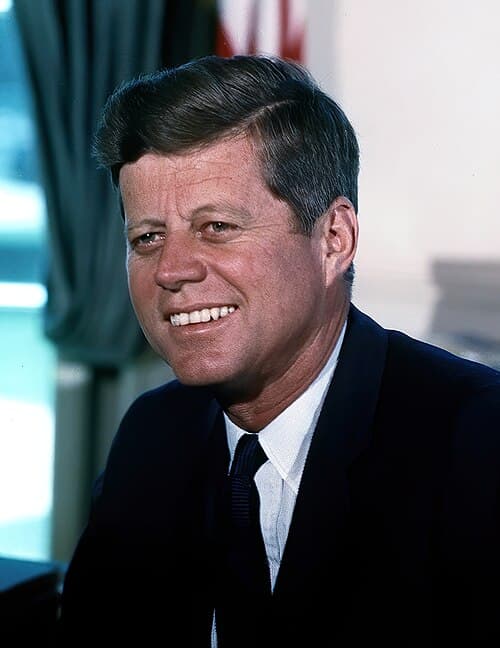
John F. Kennedy
PERSON2,074 w/ George·4 w/ Social
Prince Charles
PERSON1,166 w/ George·4 w/ Social
Bradley Edwards
PERSON907 w/ George·3 w/ Social
LB
Leon Black
PERSON901 w/ George·3 w/ Social
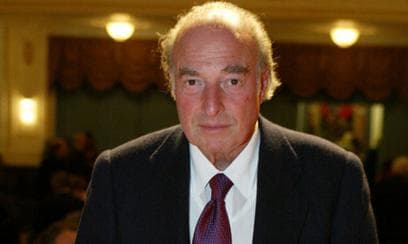
Marc Rich
PERSON853 w/ George·5 w/ Social
Prince Andrew
PERSON817 w/ George·3 w/ Social
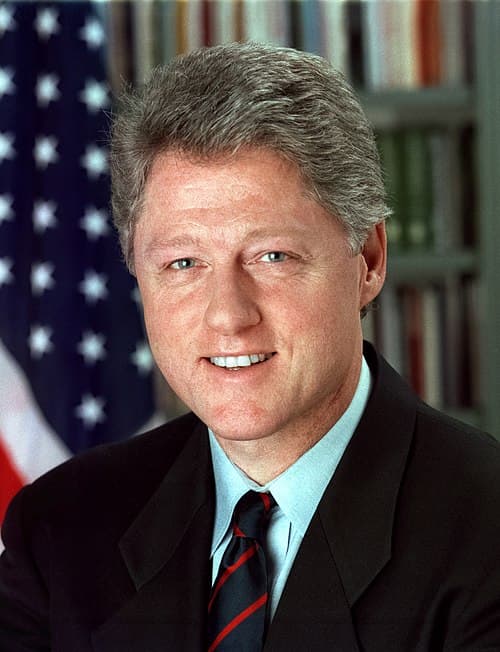
Bill Clinton
PERSON800 w/ George·2 w/ Social
Joe Biden
PERSON770 w/ George·2 w/ Social
Julie K. Brown
PERSON750 w/ George·5 w/ Social
New York City
LOCATION552 w/ George·4 w/ Social
Stephen Hawking
PERSON535 w/ George·4 w/ Social
Samantha Power
PERSON510 w/ George·4 w/ Social
Virginia Giuffre
PERSON499 w/ George·3 w/ Social
Scarlett Johansson
PERSON487 w/ George·3 w/ Social
New York
LOCATION453 w/ George·2 w/ Social
Michael Jackson
PERSON445 w/ George·6 w/ Social
Vicky Ward
PERSON433 w/ George·2 w/ Social
MW
Martin Weinberg
PERSON428 w/ George·4 w/ Social
DB
Doug Band
PERSON407 w/ George·2 w/ Social