Back to Network










6
Shared Docs
6
Same-Page
6 / 6
Mentions
Document Mentions (6 shared documents)
2 mentions1 same-page
Page ?Same page
Math 58 (1936): 345-63. ———. “Systems of Logic Based on Ordinals.” Proceedings of the London Mathematical Society 2, no. 1 (1939): 161-228. Wiles, Andrew. “Modular Elliptic Curves and Fermat’s Last Theorem.” Annals of Mathematics-Second Series 141, no. 3 (1995): 443-552. Chapter 12 Burgin, Mark. Supe
computation: Computing Beyond the Church- Turing Barrier. Softcover reprint of hardcover 1st ed. 2008. Springer, 2010. Chapter 13 Shannon, C.E., and Warren Weaver. The Mathematical Theory of Communication. University of Illinois Press, 1949. Chapter 14 Boden, Margaret A. The Creative Mind: Myths and Mechanism
2 mentions1 same-page
Page ?Same page
s (Bluejacket Press, 1984) 179 36 The IED threat: Andrew Smith, “Improvised Explosive Devices in Iraq, 200
ogy, 66: 2177-2186; Norbert Wiener Cybernetics, or control and communication in the animal and the machine (New York, NY: John Wiley and Sons, 1948); Warren Weaver, “Science and complexity”, American Scientist, 36(4), 536 103 They are ordered: Carlos Gershenson, Peter Csermely, Peter Erdi, Helena Knyazeva, and
2 mentions1 same-page
Page ?Same page
than expected. One variation on this argument is Andrew Ng’s statement that it’s “like worrying about ove
Doubt and Certainty in Science in which he said that we create tools and we mold ourselves through our use of them. The other text he recommended was Warren Weaver and Claude Shannon’s 1949 paper “Recent Contributions to the Mathematical Theory of Communication,” which begins: “The word communication will be use
Sponsored
2 mentions1 same-page
Page ?Same page
e joined by Venki Ramakrishnan, Jaan Tallinn, and Andrew Blake, research director of The Alan Turing Insti
had published a pair of lengthy articles in the Be// System Technical Journal. Introducing the new work to a broad readership in 1949, mathematician Warren Weaver explained that in Shannon’s formulation, “the word information...is used in a special sense that must not be confused with its ordinary usage. In par
2 mentions1 same-page
Page ?Same page
than expected. One variation on this argument is Andrew Ng’s statement that it’s “like worrying about ove
Doubt and Certainty in Science in which he said that we create tools and we mold ourselves through our use of them. The other text he recommended was Warren Weaver and Claude Shannon’s 1949 paper “Recent Contributions to the Mathematical Theory of Communication,” which begins: “The word communication will be use
2 mentions1 same-page
Page ?Same page
e joined by Venki Ramakrishnan, Jaan Tallinn, and Andrew Blake, research director of The Alan Turing Insti
had published a pair of lengthy articles in the Be// System Technical Journal. Introducing the new work to a broad readership in 1949, mathematician Warren Weaver explained that in Shannon’s formulation, “the word information...is used in a special sense that must not be confused with its ordinary usage. In par
Sponsored
Mutual Connections (707)
Entities connected to both Prince Andrew and Warren Weaver
Ghislaine Maxwell
PERSON2,544 w/ Prince·5 w/ Warren
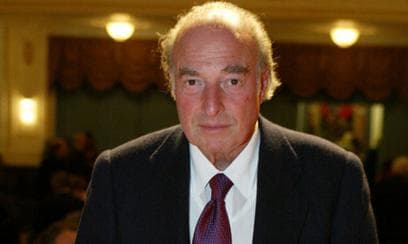
Marc Rich
PERSON1,327 w/ Prince·5 w/ Warren
LB
Leon Black
PERSON1,263 w/ Prince·6 w/ Warren
Donald Trump
PERSON1,068 w/ Prince·2 w/ Warren
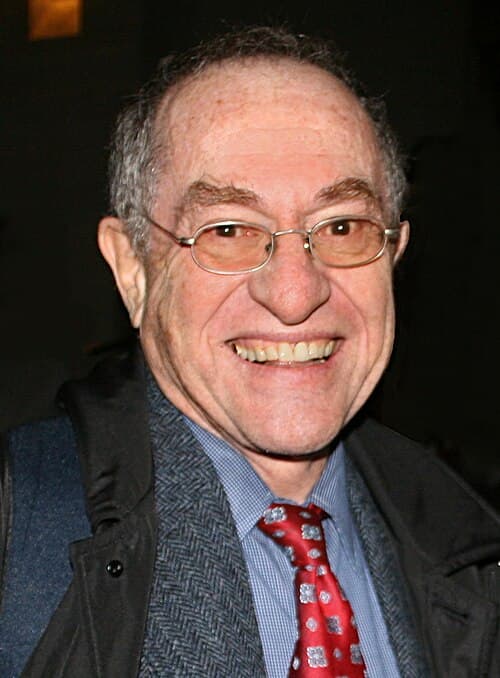
Alan Dershowitz
PERSON982 w/ Prince·6 w/ Warren
Richard Kahn
PERSON832 w/ Prince·2 w/ Warren
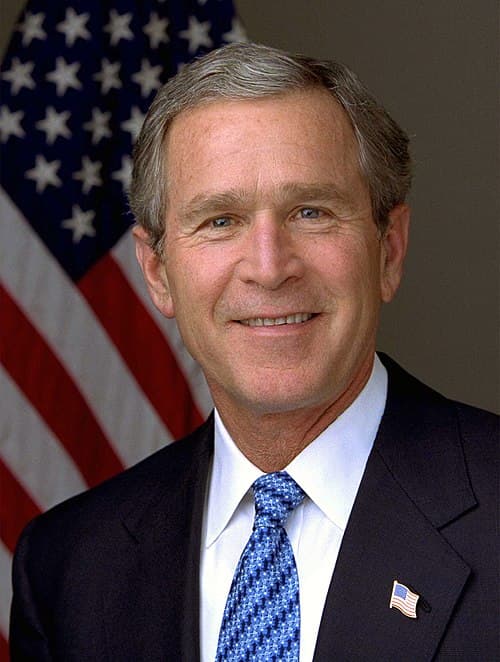
George W. Bush
PERSON817 w/ Prince·6 w/ Warren
Woody Allen
PERSON736 w/ Prince·2 w/ Warren
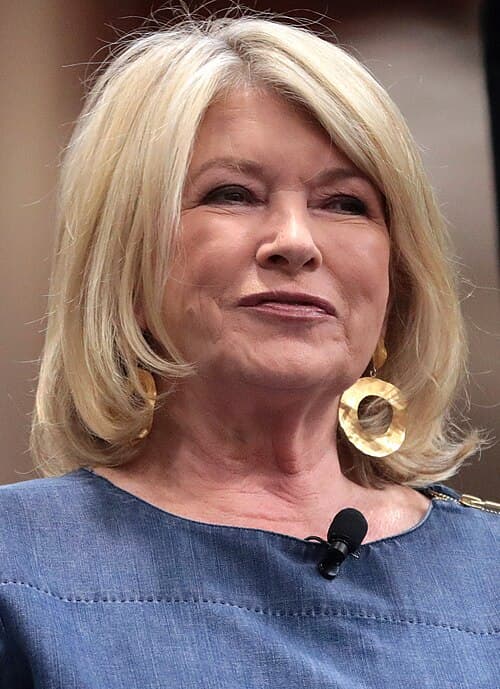
Martha Stewart
PERSON719 w/ Prince·4 w/ Warren
Virginia Giuffre
PERSON687 w/ Prince·2 w/ Warren
Prince Charles
PERSON679 w/ Prince·2 w/ Warren
Joe Biden
PERSON655 w/ Prince·3 w/ Warren
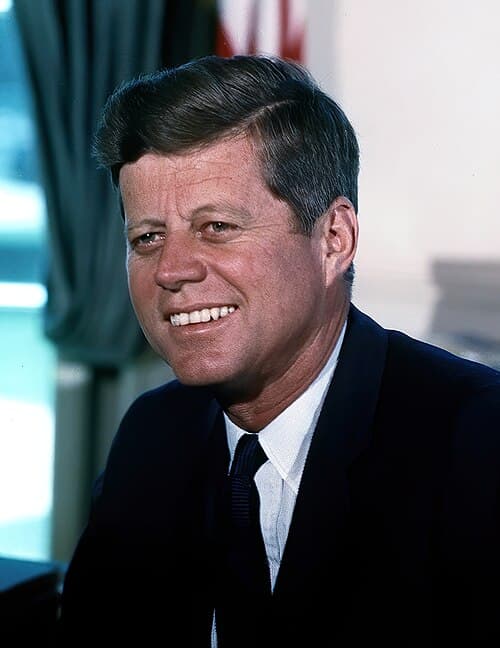
John F. Kennedy
PERSON641 w/ Prince·3 w/ Warren
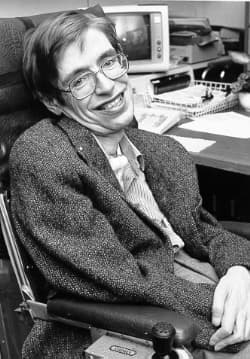
Stephen Hawking
PERSON627 w/ Prince·6 w/ Warren
Julie K. Brown
PERSON573 w/ Prince·5 w/ Warren
MF
Maria Farmer
PERSON488 w/ Prince·3 w/ Warren
Eric Trump
PERSON456 w/ Prince·6 w/ Warren
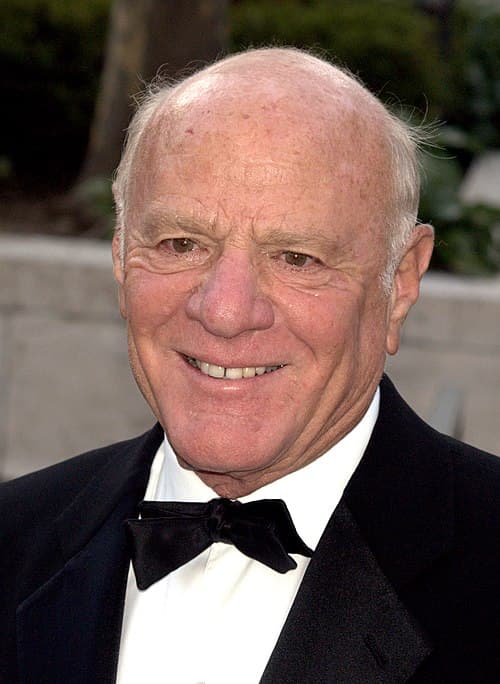
Barry Diller
PERSON443 w/ Prince·4 w/ Warren
Harvey Weinstein
PERSON439 w/ Prince·5 w/ Warren
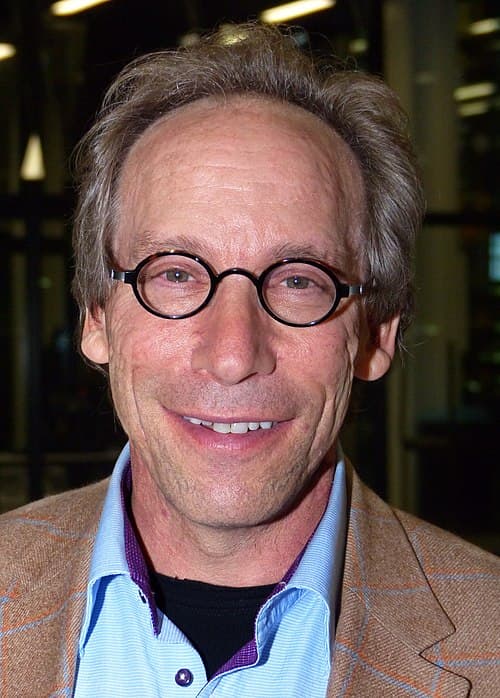
Lawrence Krauss
PERSON375 w/ Prince·2 w/ Warren