Back to Network











4
Shared Docs
4
Same-Page
7 / 4
Mentions
Document Mentions (4 shared documents)
3 mentions1 same-page
Page ?Same page
s Act case, in which it admitted that a physician, Dr. Jackson, was an employee of the Veterans Administration at the time he treated the plaintiff Sulkoff. Subsequently, the United States Attorney's Office became aware that Dr. Jackson was not an employee of the United States. When the United States so
ly if it pertains to a fact, not a legal conclusion. McCaskill v. SCI Mgmt. Corp., 298 F.3d 677, 681-82 (7th Cir. 2002)(Rovner, J., concurring). In Sulkoff v. United States, 2003 WL 1903349 (S.D. Ind. 2003), the United States filed its answer in a Federal Tort Claims Act case, in which it admitted that
bserved that, "[f]actual admissions can be binding as judicial admissions; admissions of legal conclusions cannot." Id.(citations omitted). See also Dabertin v. HCR Manor Care, Inc., 68 F.Supp.2d 998, 1000 (N.D. III. 1999)("It is well established that judicial admissions on questions of law have no legal
3 mentions1 same-page
Page ?Same page
ms Act case, in which it admitted that a physician, Dr. Jackson, was an employee of the Veterans Administration at the time he treated the plaintiff Sulkoff. Subsequently, the United States Attorney's Office became aware that Dr. Jackson was not an employee of the United States. When the United States so
if it pertains to a fact, not a legal conclusion. McCaskill v. SCI Mgmt. Corp. , 298 F.3d 677, 681-82 (7 III Cir. 2002)(Rovner, J., concurring). In Sulkoff v. United States , 2003 WL 1903349 (S.D. Ind. 2003), the United States filed its answer in a Federal Tort Claims Act case, in which it admitted that
served that, "[f]actual admissions can be binding as judicial admissions; admissions of legal conclusions cannot." Id. (citations omitted). See also Dabertin v. HCR Manor Care, Inc. , 68 F.Supp.2d 998, 1000 (N.D. III. 1999)("It is well established that judicial admissions on questions of law have no lega
3 mentions1 same-page
Page ?Same page
s Act case, in which it admitted that a physician, Dr. Jackson, was an employee of the Veterans Administration at the time he treated the plaintiff Sulkoff. Subsequently, the United States Attorney's Office became aware that Dr. Jackson was not an employee of the United States. When the United States so
ly if it pertains to a fact, not a legal conclusion. McCaskill v. SCI Mgmt. Corp., 298 F.3d 677, 681-82 (7th Cir. 2002)(Rovner, J., concurring). In Sulkoff v. United States, 2003 WL 1903349 (S.D. Ind. 2003), the United States filed its answer in a Federal Tort Claims Act case, in which it admitted that
bserved that, "[f]actual admissions can be binding as judicial admissions; admissions of legal conclusions cannot." Id.(citations omitted). See also Dabertin v. HCR Manor Care, Inc., 68 F.Supp.2d 998, 1000 (N.D. Ill. 1999)("It is well established that judicial admissions on questions of law have no legal
Sponsored
2 mentions1 same-page
Page ?Same page
s Act case, in which it admitted that a physician, Dr. Jackson, was an employee of the Veterans Administration at the time he treated the plaintiff Sulkoff. Subsequently, the United States Attorney's Office became aware that Dr. Jackson was not an employee of the United States. When the United States so
bserved that, "[fjactual admissions can be binding as judicial admissions; admissions of legal conclusions cannot." Id.(citations omitted). See also Dabertin v. HCR Manor Care, Inc., 68 F.Supp.2d 998, 1000 (N.D. Dl. 1999)("It is well established that judicial admissions on questions of law have no legal
Sponsored
Mutual Connections (139)
Entities connected to both Sulkoff and Dabertin
LB
Leon Black
PERSON6 w/ Sulkoff·6 w/ Dabertin
United States
LOCATION6 w/ Sulkoff·6 w/ Dabertin
Bradley Edwards
PERSON6 w/ Sulkoff·6 w/ Dabertin
Paul Cassell
PERSON6 w/ Sulkoff·6 w/ Dabertin
Department of Justice
ORGANIZATION6 w/ Sulkoff·6 w/ Dabertin
Anderson
PERSON6 w/ Sulkoff·6 w/ Dabertin
Jeffrey Epstein
PERSON6 w/ Sulkoff·6 w/ Dabertin
Martinez
PERSON6 w/ Sulkoff·6 w/ Dabertin
Bailey
PERSON6 w/ Sulkoff·6 w/ Dabertin
U.S. Marshals
ORGANIZATION6 w/ Sulkoff·6 w/ Dabertin
DO
Dorsett
PERSON5 w/ Sulkoff·6 w/ Dabertin
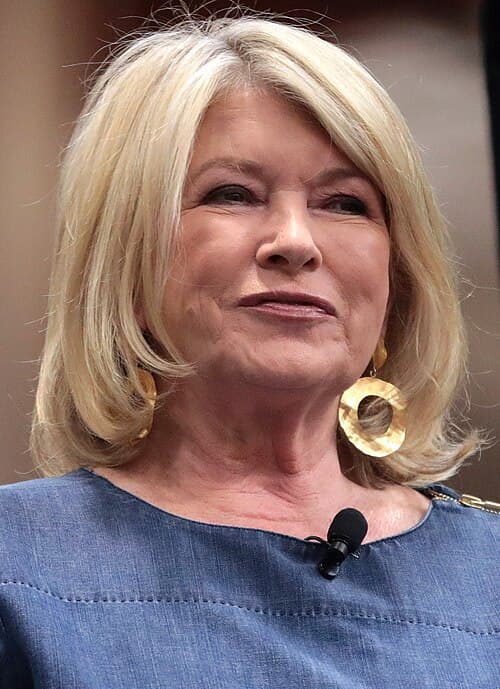
Martha Stewart
PERSON6 w/ Sulkoff·4 w/ Dabertin
Prince Andrew
PERSON6 w/ Sulkoff·4 w/ Dabertin
Michigan
LOCATION6 w/ Sulkoff·4 w/ Dabertin
Michael Jackson
PERSON6 w/ Sulkoff·4 w/ Dabertin
Kenneth Marra
PERSON5 w/ Sulkoff·5 w/ Dabertin
FBI
ORGANIZATION6 w/ Sulkoff·4 w/ Dabertin
Eric Trump
PERSON6 w/ Sulkoff·4 w/ Dabertin
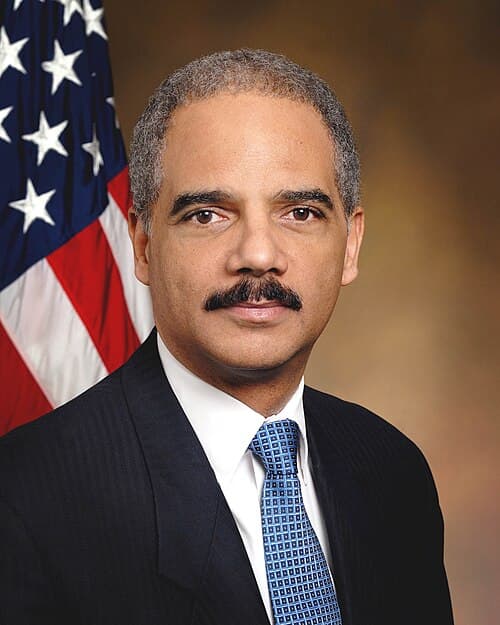
Eric Holder
PERSON6 w/ Sulkoff·4 w/ Dabertin
PE
Petersen
PERSON6 w/ Sulkoff·4 w/ Dabertin