Back to Network






5
Shared Docs
5
Same-Page
5 / 5
Mentions
Document Mentions (5 shared documents)
2 mentions1 same-page
Page ?Same page
l of otherwise barred claims fell squarely within a category of ex post facto laws condemned by the Supreme Court's seminal ex post facto decision, Calder v. Bull—namely, laws providing for "punishments, where the party was not, by law, liable to any punishment." Id. at 612 (quoting Calder, 3 Dall. 386, 391 (1
lusion."' United States v. Jordan, 915 F.2d 622, 628 (11th Cir. 1990) (quoting Rodriguez v. United States, 480 U.S. 522, 525 (1987) (itself quoting Russello v. United States, 464 U.S. 16, 23 (1983))). There is no basis for departing from that rule. Given the strong evidence that Congress did not intend retroactively to a
Sponsored
2 mentions1 same-page
Page ?Same page
l of otherwise barred claims fell squarely within a category of ex post facto laws condemned by the Supreme Court's seminal ex post facto decision, Calder v. Bull—namely, laws providing for "punishments, where the party was not, by law, liable to any punishment." Id. at 612 (quoting Calder, 3 Dall. 386, 391 (1
lusion."' United States v. Jordan, 915 F.2d 622, 628 (11th Cir. 1990) (quoting Rodriguez v. United States, 480 U.S. 522, 525 (1987) (itself quoting Russello v. United States, 464 U.S. 16, 23 (1983))). There is no basis for departing from that rule. Given the strong evidence that Congress did not intend retroactively to a
Sponsored
Mutual Connections (101)
Entities connected to both Calder v. Bull and Russello v. United States
Jeffrey Epstein
PERSON11 w/ Calder·6 w/ Russello
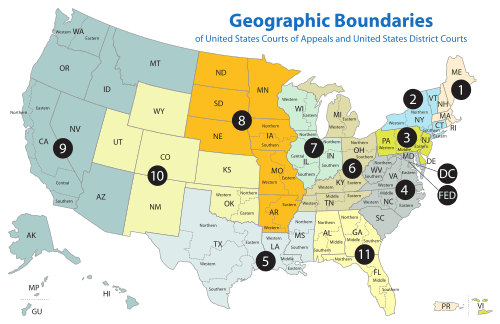
United States
LOCATION11 w/ Calder·6 w/ Russello
JG
Jack Goldberger
PERSON11 w/ Calder·6 w/ Russello
Alan Dershowitz
PERSON11 w/ Calder·6 w/ Russello
Calder
ORGANIZATION11 w/ Calder·5 w/ Russello
John Kerry
PERSON11 w/ Calder·5 w/ Russello
Atterbury Goldberger & Weiss
ORGANIZATION11 w/ Calder·5 w/ Russello
JD
Jane Doe
PERSON10 w/ Calder·6 w/ Russello
Bowen
PERSON11 w/ Calder·5 w/ Russello
United States District Court
ORGANIZATION10 w/ Calder·5 w/ Russello
MP
Michael J. Pike
PERSON10 w/ Calder·5 w/ Russello
Merritt
PERSON10 w/ Calder·5 w/ Russello
Scarlett Johansson
PERSON8 w/ Calder·6 w/ Russello
LB
Leon Black
PERSON8 w/ Calder·6 w/ Russello
CBS, Inc.
ORGANIZATION9 w/ Calder·5 w/ Russello
RJ
Robert C. Josefsberg
PERSON8 w/ Calder·5 w/ Russello
George W. Bush
PERSON8 w/ Calder·5 w/ Russello
Supreme Court
ORGANIZATION7 w/ Calder·6 w/ Russello
WE
Weaver
PERSON8 w/ Calder·5 w/ Russello
KE
Katherine W. Ezell
PERSON8 w/ Calder·5 w/ Russello