Back to Network



4
Shared Docs
4
Same-Page
6 / 4
Mentions
Document Mentions (4 shared documents)
3 mentions1 same-page
Page ?Same page
ion and intelligence. It has been tested on some practical control applications, and also on simulating artificial agents in a simple virtual world. MicroPsi's comprehen- siveness and basis in neuroscience and psychology are impressive, but in the current version of MicroPsi, learning and reasoning are ca
nts in a simple virtual world. MicroPsi's comprehen- siveness and basis in neuroscience and psychology are impressive, but in the current version of MicroPsi, learning and reasoning are carried out by algorithms that seem unlikely to scale. OCP incorporates the Psi model for motivation and emotion, so tha
1 Introduction 107 6.2 High-Level Architecture of CogPrime 107 6.3 Current and Prior Applications of OpenCog 108 6.3.1 Transitioning from Virtual Agents to a Physical Robot 110 6.4 Memory Types and Associated Cognitive Processes in CogPrime 110 6.4.1 Cognitive Synergy in PLN 111 6.5 Goal-Ori
3 mentions1 same-page
Page ?Same page
tion and intelligence. It has been tested on some practical control applications, and also on simulating artificial agents in a simple virtual world. MicroPsi’s comprehen- siveness and basis in neuroscience and psychology are impressive, but in the current version of MicroPsi, learning and reasoning are car
ents in a simple virtual world. MicroPsi’s comprehen- siveness and basis in neuroscience and psychology are impressive, but in the current version of MicroPsi, learning and reasoning are carried out by algorithms that seem unlikely to scale. OCP incorporates the Psi model for motivation and emotion, so that
ime .......... 0.00.00 eee eee eee eee 107 6.3 Current and Prior Applications of OpenCog ..............0..0 022 eee eee 108 6.3.1 Transitioning from Virtual Agents to a Physical Robot ................ 110 6.4 Memory Types and Associated Cognitive Processes in CogPrime ............. 110 6.4.1 Cognitive Synergy i
2 mentions1 same-page
Page ?Same page
ut on the big- picture level the main difference lies in the way the cognitive synergy principle is pursued in the two different approaches. Psi and MicroPsi rely on very simple learning algorithms that are closely tied to the "quad" neurosymbolic knowledge representation, and hence interoperate in a fai
for building steps available, finding some other way to get elevated will be a good idea that may help it get the object 6.3.1 lb-ansitioning from Virtual Agents to a Physical Robot Preliminary experiments have also been conducted using OpenCog to control a Nao robot as well as a virtual dog HIG081. This inv
Sponsored
2 mentions1 same-page
Page ?Same page
but on the big- picture level the main difference lies in the way the cognitive synergy principle is pursued in the two different approaches. Psi and MicroPsi rely on very simple learning algorithms that are closely tied to the “quad” neurosymbolic knowledge representation, and hence interoperate in a fairl
ls for building steps available, finding some other way to get elevated will be a good idea that may help it get the object 6.3.1 Transitioning from Virtual Agents to a Physical Robot Preliminary experiments have also been conducted using OpenCog to control a Nao robot as well as a virtual dog [GdGO08]. This in
Sponsored
Mutual Connections (330)
Entities connected to both MicroPsi and Virtual Agents
DeSTIN
ORGANIZATION7 w/ MicroPsi·4 w/ Virtual
CogPrime
ORGANIZATION7 w/ MicroPsi·4 w/ Virtual
Marc Rich
PERSON7 w/ MicroPsi·4 w/ Virtual
OpenCog
ORGANIZATION7 w/ MicroPsi·4 w/ Virtual
Hopfield
ORGANIZATION5 w/ MicroPsi·4 w/ Virtual
CogPrime AGI
ORGANIZATION6 w/ MicroPsi·3 w/ Virtual
Motivation
ORGANIZATION4 w/ MicroPsi·4 w/ Virtual
Shane Legg
PERSON4 w/ MicroPsi·4 w/ Virtual
Albus
ORGANIZATION4 w/ MicroPsi·4 w/ Virtual
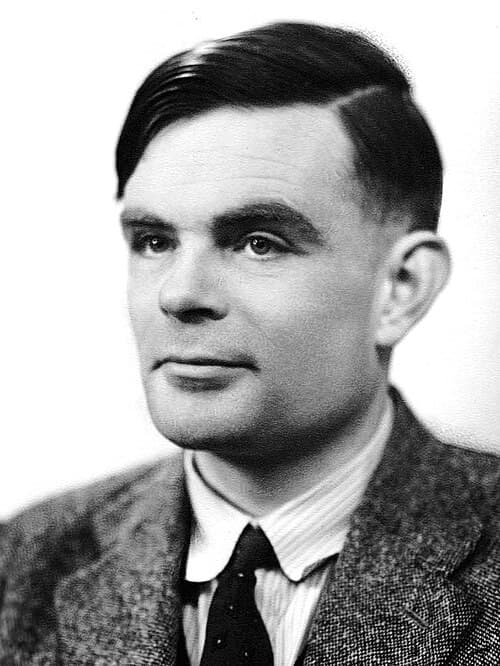
Turing
PERSON4 w/ MicroPsi·4 w/ Virtual
Connecting Legg
ORGANIZATION4 w/ MicroPsi·4 w/ Virtual
Surfaces, Limits, Boundaries
ORGANIZATION4 w/ MicroPsi·4 w/ Virtual
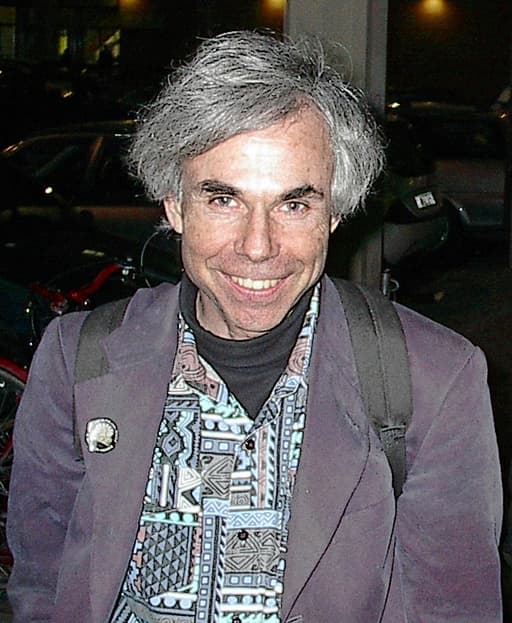
Douglas Hofstadter
PERSON4 w/ MicroPsi·4 w/ Virtual
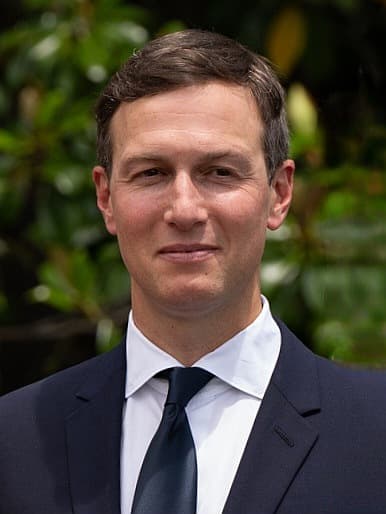
Jared Kushner
PERSON4 w/ MicroPsi·4 w/ Virtual
Vince Foster
PERSON4 w/ MicroPsi·4 w/ Virtual
BK
Ben Kuipers
PERSON4 w/ MicroPsi·4 w/ Virtual
Marvin Minsky
PERSON4 w/ MicroPsi·4 w/ Virtual
George W. Bush
PERSON4 w/ MicroPsi·4 w/ Virtual
Amy Adams
PERSON4 w/ MicroPsi·4 w/ Virtual
Michael Douglas
PERSON4 w/ MicroPsi·4 w/ Virtual