Back to Network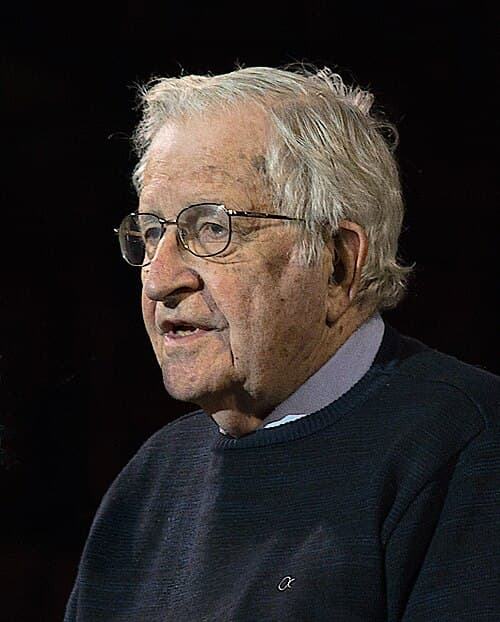







9
Shared Docs
9
Same-Page
9 / 9
Mentions
Document Mentions (9 shared documents)
2 mentions1 same-page
Page ?Same page
e: 1. Not a trivial matter. I'm not the best person to ask. I'd suggest contacting people who've really thought seriously about these issues, like Robert Pollin, a fine independent economist at U Mass Amherst 2. Sherman's speculation is an interesting extension of recent discoveries about conservation, deep
ntributions of Berwick and his students, including Yang. 3. The idea that there is a "ug" for vision, language, etc., seems to be essentially what Randy Gallistel calls "the norm in neuroscience," quoted in the paper on modularity that I sent you. And yes, they're certainly connected, at least at the level of
2 mentions1 same-page
Page ?Same page
1. Not a trivial matter. I'm not the=best person to ask. I'd suggest contacting people who =99ve really thought seriously about these issues, like Robert Pollin, a fi=e independent economist at U Mass Amherst 2. Sherman's speculation is an interesting exten=ion of recent discoveries about conservation, de
tributi=ns of Berwick and his students, including Yang. 3. The idea that there is a "ug" for vis=on, language, etc., seems to be essentially what Randy Gallistel calls =80 the norm in neuroscience," quoted in the paper on modularity =hat I sent you. And yes, they're certainly connected, at least a= the level
Sponsored
2 mentions1 same-page
Page ?Same page
1. Not a trivial matter. I'm not the=best person to ask. I'd suggest contacting people who =99ve really thought seriously about these issues, like Robert Pollin, a fi=e independent economist at U Mass Amherst 2. Sherman's speculation is an interesting exten=ion of recent discoveries about conservation, de
tributi=ns of Berwick and his students, including Yang. 3. The idea that there is a "ug" for vis=on, language, etc., seems to be essentially what Randy Gallistel calls =80 the norm in neuroscience," quoted in the paper on modularity =hat I sent you. And yes, they're certainly connected, at least a= the level
2 mentions1 same-page
Page ?Same page
e: 1. Not a trivial matter. I'm not the best person to ask. I'd suggest contacting people who've really thought seriously about these issues, like Robert Pollin, a fine independent economist at U Mass Amherst 2. Sherman's speculation is an interesting extension of recent discoveries about conservation, de
tributions of Berwick and his students, including Yang. 3. The idea that there is a "ug" for vision, language, etc., seems to be essentially what Randy Gallistel calls "the norm in neuroscience," quoted in the paper on modularity that I sent you. And yes, they're certainly connected, at least at the level of
2 mentions1 same-page
Page ?Same page
e: 1. Not a trivial matter. I'm not the best person to ask. I'd suggest contacting people who've really thought seriously about these issues, like Robert Pollin, a fine independent economist at U Mass Amherst 2. Sherman's speculation is an interesting extension of recent discoveries about conservation, deep
ntributions of Berwick and his students, including Yang. 3. The idea that there is a "ug" for vision, language, etc., seems to be essentially what Randy Gallistel calls "the norm in neuroscience," quoted in the paper on modularity that I sent you. And yes, they're certainly connected, at least at the level of
Sponsored
2 mentions1 same-page
Page ?Same page
1. Not a trivial matter. I'm not the=best person to ask. I'd suggest contacting people who =99ve really thought seriously about these issues, like Robert Pollin, a fi=e independent economist at U Mass Amherst 2. Sherman's speculation is an interesting exten=ion of recent discoveries about conservation, de
tributi=ns of Berwick and his students, including Yang. 3. The idea that there is a "ug" for vis=on, language, etc., seems to be essentially what Randy Gallistel calls =80 the norm in neuroscience," quoted in the paper on modularity =hat I sent you. And yes, they're certainly connected, at least a= the level
2 mentions1 same-page
Page ?Same page
1. Not a trivial matter. I'm not the=best person to ask. I'd suggest contacting people who =99ve really thought seriously about these issues, like Robert Pollin, a fi=e independent economist at U Mass Amherst 2. Sherman's speculation is an interesting exten=ion of recent discoveries about conservation, de
tributi=ns of Berwick and his students, including Yang. 3. The idea that there is a "ug" for vis=on, language, etc., seems to be essentially what Randy Gallistel calls =80 the norm in neuroscience," quoted in the paper on modularity =hat I sent you. And yes, they're 2 EFTA_R1_01624356 EFTA02498694 certain
2 mentions1 same-page
Page ?Same page
e: 1. Not a trivial matter. I'm not the best person to ask. I'd suggest contacting people who've really thought seriously about these issues, like Robert Pollin, a fine independent economist at U Mass Amherst 2. Sherman's speculation is an interesting extension of recent discoveries about conservation, deep
ntributions of Berwick and his students, including Yang. 3. The idea that there is a "ug" for vision, language, etc., seems to be essentially what Randy Gallistel calls "the norm in neuroscience," quoted in the paper on modularity that I sent you. And yes, they're certainly connected, at least at the level of
Sponsored
Mutual Connections (25)
Entities connected to both Robert Pollin and Randy Gallistel
Noam Chomsky
PERSON9 w/ Robert·10 w/ Randy
Jeffrey Epstein
PERSON9 w/ Robert·10 w/ Randy
Sherman
PERSON9 w/ Robert·9 w/ Randy
Berwick
LOCATION9 w/ Robert·9 w/ Randy
Martin Nowak
PERSON9 w/ Robert·9 w/ Randy
GA
Gallistel
PERSON9 w/ Robert·9 w/ Randy
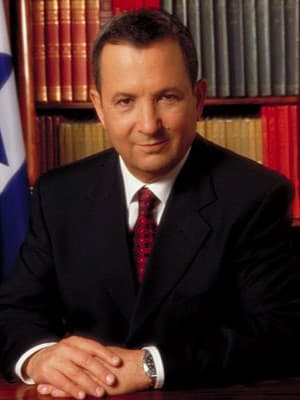
Ehud Barak
PERSON8 w/ Robert·8 w/ Randy
U Mass
ORGANIZATION8 w/ Robert·8 w/ Randy
Marc Rich
PERSON7 w/ Robert·7 w/ Randy
Zimbabwe
LOCATION7 w/ Robert·7 w/ Randy
Wellfleet
ORGANIZATION6 w/ Robert·6 w/ Randy
MS
Michael Sherman
PERSON4 w/ Robert·4 w/ Randy
Benjamin Netanyahu
PERSON4 w/ Robert·4 w/ Randy
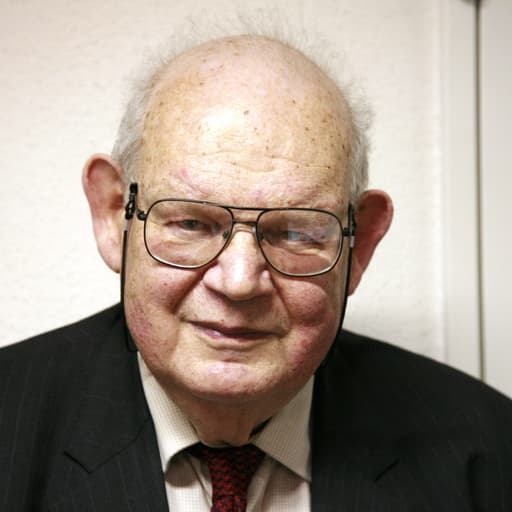
Mandelbrot
PERSON4 w/ Robert·4 w/ Randy
Valeria Chomsky
PERSON3 w/ Robert·4 w/ Randy
Hilbert
PERSON3 w/ Robert·3 w/ Randy
CY
Charles Yang
PERSON3 w/ Robert·3 w/ Randy
Bill Clinton
PERSON3 w/ Robert·3 w/ Randy
MS
Michael Sherman's
PERSON3 w/ Robert·3 w/ Randy
Prince Charles
PERSON3 w/ Robert·3 w/ Randy