EFTA02496453_email_002
Document Information
Bates Range
EFTA02496453_email_002
Pages
1
Original Filename
EFTA02496453.pdf (email 2: Re: Re:)
Document Content
Page 1 - EFTA02496453_003
I wouldn't take the term =80 mechanism" too literally. It refers to whatever is taki=g place in the brain. For some, as most of those in the Nowak group, it means neural nets. =For Gallistel, it's processes internal to the cell. Useful t= look at these matters in terms of Marrs three levels: computatio=, algorithm, mechanism. From: Jeffrey E. [mailto:[email protected]] Sent: Tuesday, June 23, 2015 9:46 PM To: Noam Chomsky Subject: Re: Re: 1 will do , by the way new =ousing starts were the highest in 7 years. the mortgage intere=t deduction cheerleaders , ( not me ). are thrilled. 2. i am willing to be convinced, as always=/u> 3. my admittedly naive point is that &qu=t;mechanism" ,I believe ,is the wrong concept. driven in error,=by the machine -computer analog since the early 1900s . instead think of probability , it is not a mechanism , On Tue, Jun 23, 2015 at 9:05 PM, Noam Chomsky <mailtc > > =rote: 1. Not a trivial matter. I'm not the=best person to ask. I'd suggest contacting people who =99ve really thought seriously about these issues, like Robert Pollin, a fi=e independent economist at U Mass Amherst 2. Sherman's speculation is an interesting exten=ion of recent discoveries about conservation, deep homologies, regulatory =ircuits, and other elements of what's sometimes called "the evo-devo revolution." It remains to be seen whether a=ything can be done with it. I think you underestimate the contributi=ns of Berwick and his students, including Yang. 3. The idea that there is a "ug" for vis=on, language, etc., seems to be essentially what Randy Gallistel calls =80 the norm in neuroscience," quoted in the paper on modularity =hat I sent you. And yes, they're certainly connected, at least a= the level of cells, and presumably well beyond. These are live and =ignificant research areas. These "central modules" d= not have input or output, but they are accessed by input systems and in some cases, like language, by output systems. That seems a fair p=cture of the rough cognitive architecture. I don't follow th= rest. It's true that work on human language uses as evidenc= what is available, namely performance. And much of the work unfortunately is fascinated by the droppings, just as in other fields. But there is some work that seeks to discover the mechanisms, as discus=ed in the papers I sent you. 3 EFTA_R1_01620938 EFTA02496455
Entities Mentioned
GA
Gallistel
PERSON
Surname reference in documents

Jeffrey Epstein
PERSON • 2 mentions
American sex offender and financier (1953–2019)
MA
Marrs
PERSON
Surname reference in Epstein-related documents
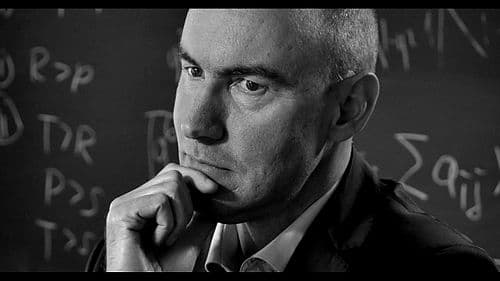
Martin Nowak
PERSON
Austrian scientist
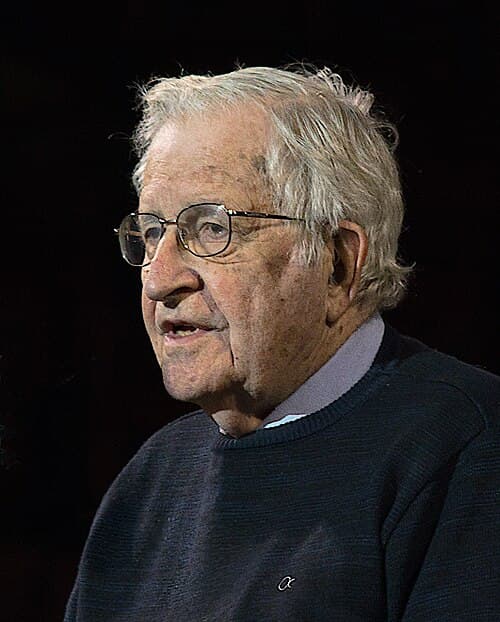
Noam Chomsky
PERSON • 2 mentions
American linguist and activist (born 1928)
RG
Randy Gallistel
PERSON
Person referenced in documents
RP
Robert Pollin
PERSON
Person referenced in documents

Sherman
PERSON
Ambiguous surname - refers to multiple people in Epstein documents
Berwick
LOCATION
Location referenced in documents
Statistics
Pages:1
Entities:9
Sponsored