Back to Network










5
Shared Docs
5
Same-Page
5 / 5
Mentions
Document Mentions (5 shared documents)
2 mentions1 same-page
Page ?Same page
ould be able to account for the phenomenon of sexual grooming. Until recently there have been three dominant theories of child sexual abuse, namely Finkelhor's Pre-condition Model (1984); Marshall and Barbaree's Integrated Theory• (1990); and Hall and Hirschman's Quadripartite Model (1992). In 2002, Ward
Gilchrist. E fin press). Current responses to sexual grooming: Implication for prevention. The Howard Journal of Criminal Justice. 46. Elliott. M.. Browne. K. & Kilcoyne. J. (1995). Child sexual abuse prevention: What offenders tell us. Child Abuse and Neglect. 19. 579-594. Fernandez. Y. M.. Marshall.
2 mentions1 same-page
Page ?Same page
nifer Kikoyne. 1995. "Child Sexual Abuse Prevention: What Offenders Tell Us: Child Abuse and Neglect 19(5):579-594. doi30.1016/0145-2134(95)00017-3 Finkelhor, David. 1994. "Current Information on the Scope and Nature of add Sexual Abuse: The Future of Children 4(2):31-53. do1:10.2307/1602522 Gillespie, A
of access, or perceived vulnerabilities of the child (Lanning 2010; McAlinden 2006; Mooney and Ost 2013; Olson, Ellevold, and Rogers 2007). Elliott, Browne, and Kilcoyne (1995) found that when selecting a victim, offenders often focused on physical characteristics such as the child being pretty (42%),
2 mentions1 same-page
Page ?Same page
he event and memory interview should engender better memory. Further- more, compared with females, males may be less likely to dis- close CSA (e.g., Finkelhor, Hotaling, Lewis, & Smith, 1990; Widom & Morris, 1997; but see Goodman et al., 2003) and may have less detailed autobiographical memories about emo
ntory: Psychometrics and association with child- hood and adult victimization in clinical samples. Journal of In- terpersonal Violence. 10. 387-401. Browne. A.. & Finkelhor. D. (1986). Impact of child sexual abuse: A review of the research. Psychological Bulletin. 99.66—i7. Christianson. S.-A. (1992).
Sponsored
2 mentions1 same-page
Page ?Same page
ncerns disentangling the effects of victimization. The common occurrence of polyvictimization (i.e., experiencing many forms of child maltreatment; Finkelhor, Shat- tuck. 'Punier, Onnmd, & Hamby, 2011) and the risk that victims of maltreatment will be revictimized (e.g., West, Williams, & Siegel. anno) m
rk. NY: Basic Books. Bremner. J. D. (2006). Traumatic stress: Effect on the brain. Dialogues in Clinical Neuroscience. B. ilot.5161. PM: 17290802. Browne. A.. & Finkelhor. D. 0986). Impart of child sexual abase: A review of the research. Psychological Sidled°. 99. 66-77. littpsdfd ohorg/1(1.10.37/003
2 mentions1 same-page
Page ?Same page
ould be able to account for the phenomenon of sexual grooming. Until recently there have been three dominant theories of child sexual abuse, namely Finkelhor's Pre-condition Model (1984); Marshall and Barbaree's Integrated Theory (1990); and Hall and Hirschman's Quadripartite Model (1992). In 2002, Ward
006). Sexual grooming of children: Review of literature and theoretical considerations. Journal of Sexual Aggression, 12(3), 287-299. Elliott, M., Browne, K., & Kilcoyne, J. (1995). Child sexual abuse prevention: What offenders tell us. Child Abuse and Neglect, 19(5), 579-594. Gallagher, B. (1999). T
Sponsored
Mutual Connections (158)
Entities connected to both Finkelhor and Gordon Brown
Julie K. Brown
PERSON3 w/ Finkelhor·41 w/ Gordon
George W. Bush
PERSON9 w/ Finkelhor·27 w/ Gordon
Prince Andrew
PERSON2 w/ Finkelhor·25 w/ Gordon
LB
Leon Black
PERSON3 w/ Finkelhor·17 w/ Gordon
Eric Trump
PERSON2 w/ Finkelhor·16 w/ Gordon
ET
Emmy Taylor
PERSON4 w/ Finkelhor·13 w/ Gordon
Marc Rich
PERSON2 w/ Finkelhor·13 w/ Gordon
Vicky Ward
PERSON5 w/ Finkelhor·10 w/ Gordon
BL
Blake
PERSON3 w/ Finkelhor·11 w/ Gordon
EL
Elliott
PERSON7 w/ Finkelhor·7 w/ Gordon
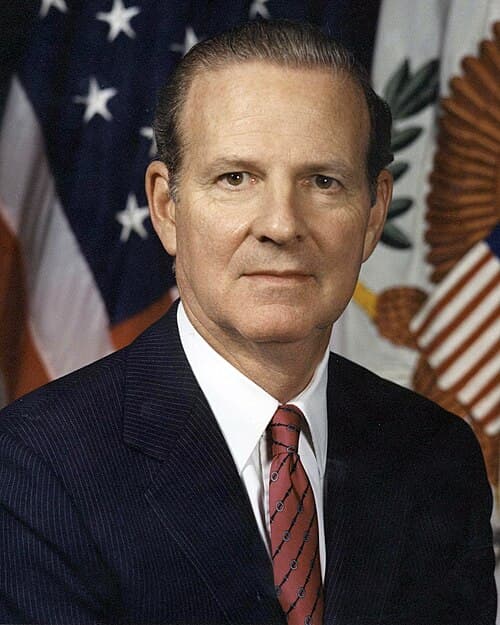
James Baker
PERSON3 w/ Finkelhor·10 w/ Gordon
Alan Dershowitz
PERSON3 w/ Finkelhor·10 w/ Gordon
New York
LOCATION2 w/ Finkelhor·10 w/ Gordon
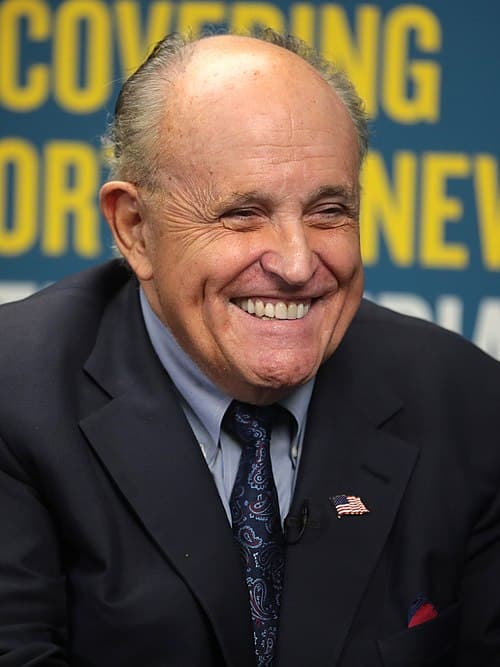
Rudy Giuliani
PERSON4 w/ Finkelhor·8 w/ Gordon
Routledge
ORGANIZATION6 w/ Finkelhor·6 w/ Gordon
Gallagher
PERSON2 w/ Finkelhor·10 w/ Gordon
Conte
PERSON5 w/ Finkelhor·6 w/ Gordon
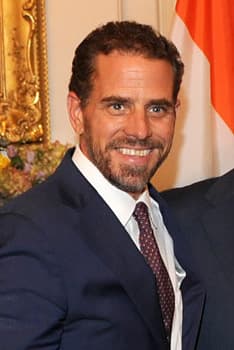
Hunter Biden
PERSON5 w/ Finkelhor·6 w/ Gordon
DB
Doug Band
PERSON2 w/ Finkelhor·9 w/ Gordon
Wales
LOCATION2 w/ Finkelhor·8 w/ Gordon