Back to Network





5
Shared Docs
5
Same-Page
10 / 5
Mentions
Document Mentions (5 shared documents)
3 mentions1 same-page
Page ?Same page
natural tendency to influence, or [be] capable of influencing, the decision of the decisionmaking body to which it was addressed." United States v. Gaudin, 515 U.S. 506, 509 (1995) (alteration in original) (quotation marks omitted). A statement made in a civil deposition is also material if "a truthful
natural tendency to influence, or [be] capable of influencing, the decision of the decisionmaking body to which it was addressed," United States v. Gaudin, 515 U.S. 506, 509 (1995) (alteration in original) (internal quotation marks omitted). Neither of these standards requires the jury to determine whe
s "are violated only when the challenged conduct invaded his legitimate expectation of privacy rather than that of a third party." United States v. Payner, 447 U.S. 727, 731 (1980) (emphasis in original); see also United States v. Villegas, 899 F.2d 1324, 1333 (2d Cir. 1990). Ultimately, the Fourth Ame
3 mentions1 same-page
Page ?Same page
natural tendency to influence, or [be] capable of influencing, the decision of the decisionmaking body to which it was addressed." United States v. Gaudin, 515 U.S. 506, 509 (1995) (alteration in original) (quotation marks omitted). A statement made in a civil deposition is also material if "a truthful
natural tendency to influence, or [be] capable of influencing, the decision of the decisionmaking body to which it was addressed," United States v. Gaudin, 515 U.S. 506, 509 (1995) (alteration in original) (internal quotation marks omitted). Neither of these standards requires the jury to determine whe
s "are violated only when the challenged conduct invaded his legitimate expectation of privacy rather than that of a third party." United States v. Payner, 447 U.S. 727, 731 (1980) (emphasis in original); see also United States v. Villegas, 899 F.2d 1324, 1333 (2d Cir. 1990). Ultimately, the Fourth Ame
3 mentions1 same-page
Page ?Same page
natural tendency to influence, or [be] capable of influencing, the decision of the decisionmaking body to which it was addressed." United States v. Gaudin, 515 U.S. 506, 509 (1995) (alteration in original) (quotation marks omitted). A statement made in a civil deposition is also material if "a truthful
natural tendency to influence, or [be] capable of influencing, the decision of the decisionmaking body to which it was addressed," United States v. Gaudin, 515 U.S. 506, 509 (1995) (alteration in original) (internal quotation marks omitted). Neither of these standards requires the jury to determine whe
s "are violated only when the challenged conduct invaded his legitimate expectation of privacy rather than that of a third party." United States v. Payner, 447 U.S. 727, 731 (1980) (emphasis in original); see also United States v. Villegas, 899 F.2d 1324, 1333 (2d Cir. 1990). Ultimately, the Fourth Ame
Sponsored
3 mentions1 same-page
Page ?Same page
influence, or [be] capable of influencing, the decision of the decisionmaking body to which it was 121 EFTA00095213 addressed." United States v. Gaudin, 515 U.S. 506, 509 (1995) (alteration in original) (quotation marks omitted). A statement made in a civil deposition is also material if "a truthful
natural tendency to influence, or [be] capable of influencing, the decision of the decisionmaking body to which it was addressed," United States v. Gaudin, 515 U.S. 506, 509 (1995) (alteration in original) (internal quotation marks omitted). Neither of these standards require the jury to determine whet
s "are violated only when the challenged conduct invaded his legitimate expectation of privacy rather than that of a third party." United States v. Payner, 447 U.S. 727, 731 (1980) (emphasis in original); see also United States v. Viliegas, 899 F.2d 1324, 1333 (2d Cir. 1990). Ultimately, the Fourth Ame
3 mentions1 same-page
Page ?Same page
natural tendency to influence, or [be] capable of influencing, the decision of the decisionmaking body to which it was addressed." United States v. Gaudin, 515 U.S. 506, 509 (1995) (alteration in original) (quotation marks omitted). A statement made in a civil deposition is also material if "a truthful
natural tendency to influence, or [be] capable of influencing, the decision of the decisionmaking body to which it was addressed," United States v. Gaudin, 515 U.S. 506, 509 (1995) (alteration in original) (internal quotation marks omitted). Neither of these standards requires the jury to determine whe
s "are violated only when the challenged conduct invaded his legitimate expectation of privacy rather than that of a third party." United States v. Payner, 447 U.S. 727, 731 (1980) (emphasis in original); see also United States v. Villegas, 899 F.2d 1324, 1333 (2d Cir. 1990). Ultimately, the Fourth Ame
Sponsored
Mutual Connections (270)
Entities connected to both Gaudin and Payner
Ghislaine Maxwell
PERSON24 w/ Gaudin·13 w/ Payner
Jeffrey Epstein
PERSON24 w/ Gaudin·13 w/ Payner
United States
LOCATION24 w/ Gaudin·11 w/ Payner
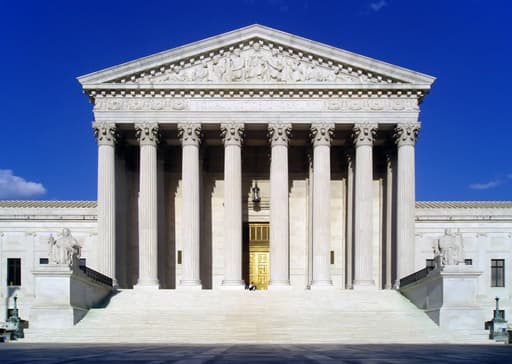
Supreme Court
ORGANIZATION24 w/ Gaudin·10 w/ Payner
the Southern District
LOCATION21 w/ Gaudin·11 w/ Payner
WE
Werner
PERSON24 w/ Gaudin·5 w/ Payner
Medina
PERSON24 w/ Gaudin·5 w/ Payner
CH
Chacko
PERSON24 w/ Gaudin·5 w/ Payner
Forde
ORGANIZATION24 w/ Gaudin·5 w/ Payner
TH
Thompson
PERSON24 w/ Gaudin·5 w/ Payner
SA
Sampson
PERSON24 w/ Gaudin·5 w/ Payner
NE
Nejad
PERSON24 w/ Gaudin·5 w/ Payner
MA
Markiewicz
PERSON24 w/ Gaudin·5 w/ Payner
Napolitano
PERSON24 w/ Gaudin·5 w/ Payner
CO
Concepcion
PERSON23 w/ Gaudin·5 w/ Payner
SA
Salameh
PERSON21 w/ Gaudin·7 w/ Payner
MO
Mostafa
PERSON23 w/ Gaudin·5 w/ Payner
Scarlett Johansson
PERSON21 w/ Gaudin·5 w/ Payner
NE
Nersesian
PERSON21 w/ Gaudin·5 w/ Payner
Adriana Ross
PERSON21 w/ Gaudin·5 w/ Payner