Back to Network







6
Shared Docs
6
Same-Page
6 / 6
Mentions
Document Mentions (6 shared documents)
2 mentions1 same-page
Page ?Same page
basic CogPrime terminology. Also, OpenCog and OpenCogPrime are open-source, so the reader who wishes to dig into the source code (mostly C++, some Python and Scheme) is welcome to; directions to find the code are on the opencog . org website. 3 EFTA00624150 4 19 The OpenCog Framework Level of Ab
han using a Handle based notation which Atoms would be referred to as 1, 3433322, etc.; but sometimes we will use the Handle notation as well. Some ConceptNodes and conceptual PredicateNode or Schemallodes may correspond with human-language words or phrases like cat, bite, and so forth. This will be the mino
2 mentions1 same-page
Page ?Same page
nalty function. In the current CogPrime codebase, the algorithm in charge of calibrating the parameters of the penalty function has been written in Python. It takes in input the log of the imitation learning engine that contains the score, the size, the penalty and the fitness of all candidates explor
usual, but making use of Metallodes as well as ordinary CT nodes. The modeling of Metallodes is quite similar to the modeling of Nodes representing ConceptNodes and PredicateNodes using embedding vectors. In this way, one can use standard, small decision tree models to model fairly large portions of CTs (be
2 mentions1 same-page
Page ?Same page
history. In the standard CogPrinte notation as introduced formally in Chapter 20 (where indentation has function-argument syntax similar to that in Python, and relationship types are prepended to their relata without parentheses), for the case C is declarative this would be written as PredictiveExtens
Knowledge in the Atomspace. A simple example of implicit knowledge in the Atomspace. The "chicken" and "food" concepts are represented by "maps" of ConceptNodes interconnected by HebbianLinks, where the latter tend to form between Con- ceptNodes that are often simultaneously important. The bundle of links bet
Sponsored
2 mentions1 same-page
Page ?Same page
th to Superhuman AGI Fide implication Dog Dog implication NIRO (.1) !lido a Nice Implication PLN Deduction Rule harchtoclyd on C • • or Python) O PLN INFERENCE DeClarative representation of PLN deduction rule in atomspace .... •. • PIA le a set a Schema Node that can modify the
at contains all required packages and tools to test and develop OpenCog. • Concept Creation: A general term for cognitive processes that create new ConceptNodes, PredicateNodes or concept maps representing new concepts. • Conceptual Blending: A process of creating new concepts via judiciously combining pie
2 mentions1 same-page
Page ?Same page
s history. In the standard CogPrime notation as introduced formally in Chapter 20 (where indentation has function-argument syntax similar to that in Python, and relationship types are prepended to their relata without parentheses), for the case C is declarative this would be written as PredictiveExtensi
t Knowledge in the Atomspace. A simple example of implicit knowledge in the Atomspace. The "chicken" and "food" concepts are represented by "maps" of ConceptNodes interconnected by HebbianLinks, where the latter tend to form between Con- ceptNodes that are often simultaneously important. The bundle of links bet
2 mentions1 same-page
Page ?Same page
0 18 Advanced Self-Modification: A Possible Path to Superhuman AGI Fido implication — Dog implication Nice PLN Deduction Rule (hard-coded in C++ or Python) ; (8) Fido. : —— > Nice implication - implication i icati N PLN is a set Fido P = Dog Dog bal ee Nice of Schema Nodes that can modify the Atomspac
hat contains all required packages and tools to test and develop OpenCog. e Concept Creation: A general term for cognitive processes that create new ConceptNodes, PredicateNodes or concept maps representing new concepts. e Conceptual Blending: A process of creating new concepts via judiciously combining piece
Sponsored
Mutual Connections (660)
Entities connected to both Python and ConceptNodes
Marc Rich
PERSON10 w/ Python·12 w/ ConceptNodes
OpenCog
ORGANIZATION8 w/ Python·12 w/ ConceptNodes
George W. Bush
PERSON11 w/ Python·8 w/ ConceptNodes
Joscha Bach
PERSON14 w/ Python·5 w/ ConceptNodes
Donald Trump
PERSON12 w/ Python·4 w/ ConceptNodes
MI
MindAgents
PERSON6 w/ Python·10 w/ ConceptNodes
CogPrime
ORGANIZATION6 w/ Python·10 w/ ConceptNodes
DeSTIN
ORGANIZATION6 w/ Python·9 w/ ConceptNodes
Marvin Minsky
PERSON7 w/ Python·7 w/ ConceptNodes
PredicateNodes
ORGANIZATION4 w/ Python·7 w/ ConceptNodes
PredicateNode
LOCATION4 w/ Python·7 w/ ConceptNodes
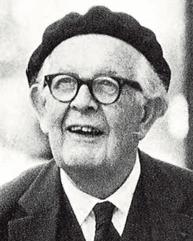
Piaget
PERSON9 w/ Python·2 w/ ConceptNodes
Stephen Hawking
PERSON5 w/ Python·6 w/ ConceptNodes
Woody Allen
PERSON5 w/ Python·6 w/ ConceptNodes
Combo
LOCATION4 w/ Python·6 w/ ConceptNodes
STICurrency
LOCATION4 w/ Python·6 w/ ConceptNodes
ImplicationLinks
ORGANIZATION3 w/ Python·7 w/ ConceptNodes
PI
Piagetan
PERSON4 w/ Python·6 w/ ConceptNodes
TruthValues
ORGANIZATION3 w/ Python·7 w/ ConceptNodes
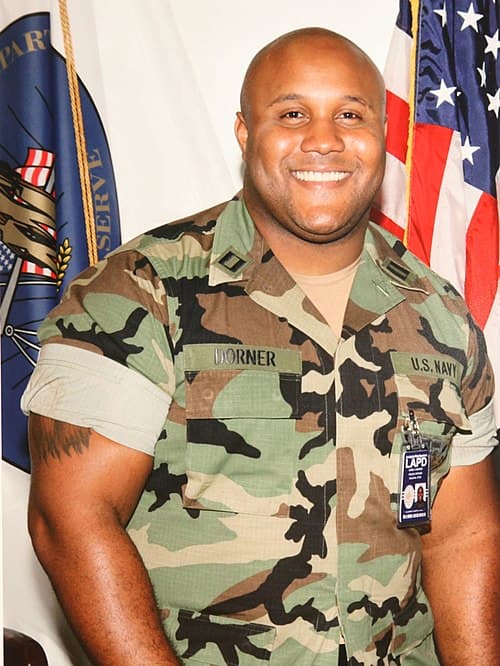
Dorner
ORGANIZATION4 w/ Python·6 w/ ConceptNodes