Back to Network


















8
Shared Docs
6
Same-Page
8 / 9
Mentions
Document Mentions (8 shared documents)
3 mentions1 same-page
Page ?Same page
es a Palestinian state with its capital in East Jerusalem. The United States has lost all credibility on this issue; after casting the sole vote in the U.N. Security Council against censuring Israel for its illegal settlement building, it can no longer act as an objective mediator. This act was a watershed in U.S.- Saud
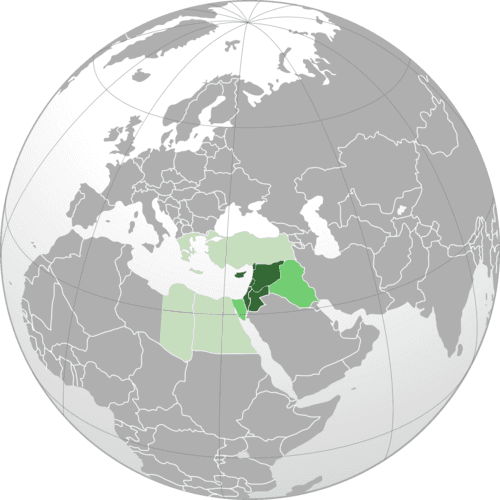
eft the southern flank exposed. Therefore, by holding the Levant, an eastern power protected itself against attacks from Mediterranean powers. The Levant was also important to any empire originating to the north or south of Israel. If Egypt decided to move beyond the Nile Basin and North Africa eastw
y over nearly 3,000 years. For convenience, we will use the term "Israel" to connote all of the Hebrew and Jewish entities that have existed in the Levant since the invasion of the region as chronicled in the Book of Joshua. As always, geopolitics requires a consideration of three dimensions: the int
2 mentions1 same-page
Page ?Same page
which I proposed the establishment of a regional security and cooperation scheme. And I believe that we should have done this a long time ago. When the U.N. Security Council resolution that ended the Iraq-Iran war was being drafted, on the request of Iran, 26 years ago, we suggested that regional security should be para
y lies in tatters. Washington and London were forced to act after Islamist rebels, including the al-Qaida-affiliated Islamic State of Iraq and the Levant, took over the headquarters and warehouses of the western-backed FSA and reportedly seized anti-aircraft and anti-tank missiles, some of which are
2 mentions1 same-page
Page ?Same page
ith Saudi Arabia's Prince Turki, former chief of intelligence and brother of the foreign minister. Excerpts: Q. Who made the decision to turn down the U.N. Security Council seat? A. It is always in the end the king [King Abdullah] who makes the decision. But it wasn't a whimsical decision. Nor was it, as some newspape
in power. Having no other major clients for its arms-export industry since the fall of Muammar Qadhafi, no other port of access for its navy in the Levant, and an affinity for a secular regime—however brutal—that bills itself as a bulwark against Sunni Arab religious extremism, Russia has deftly kept
Sponsored
2 mentions1 same-page
Page ?Same page
CS framework. At the same time, China has resisted the claims of India and Brazil EFTA_R 1_02034306 EFTA02691792 29 for permanent membership on the U.N. Security Council that would rival its own status. How seriously should we take the role of BRICS? The Beijing Review recently claimed the organization is "represen
Syria, believes that the Syrian recognition of the Palestinian state today means that the al- Assad regime may give up the idea of custody over the Levant, i.e. Lebanon and Palestine, especially as Damascus also previously prevented Lebanon from recognizing the Palestinian state. The Syrian recogniti
2 mentions1 same-page
Page ?Same page
-- even pleading =or -- a negotiated political solution where both sides first "simultaneously" lay down their weapons (a call=subsequently made by the U.N. Security Council). "These matters canno= be dealt with by fighting, confrontations, wars, or by inviting foreign m=litary intervention," Nasrallah stressed, an intim
ogether =ith "the part of the Syrian people" who steadfastly reject what =he party believes is essentially a pro-Zionist push for supremacy over the Levant, will necessarily be forced to use counterfo=ce at some point -- the logic of resistance -- to defend mutual interests =o clearly threatened by a di
2 mentions1 same-page
Page ?Same page
in November 2010, for example, President Obama committed the U.S. for the very first time to support India's candidacy for permanent membership on the U.N. Security Council. Like many others who wish to see India become a close strategic partner of the U.S., I supported the president's announcement. Unfortunately, Ind
o. EFTA_R1_00229020 EFTA01842223 Let's consider a post-attack Middle East. The risk factors are well known: potential Iranian retaliation in the Levant, the Persian Gulf and perhaps against Israeli and American interests abroad, as well as destabilizing consequences for global oil markets. Those I
Sponsored
Page HOUSE_OVERSIGHT_030079
They realize that the measures taken until now by the United States and Europe have been relatively gentle, therefore wholly ineffective. Add to that the U.N. Security Council's recent failure to condemn Syria and official Arab support for Syrian stability, and you will grasp why the Assad regime saw an opening to reinforce A
Page: HOUSE_OVERSIGHT_030079 →Page HOUSE_OVERSIGHT_030088
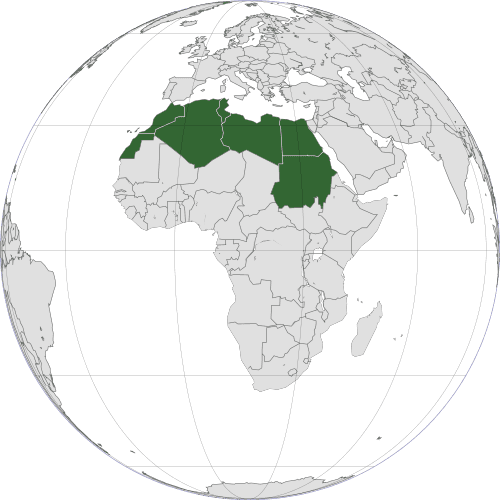
, nationalism, and socialism. Ibn Khaldun's analysis was based on his native North Africa, but it can be adapted to the conditions of the Mashreq, or Levant-where similar historical conditions prevailed. As Albert Hourani explained in his magisterial History of the Arab Peoples (1991), 'asabiyya is a forc
Page: HOUSE_OVERSIGHT_030088 →Page HOUSE_OVERSIGHT_031846
udes a Palestinian state with its capital in East Jerusalem. The United States has lost all credibility on this issue; after casting the sole vote in the U.N. Security Council against censuring Israel for its illegal settlement building, it can no longer act as an objective mediator. This act was a watershed in U.S.- Saudi
Page: HOUSE_OVERSIGHT_031846 →Page HOUSE_OVERSIGHT_031858
icy over nearly 3,000 years. For convenience, we will use the term "Israel" to connote all of the Hebrew and Jewish entities that have existed in the Levant since the invasion of the region as chronicled in the Book of Joshua. As always, geopolitics requires a consideration of three dimensions: the intern
Page: HOUSE_OVERSIGHT_031858 →Sponsored
Mutual Connections (314)
Entities connected to both the U.N. Security Council and Levant
Barack Obama
PERSON27 w/ the·29 w/ Levant
United States
LOCATION25 w/ the·28 w/ Levant
Lebanon
LOCATION21 w/ the·31 w/ Levant
Bashar al-Assad
PERSON21 w/ the·30 w/ Levant
George W. Bush
PERSON23 w/ the·24 w/ Levant
Tehran
LOCATION17 w/ the·26 w/ Levant
Damascus
LOCATION21 w/ the·18 w/ Levant
Benjamin Netanyahu
PERSON19 w/ the·18 w/ Levant
Saddam Hussein
PERSON14 w/ the·23 w/ Levant
Yemen
LOCATION14 w/ the·21 w/ Levant
Bill Clinton
PERSON19 w/ the·15 w/ Levant
Tunisia
LOCATION13 w/ the·21 w/ Levant
Hosni Mubarak
PERSON14 w/ the·19 w/ Levant
Cairo
LOCATION12 w/ the·20 w/ Levant
Middle East
LOCATION12 w/ the·17 w/ Levant
Terje Rod-Larsen
PERSON14 w/ the·15 w/ Levant
Marc Rich
PERSON12 w/ the·16 w/ Levant
Jerusalem
LOCATION11 w/ the·16 w/ Levant
Hillary Clinton
PERSON13 w/ the·13 w/ Levant
North Africa
LOCATION9 w/ the·15 w/ Levant