Back to Network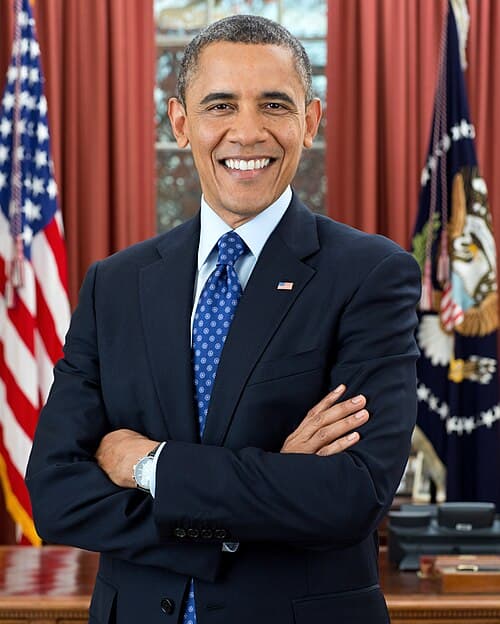

10
Shared Docs
9
Same-Page
10 / 10
Mentions
Document Mentions (10 shared documents)
2 mentions1 same-page
Page ?Same page
h is waging a ferocious war against its own separatist Kurds, will be particularly concerned about developments in Syria's Kurdish region, although Ankara's handling of Iraqi Kurdish autonomy suggests it may be more inclined to opt for a strategy of co- option than of intervention. EFTA00701764 Stil
ng control of their own towns and cities. They won't necessarily push for independence, but their alignment with the political leadership in Iraqi Kurdistan — and reports that their fighters have already taken control of many key Syrian Kurdish cities — suggests that they may be staking out an autonomou
2 mentions1 same-page
Page ?Same page
of the Islamic one. Cairo wishes to regain its political weight in the region, from North Africa to the border with Iraq, without being a number in Ankara's or Tehran's credit. In addition, President Mohamed Morsi does not need lessons from the Islamic Republic, as he belongs to a movement which was
absence — which is why Ankara might have the biggest share when reaping the fruits of the Arab spring, from Iraq where Turkish presence is wide in Kurdistan, to Syria via the opposition forces, Lebanon in the future and Tunisia, not to mention Turkish presence in Central Asia and the Balkans. Moreover,
2 mentions1 same-page
Page ?Same page
kets. However, since it also heavily relies on Caspian hydrocarbon imports and earns an estimated $200 million per annum on BTC transit fees alone, Ankara has little interest in having EFTA00630309 Azerbaijan invite retaliation on its energy sector. Moscow, the region's preeminent power, continues t
ged as collateral. This would be of little consolation to Israeli strategists if not for parallel listening posts widely believed to exist in Iraqi Kurdistan, Turkmenistan and even elsewhere in coordination with the United States But more importantly, this also means that a conflict with Iran may be muc
Sponsored
2 mentions1 same-page
Page ?Same page
could think and act for itself when it comes EFTA00660751 to foreign policy, that the Cold War was over and that Washington could no longer take Ankara for granted. And yet this move did not mean, as some critics immediately claimed, a turn toward Islam and away from the West. As recently shown, Tu
ionally been concentrated in regions in the south. There would also be a strong temptation on the part of the country's Kurds to carve out a Syrian Kurdistan in the northeast. And unlike in Libya, where any negative consequences from the overthrow of Moammar Gadhafi could be minimized in terms of the imp
2 mentions1 same-page
Page ?Same page
Kashmeri 24 June 2014 -- Baghdad is 900 miles from Riyadh, Saudi Arabia; 500 miles from Amman, Jordan; 300 miles from Kuwait, and 1000 miles from Ankara, Turkey, countries that are allies of the United States, and armed to the teeth with American weapons. With over 700,000 soldiers, 6000 tanks, EFTA
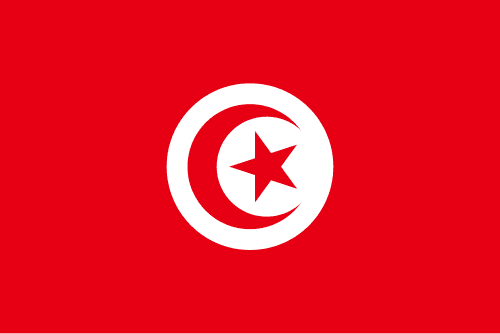
e East nations have built decent, democratizing governance, based on society and with some political, cultural and religious pluralism: Tunisia and Kurdistan. Again both are works in progress, but what is important is that they did emerge from the societies themselves. You also have the relatively soft m
2 mentions1 same-page
Page ?Same page
e world that it could think and act for itself when it comes to foreign policy, that the Cold War was over and that Washington could no longer take Ankara for granted. And yet this move did not mean, as some critics immediately EFTA_R1_00228270 EFTA01841734 claimed, a turn toward Islam and away fro
ons in the EFTA_R1_00228282 EFTA01841746 south. There would also be a strong temptation on the part of the country's Kurds to carve out a Syrian Kurdistan in the northeast. And unlike in Libya, where any negative consequences from the overthrow of Moammar Gadhafi could be minimized in terms of the im
Sponsored
2 mentions1 same-page
Page ?Same page
port of the Gulenists. Erdogan will get lower numbers, but beyond that it is hard to predict, particularly the all-important cities of Istanbul and Ankara, the bastions of his power. The wild card is the declining economy. Deepening political instability, high-reaching corruption, Erdogan's incessant
action. Erdogan managed to portray his recent trip to Brussels as a great success story. The ongoing but stagnant peace process with the insurgent Kurdistan Workers' Party (PKK) also provides him an important lifeline. The PKK remains quiet, keeps the ceasefire reached a year ago, and its jailed leader
2 mentions1 same-page
Page ?Same page
ility into its calculations from the start, then, the feeling is, it did little to show it was taking the matter seriously. The appearance is of an Ankara that was so fixed on Bashar al-Assad's departure that other matters were never considered properly. The sad fact in all this that Turkey is nowher
ightmare scenario for the Turkish establishment and for nationalist Turks in particular. The fear is this will pave, in time, the way to a "Greater Kurdistan" that will also incorporate much of Southeast Anatolia. Given that separatist terrorism by the Kurdistan Workers' Party (PKK) has peaked since spri
2 mentions1 same-page
Page ?Same page
ets. However, since it also heavily relies on Caspian hydrocarbon imports and earns an estimated $200 million per annum on BTC transit fees alone, Ankara has little interest in having Azerbaijan invite retaliation on its energy sector. Moscow, the region's preeminent power, continues to view the Casp
ged as collateral. This would be of little consolation to Israeli strategists if not for parallel listening posts widely believed to exist in Iraqi Kurdistan, Turkmenistan and even elsewhere in coordination with the United States But more importantly, this also means that a conflict with Iran may be muc
Sponsored
Page HOUSE_OVERSIGHT_025800
an put non-uniformed people in Iraqi Kurdistan. Kurdish conflict with NAM is about oil. These are big bets. NAM is saying you oil companies can go to Kurdistan or Basra but not both. Immediate neighbors of Kurds are Sunnis who also dislike NAM. What would US position be if Iraqi forces fought with Kurds? Ma
Page: HOUSE_OVERSIGHT_025800 →Page HOUSE_OVERSIGHT_025801
ia. We would like an opposition that is more broad based. Barzani could help by trying to get Syrian Kurds integrated into Syrian opposition. Baghdad-Ankara relationship is very bad. They want to get rid of NAM so pushing Iraqi Kurds to make trouble for NAM. This could be a gross miscalculation. Davutaglu
Page: HOUSE_OVERSIGHT_025801 →Sponsored
Mutual Connections (372)
Entities connected to both Ankara and Kurdistan
Barack Obama
PERSON56 w/ Ankara·19 w/ Kurdistan
United States
LOCATION46 w/ Ankara·17 w/ Kurdistan
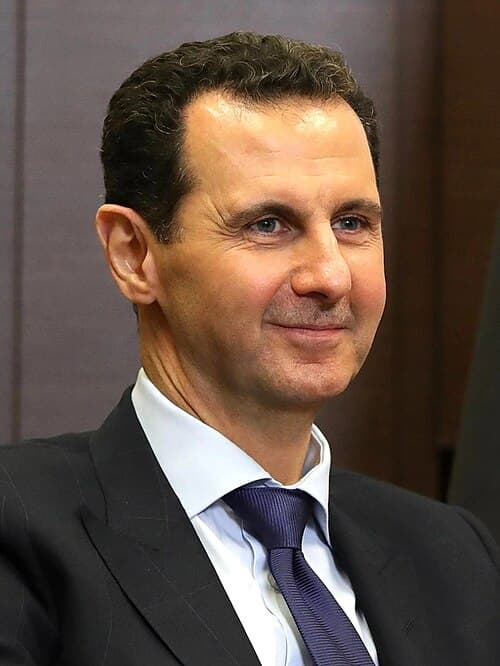
Bashar al-Assad
PERSON43 w/ Ankara·18 w/ Kurdistan
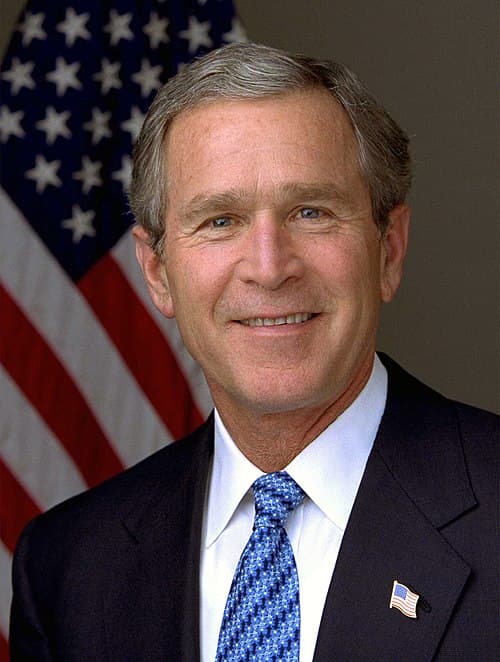
George W. Bush
PERSON43 w/ Ankara·15 w/ Kurdistan
Tehran
LOCATION38 w/ Ankara·16 w/ Kurdistan
Lebanon
LOCATION37 w/ Ankara·17 w/ Kurdistan
Benjamin Netanyahu
PERSON39 w/ Ankara·14 w/ Kurdistan
Damascus
LOCATION33 w/ Ankara·14 w/ Kurdistan
Saddam Hussein
PERSON30 w/ Ankara·16 w/ Kurdistan
Tunisia
LOCATION31 w/ Ankara·15 w/ Kurdistan
Hosni Mubarak
PERSON30 w/ Ankara·12 w/ Kurdistan
Recep Tayyip Erdogan
PERSON34 w/ Ankara·7 w/ Kurdistan
Terje Rod-Larsen
PERSON26 w/ Ankara·14 w/ Kurdistan
Middle East
LOCATION29 w/ Ankara·10 w/ Kurdistan
Bill Clinton
PERSON32 w/ Ankara·6 w/ Kurdistan
Jeffrey Epstein
PERSON27 w/ Ankara·10 w/ Kurdistan
Baghdad
LOCATION15 w/ Ankara·21 w/ Kurdistan
Cairo
LOCATION26 w/ Ankara·10 w/ Kurdistan
Marc Rich
PERSON21 w/ Ankara·13 w/ Kurdistan
Yemen
LOCATION21 w/ Ankara·13 w/ Kurdistan