Back to Network

















6
Shared Docs
6
Same-Page
6 / 7
Mentions
Document Mentions (6 shared documents)
3 mentions1 same-page
Page ?Same page
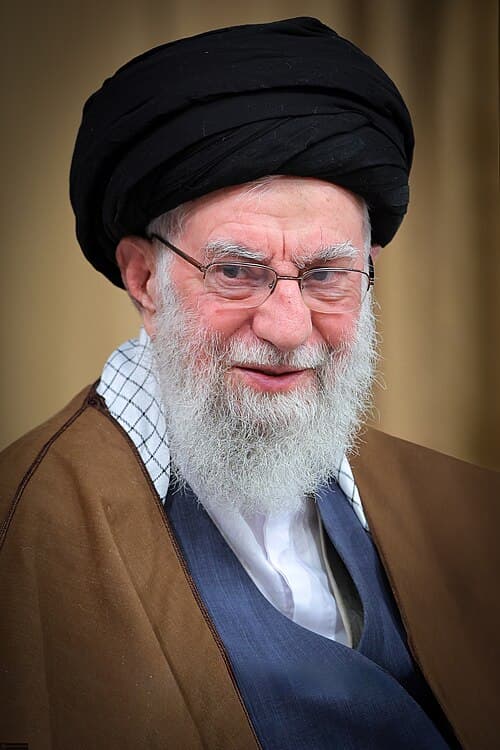
is keenly felt by Israel, surrounded by threats and especially vulnerable to a nuclear bomb because it is such a small land. Iran's Supreme Leader, Ayatollah Ali Khamenei, recently called the "Zionist regime" a "cancerous tumour that EFTA_R1_00484968 EFTA01991831 must be cut out". Jews, of all people, cannot just
solution short of stripping Iran of even a peaceful nuclear capacity." What's more, says Friedman, the non-binding status may be temporary. "Often AIPAC-backed Congressional initiatives start as non-binding language (in a resolution or a letter) and then show up in binding legislation. Once members
clude producing weapons. Even Dennis Ross--who has rarely, in his long career as a Mideast diplomat, left much daylight between his positions and AIPAC's, and who once categorically opposed Iranian enrichment--now realizes that a diplomatic solution may have to include enrichment. Last week in a Ne
2 mentions1 same-page
Page ?Same page
would not be appropriate for an effective military strategy and that they would violate the principles of the Islamic Republic. The Supreme Leader, Ayatollah Ali Khamenei, at one point issued a fatwa to this effect. US intelligence concluded in 2007 and has reaffirmed twice since that while Iran continued to enrich u
its sense is to partially delegate to the government of Israel a decision that would take the United States to war with Iran. Senators report that AIPAC's advocacy of the bill has been intensive, even by its usual standard. In the end, this seemingly complicated story is actually quite simple. For
2 mentions1 same-page
Page ?Same page
the old one-state solution found new advocates in Libya, Iraq and Iran. The late Col. Moammar Khadafy and Saddam Hussein and Iran's "Supreme Guide" Ayatollah Ali Khamenei argued that the so-called "South African model" could be applied to Israel — a single state of Palestine in which Arabs would form a majority with
uclear clock is ticking? This re-engagement comes immediately after Obama's campaign-year posturing about Iran's nukes. Speaking Sunday in front of AIPAC (the American Israel Public Affairs Committee), he warned that "Iran's leaders should have no doubt about the resolve of the United States." This j
Sponsored
2 mentions1 same-page
Page ?Same page
cause it is largely impervious to airstrikes, or to dismantle any of its centrifuges. Even if Rouhani signed off, meanwhile, Iran's supreme leader, Ayatollah Ali Khamenei, could veto the deal. Still, the Obama administration's chief nuclear negotiator, Wendy Sherman, told a Senate panel earlier this month that the W
igns of softening their positions. Their demands to maintain the current measures reflect, in part, the success of a concerted lobbying campaign by AIPAC. The pro-Israel group has sat out some recent potential fights over large- scale U.S. weapons sales to Saudi Arabia and the United Arab Emirates in
2 mentions1 same-page
Page ?Same page
ould not be appropriate for an effective military strategy and that they would violate the principles of the Islamic Republic. The Supreme Leader, Ayatollah Ali Khamenei, at one point issued a fatwa to this effect. US intelligence concluded in 2007 and has reaffirmed twice since that while Iran continued to enrich u
its sense is to partially delegate to the government of Israel a decision that would take the United States to war with Iran. Senators report that AIPAC's advocacy of the bill has been intensive, even by its usual standard. In the end, this seemingly complicated story is actually quite simple. For
2 mentions1 same-page
Page ?Same page
y 17, 2014 -- The Geneva Accord between Iran and P5+1 went into effect on January 20, but the debate still rages in Iran. For Iran's Supreme Leader Ayatollah Ali Khamenei, uranium enrichment is a red line that he will not relinquish. The conservatives view the Accord very negatively, whereas the supporters of Hassan
crease the chance that America would have to resort to military means to prevent Iran from developing nuclear weapons. EFTA00684598 In the past, AIPAC generally got what it wanted from Congress, and that appeared to be the case this time around, as well. Fully fifty senators signed on before Presi
Sponsored
Mutual Connections (281)
Entities connected to both Ayatollah Ali Khamenei and AIPAC
Barack Obama
PERSON35 w/ Ayatollah·22 w/ AIPAC
United States
LOCATION27 w/ Ayatollah·20 w/ AIPAC
Benjamin Netanyahu
PERSON26 w/ Ayatollah·19 w/ AIPAC
Lebanon
LOCATION25 w/ Ayatollah·17 w/ AIPAC
Bashar al-Assad
PERSON24 w/ Ayatollah·18 w/ AIPAC
Tehran
LOCATION26 w/ Ayatollah·15 w/ AIPAC
George W. Bush
PERSON21 w/ Ayatollah·19 w/ AIPAC
Bill Clinton
PERSON14 w/ Ayatollah·17 w/ AIPAC
Damascus
LOCATION19 w/ Ayatollah·11 w/ AIPAC
Terje Rod-Larsen
PERSON18 w/ Ayatollah·11 w/ AIPAC
Marc Rich
PERSON18 w/ Ayatollah·10 w/ AIPAC
Saddam Hussein
PERSON17 w/ Ayatollah·10 w/ AIPAC
Jeffrey Epstein
PERSON18 w/ Ayatollah·9 w/ AIPAC
Middle East
LOCATION14 w/ Ayatollah·12 w/ AIPAC
Yemen
LOCATION15 w/ Ayatollah·11 w/ AIPAC
Department of Justice
ORGANIZATION15 w/ Ayatollah·11 w/ AIPAC
Fatah
ORGANIZATION15 w/ Ayatollah·10 w/ AIPAC
Vladimir Putin
PERSON18 w/ Ayatollah·7 w/ AIPAC
Joe Biden
PERSON18 w/ Ayatollah·6 w/ AIPAC
Cairo
LOCATION15 w/ Ayatollah·9 w/ AIPAC