Back to Network


















7
Shared Docs
7
Same-Page
7 / 7
Mentions
Document Mentions (7 shared documents)
2 mentions1 same-page
Page ?Same page
has now returned to the administration, this time as the assistant secretary of defense. His new appointment makes him the Pentagon's point man for East Asia and the Pacific at a time whe 38. Jane Harman served nine terms as a congresswoman from California, stepping down in 2011 to lead the Wilson Cen
esitated to publicly criticize spy agencies at home or abroad, admonishing Pakistan's Inter-Services Intelligence for apparently failing to detect bin Laden's compound or calling U.S. intelligence on the Arab Spring "way behind our times." 30. James Miller At the beginning of this year, Jim Miller was n
2 mentions1 same-page
Page ?Same page
res the kingdom's pivot to the east. Long before the American pivot, Saudi Arabia has reoriented its economic and political priorities to South and East Asia. Salman arrived in Beijing on March 13 for his first visit to China. Last month, the crown prince visited Pakistan, Japan, India and the Maldives.
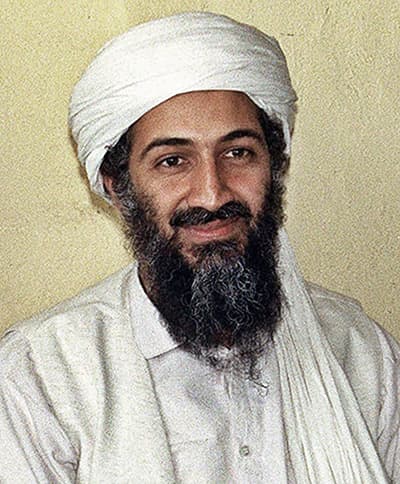
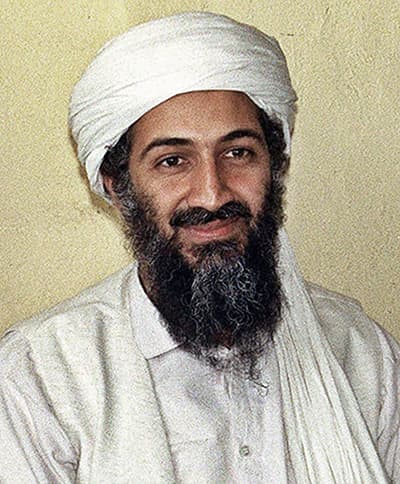
He has had some success— notably in killing Osama Bin Laden and in initiating negotiations with Iran that co
2 mentions1 same-page
Page ?Same page
toward the end of the last century and into this one, many people assumed that history moves in only one direction. The tide of freedom had lifted East Asia and Eastern Europe, the former Soviet Union and Indonesia. In an era of global trade and communications, the rest of the world surely would follow.
a politician's touch, but a tin ear: when Osama bin Laden was killed, he lamented the fall of "a Muslim an
Sponsored
2 mentions1 same-page
Page ?Same page
eatens to be the first war between two nuclear powers. The administration focused on the EFTA00701625 problems of the past, wasting its energy on East Asia, Europe and the Middle East, and missed the obvious crisis in South Asia. Despite repeated acts of terrorism sponsored by Pakistan against India,
foreign policy credentials if the raid on Osama bin Laden's compound had failed, as it easily could have.)
2 mentions1 same-page
Page ?Same page
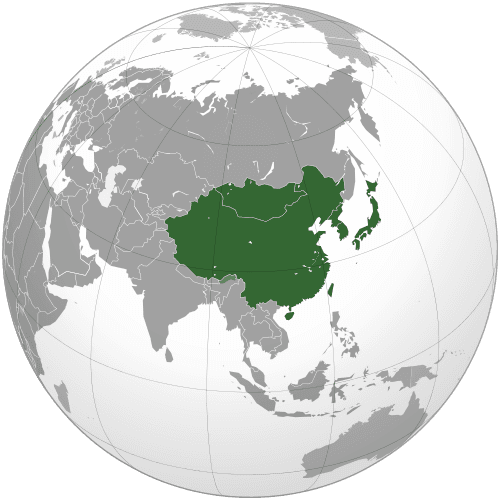
n the South China Sea and generally unnerving most of the region, the Obama administration has reconfirmed the central role of the United States in East Asia. The opening of a new base in Australia is a powerful symbol of America's enduring strategic presence in the region. The opening with Burma obvious
ous successes, most notably the killing of Osama Bin Laden. Relations with Russia, which had become quite t
2 mentions1 same-page
Page ?Same page
from them. In the ultimate irony, for all the apprehension it has unleashed elsewhere, the pivot has not produced an equal degree of reassurance in East Asia. There the promise and rhetoric of the pivot has been measured against tangible realities, like defense cuts that leave the U.S. Air Force scrappin
ord at all, he did so around the killing of Osama bin Laden, which today looks like an increasingly symbolic
Sponsored
2 mentions1 same-page
Page ?Same page
watching to determine whether America will, as Webb puts it, "live up to its uncomfortable but necessary role as the true guarantor of stability in East Asia, or whether the region will again be dominated by belligerence and intimidation." China today represents the most fundamental geopolitical challeng
e campaign and the covert raid that killed Osama bin Laden, nor is Islamabad's failure to take on difficult
Sponsored
Mutual Connections (593)
Entities connected to both East Asia and Bin Laden
Barack Obama
PERSON42 w/ East·81 w/ Bin
George W. Bush
PERSON38 w/ East·77 w/ Bin
United States
LOCATION34 w/ East·77 w/ Bin
Osama bin Laden
PERSON7 w/ East·104 w/ Bin
Jeffrey Epstein
PERSON32 w/ East·73 w/ Bin
Bill Clinton
PERSON33 w/ East·67 w/ Bin
Marc Rich
PERSON27 w/ East·49 w/ Bin
Bashar al-Assad
PERSON22 w/ East·46 w/ Bin
Benjamin Netanyahu
PERSON21 w/ East·47 w/ Bin
Lebanon
LOCATION30 w/ East·36 w/ Bin
Department of Justice
ORGANIZATION12 w/ East·53 w/ Bin
Tehran
LOCATION21 w/ East·44 w/ Bin
Joe Biden
PERSON17 w/ East·47 w/ Bin
Julie K. Brown
PERSON7 w/ East·56 w/ Bin
Prince Andrew
PERSON12 w/ East·49 w/ Bin
Donald Trump
PERSON15 w/ East·46 w/ Bin
Middle East
LOCATION26 w/ East·34 w/ Bin
Virginia Giuffre
PERSON11 w/ East·48 w/ Bin
Saddam Hussein
PERSON12 w/ East·44 w/ Bin
John F. Kennedy
PERSON10 w/ East·45 w/ Bin