Back to Network












6
Shared Docs
6
Same-Page
9 / 6
Mentions
Document Mentions (6 shared documents)
3 mentions1 same-page
Page ?Same page
War. But the Snowden breach exposing military sources was an order of magnitude greater than any past breach. The CIA’s assessment was no less grim. Morell, the deputy director of the CIA in 2013, wrote that Snowden’s action went beyond taking the handful of documents, such as the FISA order, “that addre
A briefer that it was urgent for the CIA to be brought in on the case. After all, the CIA had employed Snowden only four years earlier. Specifically, Morell said, the CIA needed to find out three things: Had CIA docu- ments been part of Snowden’s haul? How long had Snowden been stealing documents? Had Sno
ncerning the NSA hacking of the cell phone of the German chancellor, Angela Merkel. The story was published on October 23 on the Der Spiegel website. Appelbaum was the co- author of the story. Even though Snowden had by now been in Rus- sia for four months, he was cited in the story, along with unnamed “othe
3 mentions1 same-page
Page ?Same page
ay of the 9/11 attack, “Terrorist organizations around the world were already start- ing to modify their actions in light of what Snowden disclosed,” Morell wrote in 2015. “Within weeks of the [Snowden] leaks, com- @ munications sources dried up, tactics were changed.” Even more @ disturbing, suspects on
w with author. 134 The NSA had also notified: Former NSA executive who requested anonymity, interview with author. 136 NSA did not immediately share: Morell, Great War of Our Time, 283-88. 136 briefed by the NSA: See “Unclassified Declaration of David G. Leatherwood,” US. District Court for the District o
trick, Privacy for Me and Not for Thee, pt. 6. 52 “the state is all-powerful”: Fitzpatrick, introduction to ibid. 53 “Meet the Most Dangerous Man”: Appelbaum, interview with Rolling Stone, “Meet the Most Dangerous Man in Cyberspace: The American Behind WikiLeaks,” Rolling Stone, Dec. 2, 2010. 53 In Berlin
3 mentions1 same-page
Page ?Same page
ity, wrote that Snowden’s action went beyond taking the handful of documents, such as the FISA order, “that addressed the privacy issue.” Instead, as Morell put it, “he backed up a virtual tractor trailer and emptied a warehouse full of documents—the vast majority of which he could not possibly have read
of which he would likely understand—T[and] and he delivered the documents to a variety of news organizations and God knows who else.” _—_As a result, Morell concluded “Snowden’s disclosures will go down in history as the greatest compromise of classified information ever.” General Keith Alexander, the he
TOR movement was Jacob Appelbaum, a charismatic 28-year old who had grown up in northern California. Like Snowden, he had dropped out of high school. Appelbaum identified himself to his followers on the Internet as a “hacktivist” battling state surveillance. For him, as with many in the hacktavist culture, t
Sponsored
2 mentions1 same-page
Page ?Same page
e also continued to invite activists to his CryptoParties, and he openly advertised them on the Internet until 2013. The CIA’s former deputy director Morell, who reviewed the security situation at the NSA in 2014 as a mem- ber of President Obama’s NSA Review Committee, found that the NSA in the post-Cold
or was Jacob Appelbaum, a charismatic twenty-eight-year-old who had grown up in Northern California. Like Snowden, he had dropped out of high school. Appelbaum identified himself to his followers on @ the Internet as a “hacktivist” battling state surveillance. For him, as @ for many in the hacktivist cultur
2 mentions1 same-page
Page ?Same page
lations.” (He was correct that Snowden had stolen a larger number of CIA documents that he had not turned over to journalists, as CIA deputy director Morell confirmed.) Whatever this material might reveal, the FSB was presumably aware of its existence. After all, Kucherena was on the FSB’s public oversig
len documents, Wikileaks became a media sensation and Assange, the runner-up for Zime’s Man-of-the Year for 2010, became a leading figure, along with Appelbaum, in the global hacktavist underground. In November 2010, however, he also ran into a legal problem. A judge in Stockholm, Sweden ordered his detentio
2 mentions1 same-page
Page ?Same page
s around the world were already starting to modify their actions in light of what Snowden disclosed. Communication sources dried up.” What heightened Morell’s concern about this loss of intelligence sources was the discovery a 26-page document on an ISIS computer in Syria indicating that the terrorist gro
ing Stone interview with Jacob Appelbaum, “Meet the Most Dangerous Man in Cyberspace: The American Behind Wikileaks, Rolling Stone, December 2,2010 “Appelbaum acted to defeat-...”—George Packer, The Holder of Secrets, The New Yorker, October 20, 2014 “She identified herself in Forbes...’”—Runa A Sandvik, F
Sponsored
Mutual Connections (667)
Entities connected to both Morell and Appelbaum
Jeffrey Epstein
PERSON14 w/ Morell·9 w/ Appelbaum
Barack Obama
PERSON14 w/ Morell·9 w/ Appelbaum
Department of Justice
ORGANIZATION12 w/ Morell·9 w/ Appelbaum
Donald Trump
PERSON13 w/ Morell·8 w/ Appelbaum
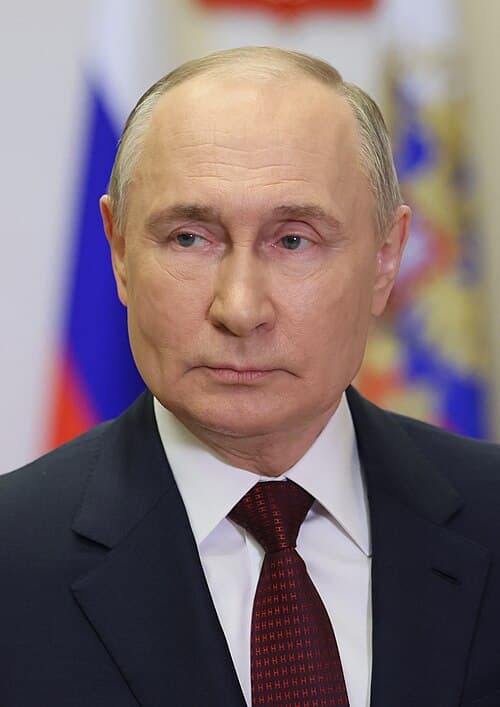
Vladimir Putin
PERSON11 w/ Morell·8 w/ Appelbaum
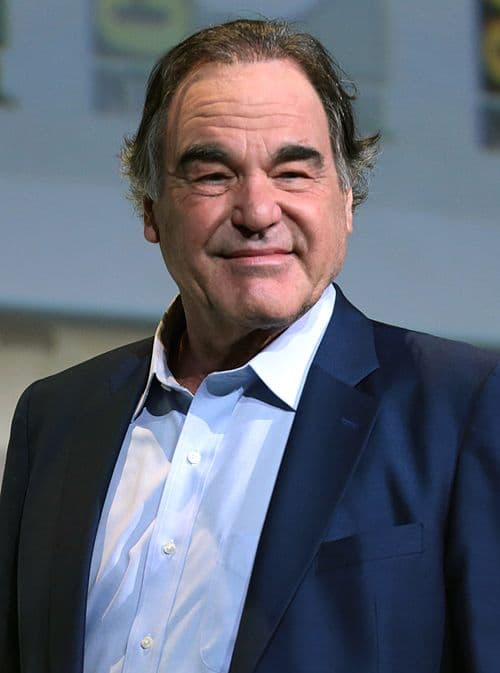
Oliver Stone
PERSON12 w/ Morell·6 w/ Appelbaum
George W. Bush
PERSON10 w/ Morell·8 w/ Appelbaum
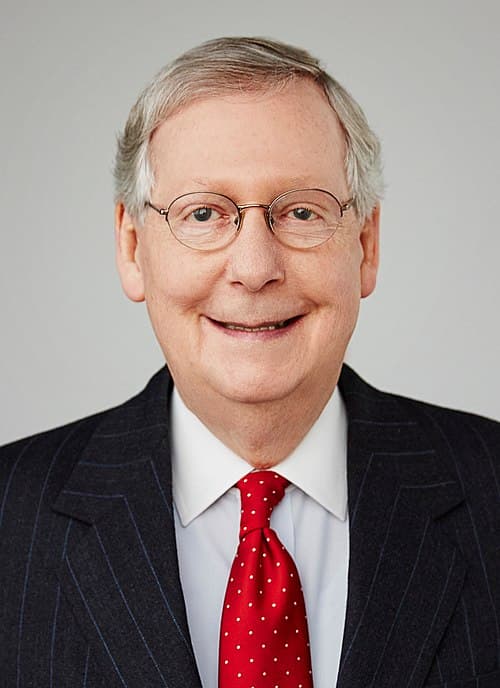
Mitch McConnell
PERSON12 w/ Morell·6 w/ Appelbaum
United States
LOCATION9 w/ Morell·8 w/ Appelbaum
Bill Clinton
PERSON10 w/ Morell·7 w/ Appelbaum
Virginia Giuffre
PERSON10 w/ Morell·6 w/ Appelbaum
North Korea
LOCATION8 w/ Morell·8 w/ Appelbaum
Edward Snowden
PERSON10 w/ Morell·6 w/ Appelbaum
Hawaii
LOCATION8 w/ Morell·8 w/ Appelbaum
WikiLeaks
ORGANIZATION8 w/ Morell·8 w/ Appelbaum
John F. Kennedy
PERSON7 w/ Morell·8 w/ Appelbaum
Ars Technica
ORGANIZATION6 w/ Morell·9 w/ Appelbaum
George Mitchell
PERSON10 w/ Morell·5 w/ Appelbaum
Honolulu
LOCATION7 w/ Morell·8 w/ Appelbaum
Stephen Hawking
PERSON8 w/ Morell·7 w/ Appelbaum