Back to Network


















5
Shared Docs
4
Same-Page
5 / 5
Mentions
Document Mentions (5 shared documents)
2 mentions1 same-page
Page ?Same page
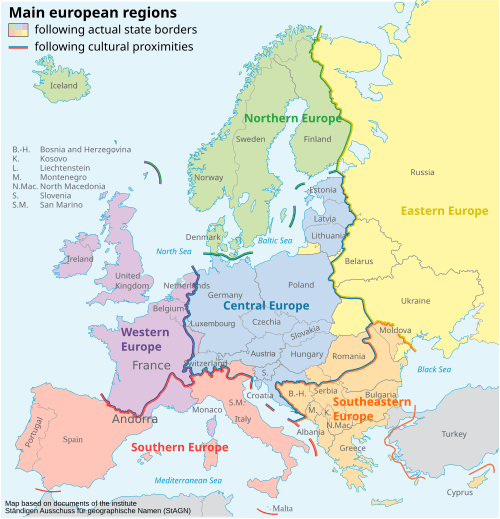
ptions of his conversations with Timothy Snyder, a Yale historian who is the distinguished author of a number of well-regarded books on Eastern and Central Europe. Snyder, highly erudite and opinionated himself, is not your typical journalistic interviewer; the book is more a dialogue than an autobiography.
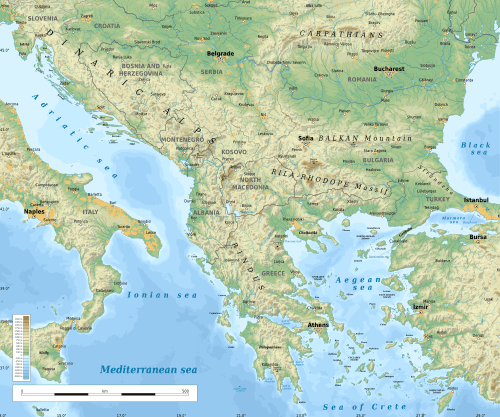
better understood as the unwillingness of Israel to give up any of its 1967 conquests. Turkey also sought to be a peacemaker further afield in the Balkans and the Caucasus, doing the seemingly impossible, bringing Bosnia and Herzegovina and Serbia together in a manner that moved their two antagonistic
2 mentions1 same-page
Page ?Same page
tions of his conversations with Timothy Snyder, a Yale historian who is the distinguished author of a number of well-regarded books on Eastern and Central Europe. Snyder, highly erudite and opinionated himself, is not your typical journalistic interviewer; the book is more a dialogue than an autobiography.
better understood as the unwillingness of Israel to give up any of its 1967 conquests. Turkey also sought to be a peacemaker further afield in the Balkans and the Caucasus, doing the seemingly impossible, bringing Bosnia and Herzegovina and Serbia together in a manner that moved their two antagonistic
2 mentions1 same-page
Page ?Same page
would be a smaller and more poorly situated power than the Soviet Union. Germany remains united, Poland is free, and Russia cannot hope to dominate Central Europe as the USSR once did. European fecklessness dragged the Clinton administration kicking and screaming into the morass of the bloody wars of the Yugo
the disengagement failed. The Clinton administration tried to outsource Yugoslavia to the Europeans in the 1990s and was ultimately pulled into the Balkans. George W. Bush tried to conduct foreign policy around and over the heads of "Old Europe"; the experience was not a success. President Obama has si
Sponsored
2 mentions1 same-page
Page ?Same page
a administration officials all tell the same story, of governments in the Middle East, in Asia and in Europe (especially EFTA00684271 Eastern and Central Europe) constantly seeking reassurances, and whenever possible, tangible evidence, that the United States is not leaving them to their fate. Are American
furter Rundschau, which had been accusing Americans of "camouflaged neocolonialism," suddenly fretted that the "problems in the Middle East, in the Balkans or in Asia" could not be solved "without U.S. assistance and a president who enjoys respect." The irony was not lost on some observers. A French pu
Page HOUSE_OVERSIGHT_031884
e to protect the Kurds and the Shia in Iraq in 1991, over the Rwandan genocide of 1994 and over the many years of dithering as lives were lost in the Balkans. But a series of apparently successful interventions - Bosnia, Kosovo, East Timor, Sierra Leone - gradually strengthened the belief that western mili
Page: HOUSE_OVERSIGHT_031884 →Page HOUSE_OVERSIGHT_031891
lavia and Belarus or, at best, Ukraine. We, and they, may get lucky, and the revolutions in the Arab world may lead to something that looks more like Central Europe than like Central Asia. That would be a nice surprise, but we should not be placing large bets that this will actually happen. China, by the way, doe
Page: HOUSE_OVERSIGHT_031891 →Sponsored
Mutual Connections (341)
Entities connected to both Central Europe and Balkans
United States
LOCATION20 w/ Central·22 w/ Balkans
George W. Bush
PERSON14 w/ Central·21 w/ Balkans
Barack Obama
PERSON15 w/ Central·18 w/ Balkans
Bill Clinton
PERSON11 w/ Central·16 w/ Balkans
Jeffrey Epstein
PERSON11 w/ Central·15 w/ Balkans
Benjamin Netanyahu
PERSON14 w/ Central·12 w/ Balkans
Department of Justice
ORGANIZATION10 w/ Central·15 w/ Balkans
North Korea
LOCATION11 w/ Central·13 w/ Balkans
Bashar al-Assad
PERSON10 w/ Central·14 w/ Balkans
Lebanon
LOCATION9 w/ Central·15 w/ Balkans
Vladimir Putin
PERSON15 w/ Central·9 w/ Balkans
Joe Biden
PERSON8 w/ Central·16 w/ Balkans
Donald Trump
PERSON11 w/ Central·11 w/ Balkans
Middle East
LOCATION11 w/ Central·10 w/ Balkans
Marc Rich
PERSON7 w/ Central·14 w/ Balkans
Tehran
LOCATION7 w/ Central·14 w/ Balkans
LB
Leon Black
PERSON7 w/ Central·13 w/ Balkans
Saddam Hussein
PERSON5 w/ Central·14 w/ Balkans
Prince Andrew
PERSON9 w/ Central·9 w/ Balkans
Jerusalem
LOCATION8 w/ Central·10 w/ Balkans