Back to Network















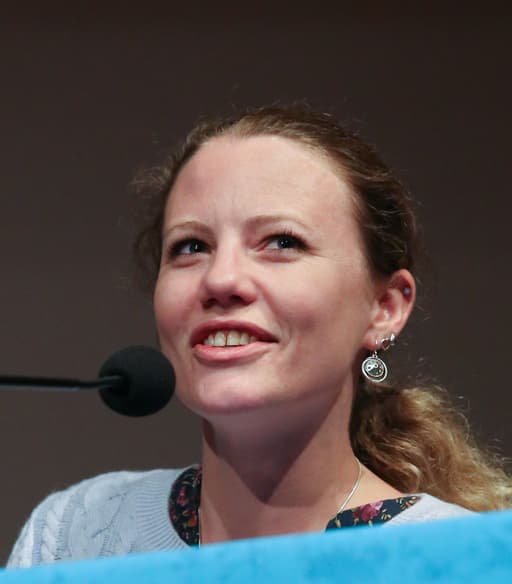
6
Shared Docs
6
Same-Page
6 / 10
Mentions
Document Mentions (6 shared documents)
3 mentions1 same-page
Page ?Same page
by his supporters) and confined to Ellingham Hall in Norfolk, England. While awaiting the outcome of the extradition proceedings, he lived there with Sarah Harrison, his twenty-eight-year-old deputy at WikiLeaks. A graduate of the elite Sevenoaks School in Kent, Harri- son served as Assange’s liaison with the out
War. But the Snowden breach exposing military sources was an order of magnitude greater than any past breach. The CIA’s assessment was no less grim. Morell, the deputy director of the CIA in 2013, wrote that Snowden’s action went beyond taking the handful of documents, such as the FISA order, “that addre
A briefer that it was urgent for the CIA to be brought in on the case. After all, the CIA had employed Snowden only four years earlier. Specifically, Morell said, the CIA needed to find out three things: Had CIA docu- ments been part of Snowden’s haul? How long had Snowden been stealing documents? Had Sno
3 mentions1 same-page
Page ?Same page
engers were allowed to disembark from the plane, Russian plainclothes officers from the special services boarded the plane and asked both Snowden and Sarah Harrison, his WikiLeaks-supplied “ninja,” to accompany them to a waiting car that whisked them away. According to the account in Izvestia, “A special operatio
arrant to investigate U.S. citi- @ zens who use Tor. The NSA is hardly immune from an attack on its own computers. As the former CIA deputy director Morell wrote in his 2015 book, The Great War of Our Time, many financial institutions have “better cyber security than the NSA.” The Internet certainly help
her actors. “For our enemies, having it [the black budget] is like having the playbook of the opposing NFL team,” said the former CIA deputy director Morell in 2015. “I guarantee you that the SVR, the Russian foreign intelligence service, would have paid millions of dollars for such a document.” If unlike
3 mentions1 same-page
Page ?Same page
ssange had made: David Leigh and Luke Harding, “Julian Assange: The Teen Hacker Who Became Insurgent in Information War” Guardian, Jan. 30, 2011. 99 Sarah Harrison: Sarah Ellison, “The Man Who Came to Dinner,” Vanity Fair, Oct. 2013. 99 Snowden telephoned Assange: Assange interview, in Giles Whittell, “Julian A
ay of the 9/11 attack, “Terrorist organizations around the world were already start- ing to modify their actions in light of what Snowden disclosed,” Morell wrote in 2015. “Within weeks of the [Snowden] leaks, com- @ munications sources dried up, tactics were changed.” Even more @ disturbing, suspects on
w with author. 134 The NSA had also notified: Former NSA executive who requested anonymity, interview with author. 136 NSA did not immediately share: Morell, Great War of Our Time, 283-88. 136 briefed by the NSA: See “Unclassified Declaration of David G. Leatherwood,” US. District Court for the District o
Sponsored
3 mentions1 same-page
Page ?Same page
of the Guardian, Edward Snowden reveals himself as the source for the document published by the Guardian and the Washington Post June 11 Hong Kong. Sarah Harrison arrives in Hong Kong to work behind-the-scenes to assist Snowden. June 14, 2013, Washington D.C. Federal prosecutors in the Eastern District of Virg
ity, wrote that Snowden’s action went beyond taking the handful of documents, such as the FISA order, “that addressed the privacy issue.” Instead, as Morell put it, “he backed up a virtual tractor trailer and emptied a warehouse full of documents—the vast majority of which he could not possibly have read
of which he would likely understand—T[and] and he delivered the documents to a variety of news organizations and God knows who else.” _—_As a result, Morell concluded “Snowden’s disclosures will go down in history as the greatest compromise of classified information ever.” General Keith Alexander, the he
2 mentions1 same-page
Page ?Same page
ld Snowden that he would immediately dispatch one of his senior staff members to help him engineer his escape to Russia. That senior staff member was Sarah Harrison, After speaking to Snowden, Assange called Harrison, who was in Melbourne, Australia. She had gone there a month earlier to help organize Assange’s
lations.” (He was correct that Snowden had stolen a larger number of CIA documents that he had not turned over to journalists, as CIA deputy director Morell confirmed.) Whatever this material might reveal, the FSB was presumably aware of its existence. After all, Kucherena was on the FSB’s public oversig
2 mentions1 same-page
Page ?Same page
virtually incommunicado for 20 days. Other than Russian officials, the only person he had been allowed to see during this period was Assange’s aide, Sarah Harrison. “Where in the airport did you meet him?” I asked. Was it in a VIP lounge?” “Tt was in the transit zone,” he replied coyly. “That is all I can say.
s around the world were already starting to modify their actions in light of what Snowden disclosed. Communication sources dried up.” What heightened Morell’s concern about this loss of intelligence sources was the discovery a 26-page document on an ISIS computer in Syria indicating that the terrorist gro
Sponsored
Mutual Connections (571)
Entities connected to both Sarah Harrison and Morell
Barack Obama
PERSON7 w/ Sarah·14 w/ Morell
Jeffrey Epstein
PERSON6 w/ Sarah·14 w/ Morell
Oliver Stone
PERSON7 w/ Sarah·12 w/ Morell
Mitch McConnell
PERSON6 w/ Sarah·12 w/ Morell
Donald Trump
PERSON5 w/ Sarah·13 w/ Morell
Vladimir Putin
PERSON7 w/ Sarah·11 w/ Morell
Department of Justice
ORGANIZATION6 w/ Sarah·12 w/ Morell
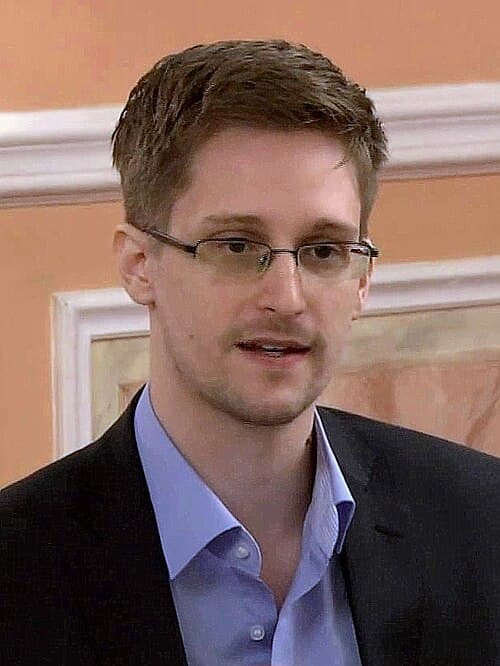
Edward Snowden
PERSON7 w/ Sarah·10 w/ Morell
George Mitchell
PERSON6 w/ Sarah·10 w/ Morell
George W. Bush
PERSON5 w/ Sarah·10 w/ Morell
Hawaii
LOCATION7 w/ Sarah·8 w/ Morell
Virginia Giuffre
PERSON5 w/ Sarah·10 w/ Morell
United States
LOCATION5 w/ Sarah·9 w/ Morell
WikiLeaks
ORGANIZATION6 w/ Sarah·8 w/ Morell
North Korea
LOCATION6 w/ Sarah·8 w/ Morell
Woody Allen
PERSON6 w/ Sarah·8 w/ Morell
Booz Allen
PERSON7 w/ Sarah·7 w/ Morell
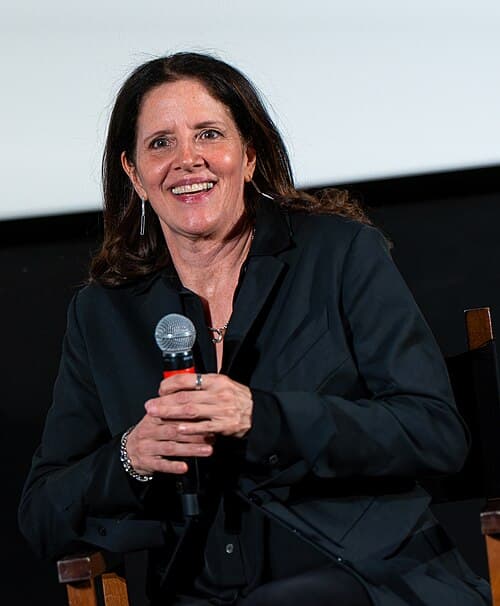
Laura Poitras
PERSON7 w/ Sarah·7 w/ Morell
Bill Clinton
PERSON4 w/ Sarah·10 w/ Morell
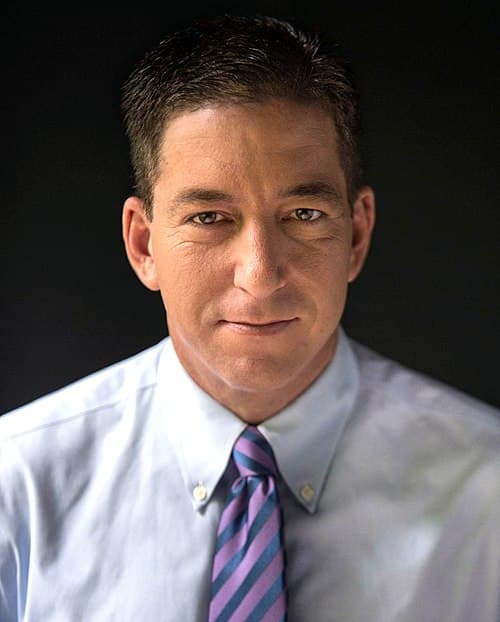
Glenn Greenwald
PERSON7 w/ Sarah·7 w/ Morell