Back to Network









4
Shared Docs
4
Same-Page
9 / 7
Mentions
Document Mentions (4 shared documents)
5 mentions1 same-page
Page ?Same page
h Russia. He was put in contact with Anatoly Grigorievich Kucherena, a silver-haired 53-year old lawyer, who was known as a personal friend of Putin. Kucherena also did task for Putin’s party in the Russian parliament or Duma. Most important for Snowden, Kucherena had excellent connections in the Russian sec
who was known as a personal friend of Putin. Kucherena also did task for Putin’s party in the Russian parliament or Duma. Most important for Snowden, Kucherena had excellent connections in the Russian security apparatus since he served on the oversight committee of the FSB. He also offered to serve as the la
ernet appearance at well-attended events around the world, such as South by Southwest, TED, and other Internet conferences. Snowden was, according to Kucherena, was also furnished with bodyguards. To help earn his keep, he was employed at an unidentified Moscow cyber-security firm. To complete his resettleme
urse grab them.” The final recruitment I asked Cherkashin about was that of Ronald Pelton, the civilian employee of the NSA who had retired in 1979. Pelton had left the NSA without taking any classified documents with him. After retiring, he had financial difficulties, and he sought to get money from the
return. What interested me about the Pelton case was that Cherkashin proceeded to recruit Pelton even though he was no longer working at the NSA, and Pelton no longer had access to the NSA. In addition, since the FBI had 24 hour surveillance on the embassy, Pelton had almost certainly been photographed en
5 mentions1 same-page
Page ?Same page
asked other countries for asylum.” Kucherena said that otherwise he could not represent him. Snowden agreed to that condition. Later that afternoon Kucherena accompanied Snowden to area G9 in the transit zone where they emerged from a door marked “authorized personnel only” shortly before 5 PM. The room wa
gn journalist, had ever obtained an interview with Snowden. At this point, Zamir was becoming increasingly doubtful about getting my access to either Kucherena or Snowden. But I had another contact in Moscow. When I had been investigating the 2006 Polonitum poisoning of ex-KGB officer Alexander Litvinenko i
to New York was in five days. My fixer, Zamir, had been trying to arrange an appointment for three weeks but he had only received one call back from Kucherena’s assistant, Valentina Vladimirovna Kvirvova. She wanted to know how I knew Oliver Stone. He told her of my part in Stone’s movie Wall Street 2: Mone
ously tapped into Soviet undersea cables in the Sea of Okhotsk, which connected a to the Soviet Pacific Fleet's mainland headquarters at Vladivostok. Pelton received another $30,000 from the KGB. “Did the information in his head proved valuable?” I asked. “As long as the NSA didn’t know the tap was comp
he residence of the Soviet ambassador to Austria. A KGB’s electronic communications expert, Anatoly Slavnov, was then sent to Vienna to supervise the Pelton debriefings. The debriefing sessions, which went on for 15 days, were from 8 AM to 6 PM. In them, Pelton managed to recall Project A, a joint NSA-CIA
3 mentions1 same-page
Page ?Same page
the journalists with the lists of sources that were particularly relevant to the NSA’s surveillance of Russia. His legal represen- tative in Moscow, Kucherena, confirmed that Snowden had taken secret “material” to Russia and had access to NSA documents that @ he had not given to journalists. Those unreveal
cure debriefing room, he said that he had information that Russia would find interesting, but he wanted money in return. What interested me about the Pelton case was that Cherkashin proceeded to recruit Pelton, even though he was no longer working at the NSA and no longer had access to @ the NSA. In addi
urse grab them.” The final recruitment I asked Cherkashin about was that of Ronald Pelton, the civilian employee of the NSA who had retired in 1979. Pelton had left the NSA without taking any classified documents with him. After retiring, he had financial difficulties, and he sought to get money from the
Sponsored
3 mentions1 same-page
Page ?Same page
Curry, “Ex-intelligence Expert Guilty of Espionage,” Chicago Tribune, June 6, 1986. CHAPTER 26 The Handler 261 “As for [Snowden’s] communication”: Kucherena interview, Shevardnadze, “Snowden Believes He Did Everything Right.” 261 learned from a Russian researcher: Vassili Sonkine, interview with author.
r NSA Director: ‘I Would Lose All Respect for Russia if They Haven't Fully Exploited Snowden,” VentureBeat, May 23, 2014. 166 He was put in contact: Kucherena, interview with Der Spiegel, “Snowden’s Law- yer: ‘Russia Will Not Hand Him Over’” Spiegel Online International, Jane 24, 2013. 166 “Officially, he
4 “There's definitely a deep state”: Vanden Heuvel and Cohen, “Snowden Speaks.” 255 according to Cherkashin: Cherkashin, interview with author. 258 Pelton had left the NSA: George E. Curry, “Ex-intelligence Expert Guilty of Espionage,” Chicago Tribune, June 6, 1986. CHAPTER 26 The Handler 261 “As for
Sponsored
Mutual Connections (444)
Entities connected to both Kucherena and Pelton
Department of Justice
ORGANIZATION5 w/ Kucherena·6 w/ Pelton
Oliver Stone
PERSON6 w/ Kucherena·5 w/ Pelton
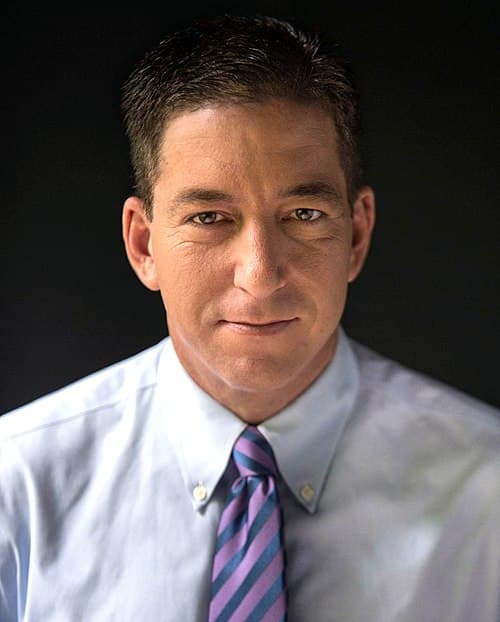
Glenn Greenwald
PERSON6 w/ Kucherena·4 w/ Pelton
United States
LOCATION4 w/ Kucherena·6 w/ Pelton
John F. Kennedy
PERSON5 w/ Kucherena·5 w/ Pelton
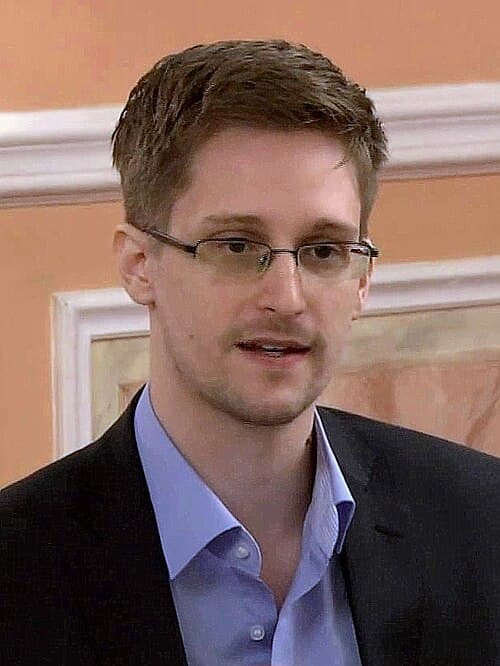
Edward Snowden
PERSON6 w/ Kucherena·4 w/ Pelton
Barack Obama
PERSON6 w/ Kucherena·4 w/ Pelton
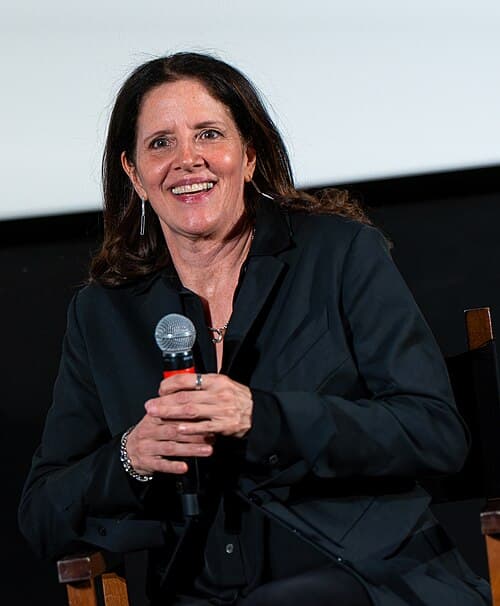
Laura Poitras
PERSON6 w/ Kucherena·4 w/ Pelton
Vladimir Putin
PERSON6 w/ Kucherena·4 w/ Pelton
Hawaii
LOCATION6 w/ Kucherena·4 w/ Pelton
Booz Allen
PERSON6 w/ Kucherena·4 w/ Pelton
Sarah Harrison
PERSON6 w/ Kucherena·4 w/ Pelton
Shevardnadze
PERSON6 w/ Kucherena·4 w/ Pelton
Woody Allen
PERSON5 w/ Kucherena·5 w/ Pelton
Aeroflot
ORGANIZATION6 w/ Kucherena·4 w/ Pelton
Assange
ORGANIZATION5 w/ Kucherena·4 w/ Pelton
Booz Allen Hamilton
PERSON5 w/ Kucherena·4 w/ Pelton
Kremlin
ORGANIZATION5 w/ Kucherena·4 w/ Pelton
Barton Gellman
PERSON5 w/ Kucherena·4 w/ Pelton
Alan Dershowitz
PERSON5 w/ Kucherena·4 w/ Pelton