Back to Network













7
Shared Docs
7
Same-Page
12 / 8
Mentions
Document Mentions (7 shared documents)
4 mentions1 same-page
Page ?Same page
ould not preclude she would not consult with others about the offer he was making her. Since her current documentary project included interviews with Assange, Appelbaum and three ex-NSA executives, intelligence services with sophisticated surveillance capabilities might also have taken a professional inter
ized release of communications intelligence documents could violate US espionage laws. Even so, there was no shortage of activists overseas, such as Assange, who would be willing to publish NSA documents revealing its global surveillance activities. And in answer to his rhetorical question, he no doubt kn
er HOUSE_OVERSIGHT_020154 Chapter Ten Raider of the Inner Sanctum Chapter Eleven Escape Artist Chapter Twelve Whistle Blower Chapter Thirteen Enter Assange Chapter Fourteen Fugitive PART THREE The Counterintelligence Conundrum Chapter Fifteen Did Snowden Act Alone Chapter Sixteen The Question of When C
s for his journalistic event. He was also apparently in contact with at least one foreign mission during this period, according to what he written to Gellman on May 25". In that email concerning when and how his story was to be published by the Washington Post, Snowden even asked Gellman to include in it s
4 mentions1 same-page
Page ?Same page
h one of his senior staff members to help him engineer his escape to Russia. That senior staff member was Sarah Harrison, After speaking to Snowden, Assange called Harrison, who was in Melbourne, Australia. She had gone there a month earlier to help organize Assange’s somewhat quixotic election campaign f
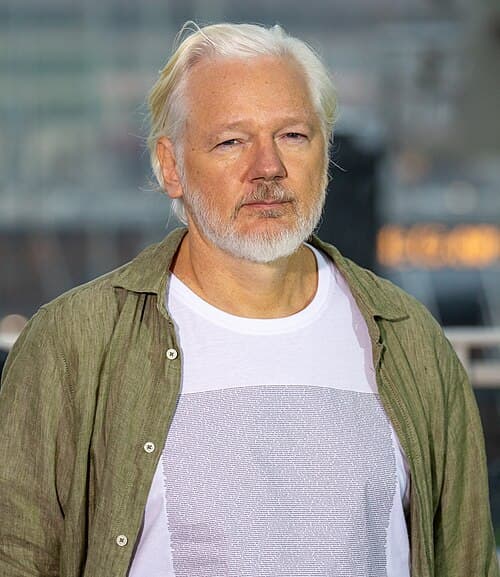
nwhile, Snowden was organizing his own exit from Hong Kong. He placed a call to Julian Assange. HOUSE_OVERSIGHT_020256 105 CHAPTER THIRTEEN Enter Assange “Thanks to Russia (and thanks to WikiLeaks), Snowden remains free.” — Julian Assange Born on July 3, 1971 in Queensland, Australia, Julian Assange h
mestic Surveillance Under Obama.” Along with it was the FISA warrant to Verizon. The PRISM story broke hours later in the Washington Post. Written by Gellman and Poitras, it claimed that the NSA and FBI were tapping directly into the central servers of nine leading U.S, Internet companies which were knowin
e name and provided his credit card, but he was he in contact with three high-profile journalists, two well-known hacktavists and, as he suggested to Gellman, a foreign diplomatic mission. Even if Snowden had failed to persuade the Washington Post to publish a coded identifier, the mission’s interest would
3 mentions1 same-page
Page ?Same page
rded among hacktiv- ists that Assange chose him as his keynote speaker replacement at the Hackers on Planet Earth (HOPE) convention in New York City. Assange told Rolling Stone, “Jake [Appelbaum] has been a tireless promoter behind the scenes of our cause.” For its part, Rolling Stone titled its profile of
zed release of communications intelligence documents would violate U.S. espionage laws. Even so, there was no shortage of activists overseas, such as Assange, who would be willing to publish NSA documents revealing its global sur- veillance activities. Cyberpunks, as these activists called themselves, tend
e the American establishment. So he had Poitras write to Barton Gellman, the Pulitzer Prize-winning reporter for The Washington Post. Poitras had met Gellman in 2010, when they were both fellows at NYU’s Center on Law and Security. Poitras had requested help in encrypting her computer from Karen Greenberg,
Sponsored
3 mentions1 same-page
Page ?Same page
ardian, January 30, 2011 “Sarah Harrison, his comely...”—Sarah Ellison, “The man who came to dinner,” Vanity Fair, October 2013 “Snowden telephoned Assange...”-- Assange interview in (London) Sunday Times. Giles Whittell, “Julian Assange unmasked.” Times Magazine, August 29, 2015. Also, “Snowden told me
en had been held virtually incommunicado for 20 days. Other than Russian officials, the only person he had been allowed to see during this period was Assange’s aide, Sarah Harrison. “Where in the airport did you meet him?” I asked. Was it in a VIP lounge?” “Tt was in the transit zone,” he replied coyly.
ed rendezvous with a journalist. As previously mentioned, when he left Hong Kong not a single journalist had agreed to meet him in Hong Kong. Indeed, Gellman considered Hong Kong, as he put it, “in the jurisdiction of a country that’s unfriendly to the United States,” and notified Snowden that he would not
2 mentions1 same-page
Page ?Same page
to The New York Times, and he suggested as punishment “those people should be shot in the balls.” Either he had a change of heart, or he was telling Assange what he believed he wanted to hear. Assange counseled Snowden to go directly to Russia. “My advice was that he should take asylum in Russia despite
s scale of domestic surveillance under Obama.” Along with it was the FISA order. The PRISM story broke hours later in The Washington Post. Written by Gellman and Poitras, it claimed that the NSA and the FBI were tapping directly into the central servers of nine leading U.S. Internet companies, which were k
2 mentions1 same-page
Page ?Same page
nterview with Katrina vanden Heuvel, the editor of The Nation, in 2014. He had already discussed the likelihood of his being captured in Ecuador with Assange before his departure for Moscow. He later told Alan Rusbridger, the editor of The Guardian, that he considered himself at risk in Latin America. So w
ts that could undo the NSA’s intelligence gathering as “the single point of failure.” While still shielding his own identity in May 2013, he wrote to Gellman that U.S. intelligence “will most certainly kill you if they think you are the single point of failure that could stop this disclosure and make them
Sponsored
2 mentions1 same-page
Page ?Same page
rmation War” Guardian, Jan. 30, 2011. 99 Sarah Harrison: Sarah Ellison, “The Man Who Came to Dinner,” Vanity Fair, Oct. 2013. 99 Snowden telephoned Assange: Assange interview, in Giles Whittell, “Julian Assange Unmasked,” Sunday Times (London), Aug. 29, 2015. 99 “Snowden told me they had abused Manning”
”: Shils, Torment of Secrecy. 47 “|The elites] know everything”: Roy, “Edward Snowden Meets Arundhati Roy and John Cusack.” 47 “What do you think”: Gellman, “Edward Snowden, After Months of NSA Rev- elations, Says His Mission’s Accomplished.” 48 violate U.S. espionage laws: Michael Hayden, interview wit
Sponsored
Mutual Connections (653)
Entities connected to both Assange and Gellman
Jeffrey Epstein
PERSON38 w/ Assange·6 w/ Gellman
Department of Justice
ORGANIZATION30 w/ Assange·7 w/ Gellman
Mitch McConnell
PERSON28 w/ Assange·7 w/ Gellman
WikiLeaks
ORGANIZATION28 w/ Assange·6 w/ Gellman
Barack Obama
PERSON26 w/ Assange·7 w/ Gellman
Donald Trump
PERSON28 w/ Assange·5 w/ Gellman
Virginia Giuffre
PERSON28 w/ Assange·5 w/ Gellman
Bill Clinton
PERSON28 w/ Assange·5 w/ Gellman
Joe Biden
PERSON27 w/ Assange·4 w/ Gellman
George Mitchell
PERSON24 w/ Assange·6 w/ Gellman
United States
LOCATION22 w/ Assange·7 w/ Gellman
Stephen Hawking
PERSON25 w/ Assange·4 w/ Gellman
Julian Assange
PERSON25 w/ Assange·4 w/ Gellman
LB
Leon Black
PERSON23 w/ Assange·5 w/ Gellman
Michael Cohen
PERSON24 w/ Assange·2 w/ Gellman
William Barr
PERSON24 w/ Assange·2 w/ Gellman
Woody Allen
PERSON19 w/ Assange·7 w/ Gellman
Bloomberg L.P.
ORGANIZATION22 w/ Assange·2 w/ Gellman
Julie K. Brown
PERSON20 w/ Assange·4 w/ Gellman
Prince Andrew
PERSON21 w/ Assange·3 w/ Gellman