Back to Network














3
Shared Docs
3
Same-Page
6 / 3
Mentions
Document Mentions (3 shared documents)
3 mentions1 same-page
Page ?Same page
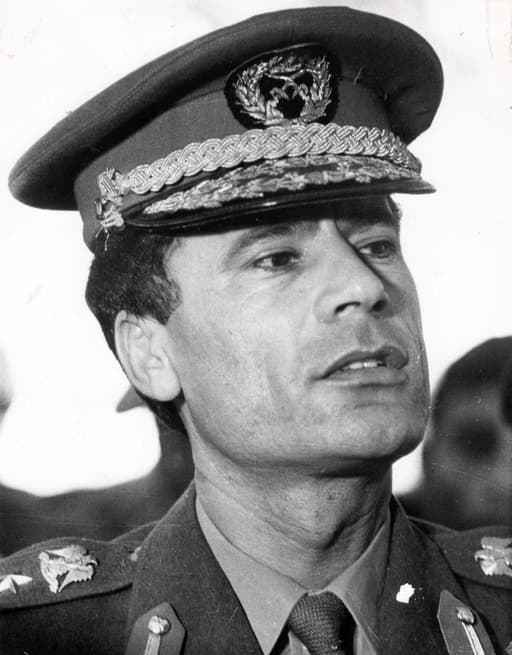
hing equally hard for military intervention in Syria. After all, the regime of Bashar al-Assad has now killed significantly more of its people than Gaddafi killed of his. Cameron acknowledges that he is "immensely frustrated that we can't do more in Syria." True, "in Libya there was a United Nations r
y intervention in Libya last year. And while Obama was careful to occupy the back seat during the NATO air campaign that helped topple the dictator Muammar Gaddafi, Cameron was up front, fighting with Nicolas Sarkozy for control of the steering wheel and gas pedal. I ask Cameron why he is not pushing equally
aying a tactical game in which he calculates how far he can go each day without incurring the collective wrath of the international community, said Peter Harling of the International Crisis Group, a Brussels-based think tank. More than 7,500 people have been killed in the uprising. Turkey also must weigh ot
3 mentions1 same-page
Page ?Same page
rorists if the regime collapses. EFTA_R1_00230154 EFTA01842830 In some respects, the potential worst-case scenario is more like Libya, where the Muammar Gaddafi regime lost control of mustard gas supplies and huge stockpiles of modern weapons. While the mustard gas, stored in bulk containers, reportedly wa
Syrian armed forces, which have remained relatively intact, unlike in Libya. Moreover, the Assad regime has more foreign allies than the isolated Gaddafi regime. It can rely on Moscow to block U.N. efforts and Iran and Hezbollah to help it resist a foreign intervention. Such differences would make a
e conflict about his Alawite minority versus the country's Sunni Muslim majority as a way of discrediting the opposition and holding his base. As Peter Harling and Sarah Birke, experts on the Middle East who have been in Syria, wrote in a recent essay: "Rather than reform, the regime's default setting has
3 mentions1 same-page
Page ?Same page
Syrian armed forces, which have remained relatively intact, unlike in Libya. Moreover, the Assad regime has more foreign allies than the isolated Gaddafi regime. It can rely on Moscow to block •. efforts and Iran and Hezbollah to help it resist a foreign intervention. Such differences would make any
ally could find their way to terrorists if the regime collapses. In some respects, the potential worst-case scenario is more like Libya, where the Muammar Gaddafi regime lost control of mustard gas supplies and huge stockpiles of modern weapons. While the mustard gas, stored in bulk containers, reportedly was
he conflict about his Alawite minority versus the country's Sunni Muslim majority as a way of discrediting the opposition and holding his base. As Peter Harling and Sarah Birke, experts on the Middle East who have been in Syria, wrote in a recent essay: "Rather than reform, the regime's default setting has
Sponsored
Mutual Connections (136)
Entities connected to both Muammar Gaddafi and Peter Harling
Barack Obama
PERSON54 w/ Muammar·3 w/ Peter
Bashar al-Assad
PERSON46 w/ Muammar·3 w/ Peter
Tehran
LOCATION41 w/ Muammar·3 w/ Peter
George W. Bush
PERSON35 w/ Muammar·3 w/ Peter
Hosni Mubarak
PERSON35 w/ Muammar·3 w/ Peter
Benjamin Netanyahu
PERSON35 w/ Muammar·3 w/ Peter
Saddam Hussein
PERSON33 w/ Muammar·3 w/ Peter
Tunisia
LOCATION34 w/ Muammar·2 w/ Peter
Lebanon
LOCATION32 w/ Muammar·3 w/ Peter
Yemen
LOCATION31 w/ Muammar·2 w/ Peter
Damascus
LOCATION29 w/ Muammar·3 w/ Peter
Cairo
LOCATION29 w/ Muammar·3 w/ Peter
Bahrain
LOCATION23 w/ Muammar·2 w/ Peter
Fatah
ORGANIZATION22 w/ Muammar·2 w/ Peter
Mediterranean
LOCATION22 w/ Muammar·2 w/ Peter
Terje Rod-Larsen
PERSON19 w/ Muammar·3 w/ Peter
North Africa
LOCATION19 w/ Muammar·2 w/ Peter
Morocco
LOCATION17 w/ Muammar·2 w/ Peter
Jerusalem
LOCATION17 w/ Muammar·2 w/ Peter
Soviet Union
LOCATION16 w/ Muammar·2 w/ Peter