Back to Network













4
Shared Docs
4
Same-Page
4 / 4
Mentions
Document Mentions (4 shared documents)
2 mentions1 same-page
Page ?Same page
they belong to the people quoted in the book: Norbert Wiener, Karl Lashley, George Kubler, J. Z. Young, John Lilly, Marshall McLuhan, Stewart Brand, Heinz von Foerster, Edward T. Hall, Alfred North Whitehead, W. Grey Walter, Kenneth Sayre, Rene Descartes, Benjamin Lee Whorf, Niels Bohr, Rene Dubos, D. and K. Stanl
J. Andrade e Silva, P. W. Bridgman, R. Buckminster Fuller, Sir Arthur Eddington, William Empson, C. G. Jung, Bertrand Russell, William Butler Yeats, John McHale, Rudolph Wurlitzer, Ihab Hassan, T. E. Hulme, Simone Weil, Samuel Beckett, David Pears, Main Robbe-Grillet, Victor Gioscia, Hugo von Hofmannsthal, N
2 mentions1 same-page
Page ?Same page
involves the . . . of information movement.' A A A 9. Stuart Brand, correspondence. AceAll thataTMs traceably ... except through effects.' A A J.. Heinz von Foerster, aceLogical Structure of Environment and Its Internal Representation,' in R. E. Eckerstrom (ed.), International Design Conference, Aspen, 1962 (Zeel
ficeOne beats and . . . Be merely oneself% 117. Eliot, aceFour Quartets,fi op. cit., p. 114. aceA people without . . . Of timeless moments.ft 118. John McHale, correspondence. Sec McHale, John, The Future of the Future (New York: George Broodier, 1969). ficeAhistory: Amen.A 119 Eliot, aceFour Quartets,fi
2 mentions1 same-page
Page ?Same page
d systems—1* order Cybernetics— moved to the Cybernetics of observing systems—2"™ order Cybernetics—or “the Cybernetics of Cybernetics”, as coined by Heinz von Foerster, who joined the Macy conferences in the mid 1950s, and spearheaded the new movement. Cybernetics, rather than disappearing, was becoming metabolized
rs since: “new technologies = new perceptions.” Inspired by communications theorist Marshall McLuhan, architect-designer Buckminster Fuller, futurist John McHale, and cultural anthropologists Edward T. (Ned) Hall and Edmund Carpenter, I started reading avidly in the field of information theory, cybernetics, an
Sponsored
2 mentions1 same-page
Page ?Same page
d systems—1* order Cybernetics— moved to the Cybernetics of observing systems—2"™ order Cybernetics—or “the Cybernetics of Cybernetics”, as coined by Heinz von Foerster, who joined the Macy conferences in the mid 1950s, and spearheaded the new movement. Cybernetics, rather than disappearing, was becoming metabolized
rs since: “new technologies = new perceptions.” Inspired by communications theorist Marshall McLuhan, architect-designer Buckminster Fuller, futurist John McHale, and cultural anthropologists Edward T. (Ned) Hall and Edmund Carpenter, I started reading avidly in the field of information theory, cybernetics, an
Sponsored
Mutual Connections (452)
Entities connected to both Heinz von Foerster and John McHale
Julie K. Brown
PERSON7 w/ Heinz·4 w/ John
William Shakespeare
PERSON6 w/ Heinz·4 w/ John
George W. Bush
PERSON6 w/ Heinz·4 w/ John
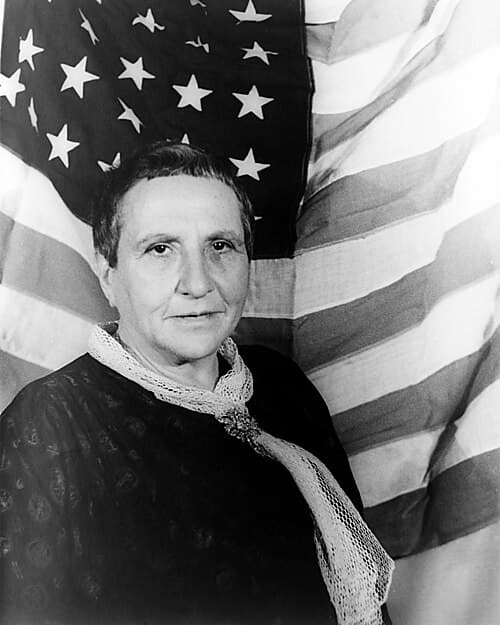
Gertrude Stein
PERSON5 w/ Heinz·4 w/ John
Martha Stewart
PERSON6 w/ Heinz·3 w/ John
Stewart Brand
PERSON5 w/ Heinz·4 w/ John
John Brockman
PERSON6 w/ Heinz·3 w/ John
Berkeley
LOCATION5 w/ Heinz·3 w/ John
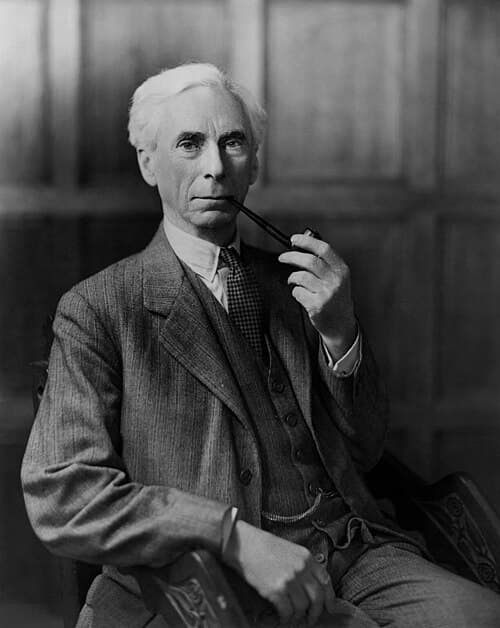
Bertrand Russell
PERSON4 w/ Heinz·4 w/ John
WI
Wiener
PERSON5 w/ Heinz·3 w/ John
BA
Bateson
PERSON5 w/ Heinz·2 w/ John
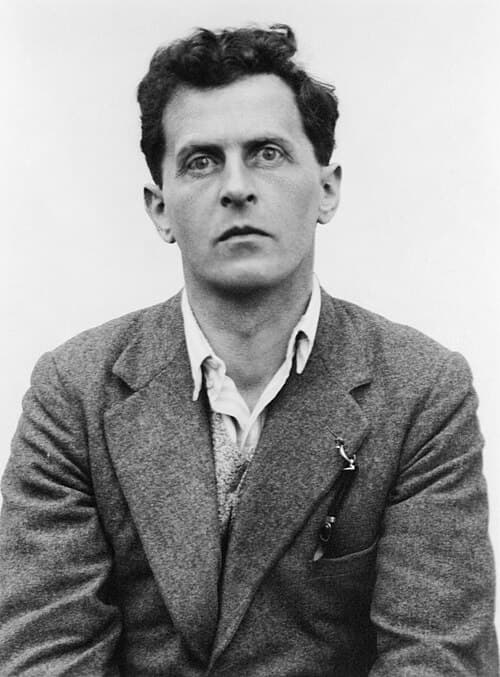
Wittgenstein
PERSON4 w/ Heinz·3 w/ John
Alan Dershowitz
PERSON5 w/ Heinz·2 w/ John
Marc Rich
PERSON5 w/ Heinz·2 w/ John
Frank Wilczek
PERSON4 w/ Heinz·2 w/ John
Stuart Russell
PERSON4 w/ Heinz·2 w/ John
Carpenter
PERSON4 w/ Heinz·2 w/ John
Prince Andrew
PERSON4 w/ Heinz·2 w/ John
AT
Amos Tversky
PERSON4 w/ Heinz·2 w/ John
Daniel Kahneman
PERSON4 w/ Heinz·2 w/ John