Back to Network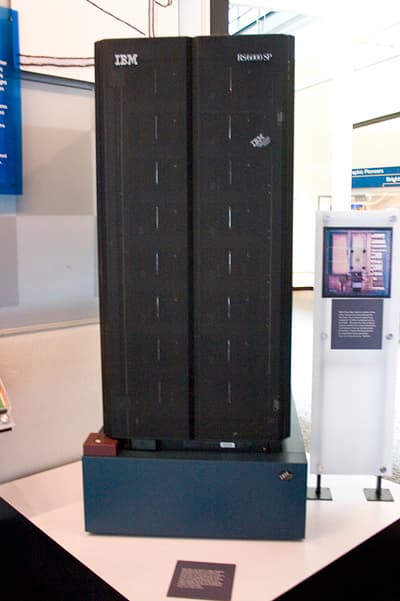













4
Shared Docs
4
Same-Page
4 / 4
Mentions
Document Mentions (4 shared documents)
2 mentions1 same-page
Page ?Same page
d systems—1* order Cybernetics— moved to the Cybernetics of observing systems—2"™ order Cybernetics—or “the Cybernetics of Cybernetics”, as coined by Heinz von Foerster, who joined the Macy conferences in the mid 1950s, and spearheaded the new movement. Cybernetics, rather than disappearing, was becoming metabolized
o communicate with other humans, learn from them, instruct them, and motivate them in our own native language. If our robots will all be as opaque as AlphaGo, we won’t be able to hold a meaningful conversation with them, and that would be unfortunate. We will need to retrain them whenever we make a slight
2 mentions1 same-page
Page ?Same page
ge making, creativity, and the use of programming as artistic tools. The deep connections between science and art had already been noted by the late Heinz von Foerster, one of the architects of cybernetics, who worked with Norbert Wiener from the mid-1940s and in the 1960s founded the field of second-order cyberneti
rs relied a great deal on intuition and a feel for position, so proficiency was thought to require a particularly human kind of intelligence. But the AlphaGo program produced by DeepMind, after being trained on thousands of high-level Go games played by humans and then millions of games with itself, was ab
2 mentions1 same-page
Page ?Same page
d systems—1* order Cybernetics— moved to the Cybernetics of observing systems—2"™ order Cybernetics—or “the Cybernetics of Cybernetics”, as coined by Heinz von Foerster, who joined the Macy conferences in the mid 1950s, and spearheaded the new movement. Cybernetics, rather than disappearing, was becoming metabolized
o communicate with other humans, learn from them, instruct them, and motivate them in our own native language. If our robots will all be as opaque as AlphaGo, we won’t be able to hold a meaningful conversation with them, and that would be unfortunate. We will need to retrain them whenever we make a slight
Sponsored
2 mentions1 same-page
Page ?Same page
ge making, creativity, and the use of programming as artistic tools. The deep connections between science and art had already been noted by the late Heinz von Foerster, one of the architects of cybernetics, who worked with Norbert Wiener from the mid-1940s and in the 1960s founded the field of second-order cyberneti
rs relied a great deal on intuition and a feel for position, so proficiency was thought to require a particularly human kind of intelligence. But the AlphaGo program produced by DeepMind, after being trained on thousands of high-level Go games played by humans and then millions of games with itself, was ab
Sponsored
Mutual Connections (688)
Entities connected to both Heinz von Foerster and AlphaGo
Deep Blue
PERSON4 w/ Heinz·8 w/ AlphaGo
Julie K. Brown
PERSON7 w/ Heinz·4 w/ AlphaGo
John Brockman
PERSON6 w/ Heinz·5 w/ AlphaGo
George W. Bush
PERSON6 w/ Heinz·4 w/ AlphaGo
Stephen Hawking
PERSON4 w/ Heinz·6 w/ AlphaGo
Martha Stewart
PERSON6 w/ Heinz·4 w/ AlphaGo
William Shakespeare
PERSON6 w/ Heinz·4 w/ AlphaGo
Alan Dershowitz
PERSON5 w/ Heinz·5 w/ AlphaGo
Garry Kasparov
PERSON4 w/ Heinz·6 w/ AlphaGo
Robert Gates
PERSON4 w/ Heinz·5 w/ AlphaGo
BA
Bateson
PERSON5 w/ Heinz·4 w/ AlphaGo
Cambridge University
ORGANIZATION4 w/ Heinz·5 w/ AlphaGo
the Royal Society
ORGANIZATION4 w/ Heinz·5 w/ AlphaGo
Jeopardy
ORGANIZATION4 w/ Heinz·5 w/ AlphaGo
Samantha Power
PERSON4 w/ Heinz·5 w/ AlphaGo
Berkeley
LOCATION5 w/ Heinz·4 w/ AlphaGo
Hans Ulrich Obrist
PERSON4 w/ Heinz·5 w/ AlphaGo
WI
Wiener
PERSON5 w/ Heinz·4 w/ AlphaGo
Turing
PERSON4 w/ Heinz·5 w/ AlphaGo
Danny Hillis
PERSON4 w/ Heinz·5 w/ AlphaGo