Back to Network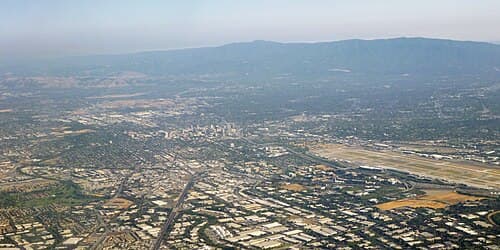

















4
Shared Docs
4
Same-Page
4 / 4
Mentions
Document Mentions (4 shared documents)
2 mentions1 same-page
Page ?Same page
d systems—1* order Cybernetics— moved to the Cybernetics of observing systems—2"™ order Cybernetics—or “the Cybernetics of Cybernetics”, as coined by Heinz von Foerster, who joined the Macy conferences in the mid 1950s, and spearheaded the new movement. Cybernetics, rather than disappearing, was becoming metabolized
ages, it uses thousands of times more energy than a human brain (a technological limitation that, as he also notes, may be temporary). Its victory in Jeopardy! was a genuine triumph, made possible by the formulaic restrictions of the Jeopardy! rules, but in order for it to compete, even these rules had to b
2 mentions1 same-page
Page ?Same page
ge making, creativity, and the use of programming as artistic tools. The deep connections between science and art had already been noted by the late Heinz von Foerster, one of the architects of cybernetics, who worked with Norbert Wiener from the mid-1940s and in the 1960s founded the field of second-order cyberneti
its of beam-fabrication methods at around 10-nanometer feature size. Power (energy consumption) issues are also apparent: The great Watson, winner of Jeopardy!, used 85,000 watts real time, while the human brains were using 20 watts each. To be fair, the human body needs 100 watts to operate and twenty year
2 mentions1 same-page
Page ?Same page
d systems—1* order Cybernetics— moved to the Cybernetics of observing systems—2"™ order Cybernetics—or “the Cybernetics of Cybernetics”, as coined by Heinz von Foerster, who joined the Macy conferences in the mid 1950s, and spearheaded the new movement. Cybernetics, rather than disappearing, was becoming metabolized
ages, it uses thousands of times more energy than a human brain (a technological limitation that, as he also notes, may be temporary). Its victory in Jeopardy! was a genuine triumph, made possible by the formulaic restrictions of the Jeopardy! rules, but in order for it to compete, even these rules had to b
Sponsored
2 mentions1 same-page
Page ?Same page
ge making, creativity, and the use of programming as artistic tools. The deep connections between science and art had already been noted by the late Heinz von Foerster, one of the architects of cybernetics, who worked with Norbert Wiener from the mid-1940s and in the 1960s founded the field of second-order cyberneti
its of beam-fabrication methods at around 10-nanometer feature size. Power (energy consumption) issues are also apparent: The great Watson, winner of Jeopardy!, used 85,000 watts real time, while the human brains were using 20 watts each. To be fair, the human body needs 100 watts to operate and twenty year
Sponsored
Mutual Connections (688)
Entities connected to both Heinz von Foerster and Jeopardy
Silicon Valley
LOCATION2 w/ Heinz·21 w/ Jeopardy
Marc Rich
PERSON5 w/ Heinz·12 w/ Jeopardy
George W. Bush
PERSON6 w/ Heinz·10 w/ Jeopardy
Julie K. Brown
PERSON7 w/ Heinz·7 w/ Jeopardy
Deep Blue
PERSON4 w/ Heinz·10 w/ Jeopardy
Barack Obama
PERSON4 w/ Heinz·9 w/ Jeopardy
Stephen Hawking
PERSON4 w/ Heinz·9 w/ Jeopardy
Ghislaine Maxwell
PERSON4 w/ Heinz·9 w/ Jeopardy
Prince Andrew
PERSON4 w/ Heinz·8 w/ Jeopardy
Alan Dershowitz
PERSON5 w/ Heinz·6 w/ Jeopardy
William Shakespeare
PERSON6 w/ Heinz·5 w/ Jeopardy
Eric Trump
PERSON4 w/ Heinz·7 w/ Jeopardy
DB
Doug Band
PERSON4 w/ Heinz·7 w/ Jeopardy
Samantha Power
PERSON4 w/ Heinz·7 w/ Jeopardy
Martha Stewart
PERSON6 w/ Heinz·5 w/ Jeopardy
Marvin Minsky
PERSON4 w/ Heinz·6 w/ Jeopardy
Joe Biden
PERSON2 w/ Heinz·8 w/ Jeopardy
Turing
PERSON4 w/ Heinz·6 w/ Jeopardy
Robert Gates
PERSON4 w/ Heinz·6 w/ Jeopardy
LB
Leon Black
PERSON4 w/ Heinz·6 w/ Jeopardy